Results: the tree, Blender's tools, the tool choice and simplified pictures
One report, as you asked. Everything in the plan was tried; each test's pass line was written in the experiment log before it ran, and each result below says whether it passed. All models here are made by script, none edited by hand. The decisions for the next round are in chat. Turn any of the models in the 3D viewer; the plan these results answer is on the plan page.
In short
kept1. Blender tool for the body
The Skin modifier stays: no other tool beat it by the 0.03 the rule asked for.
Section 117 + 7 of 372. The tree of true models
17 recognisable, 7 nearly, 13 not yet: flat wings and fins, shells, teeth and plates.
Section 2not passed3. Every limb and toe
The tree finds 91% of the tips with 86% real (needs 95 / 90). The hands step did not help.
Section 3half4. Choosing the tool
True shapes 50 of 50 by reading the shape. Carved from pictures 33 of 50 at best: cups and sheets are lost in carving.
Section 4not passed5. The tree from pictures
A tree per painted part is the best by eye but beats last week on 1 of 6 (the snake), not 5.
Section 53 of 46. Hard pieces
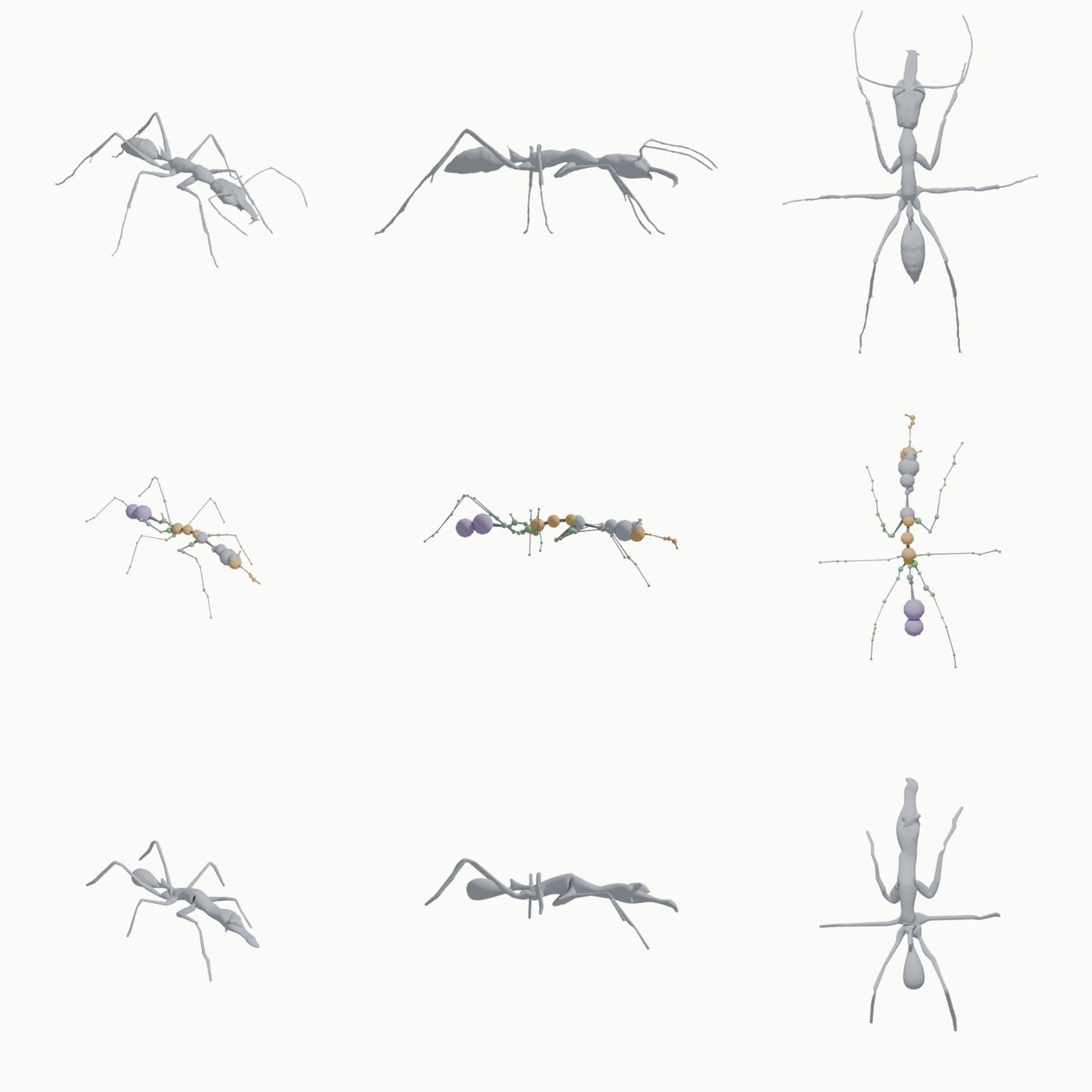
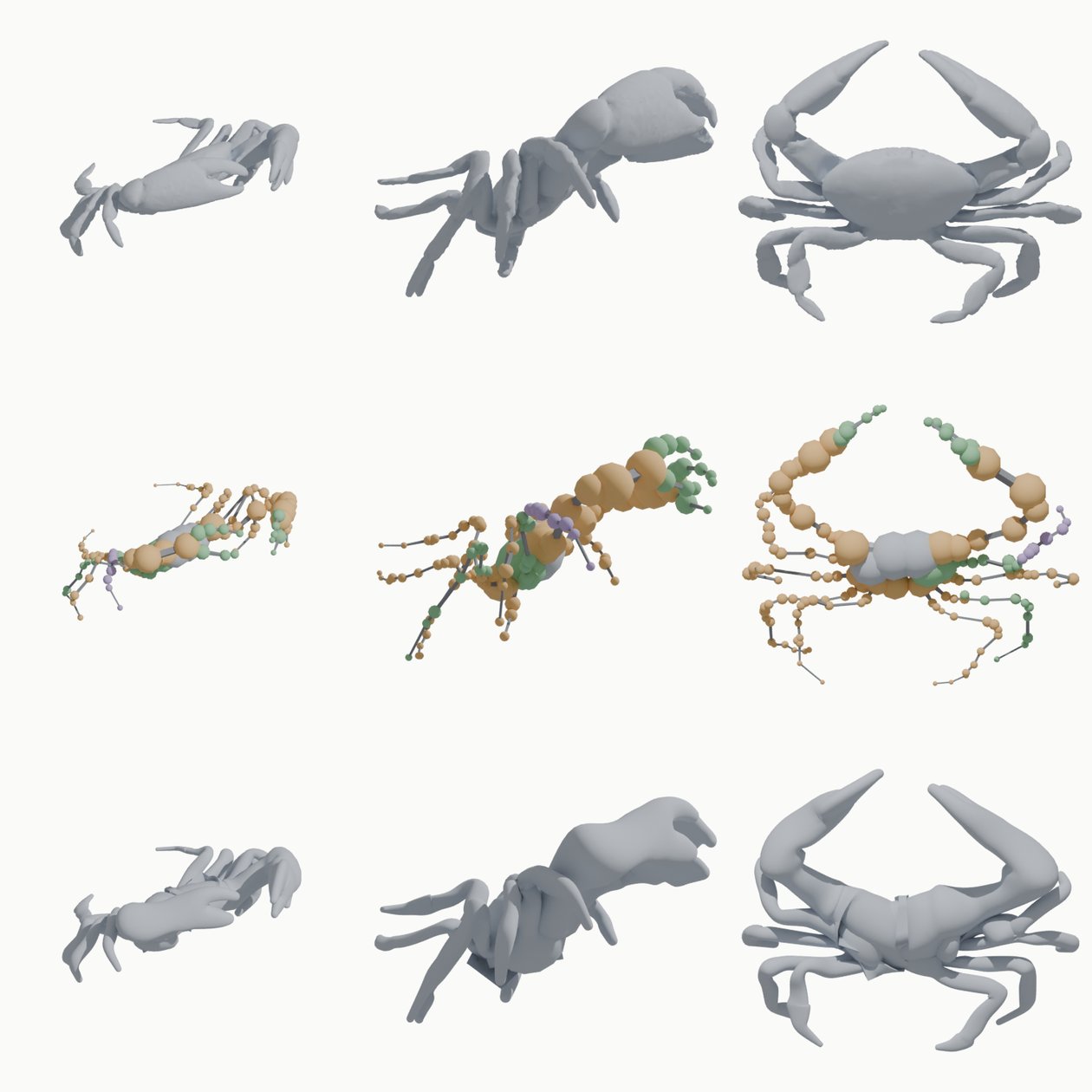
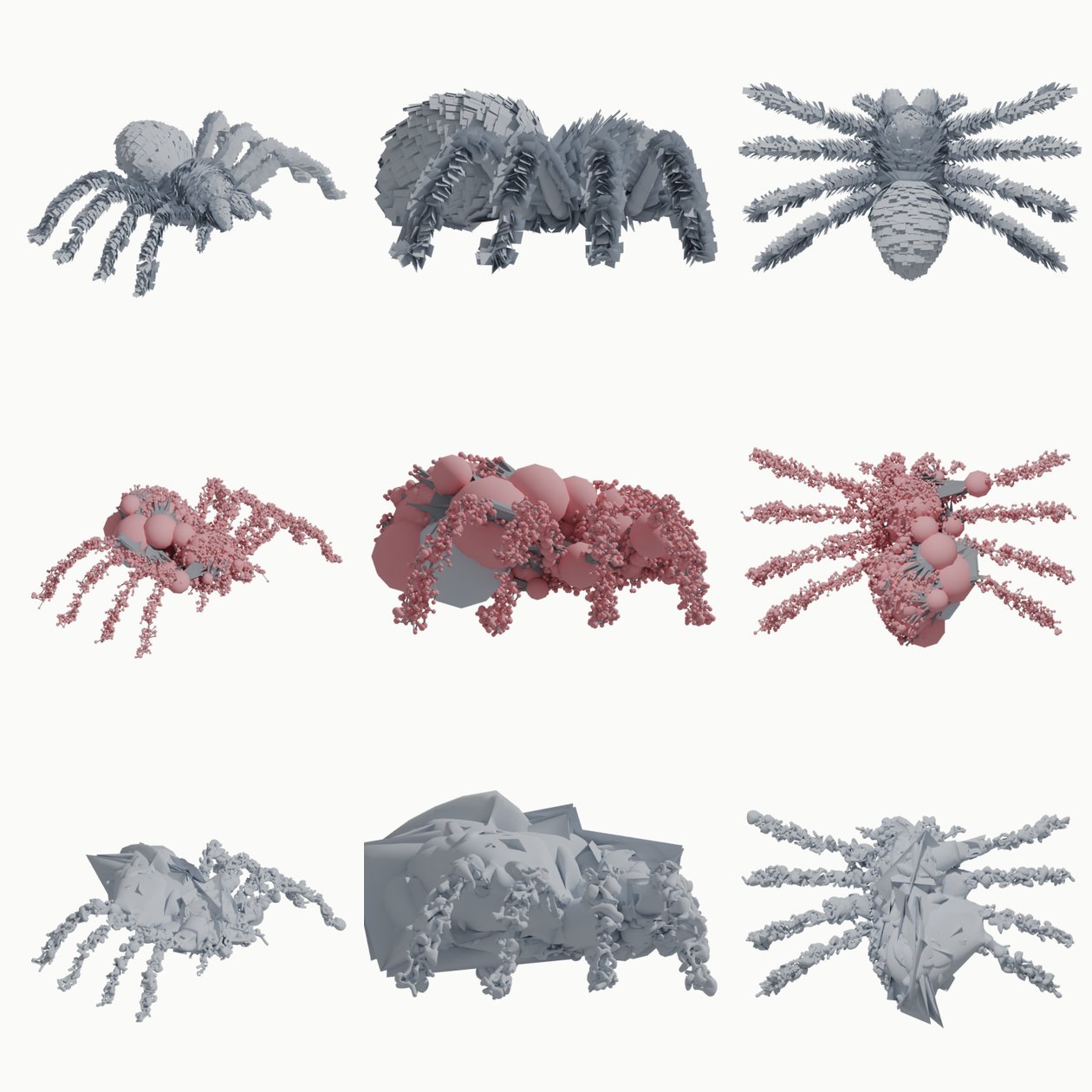
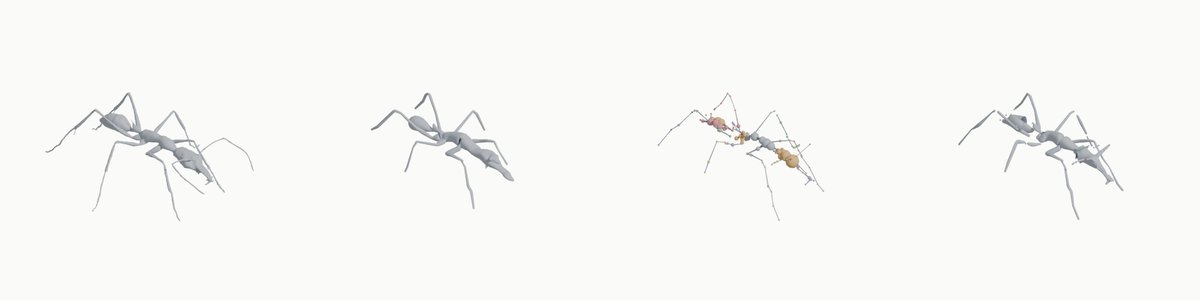
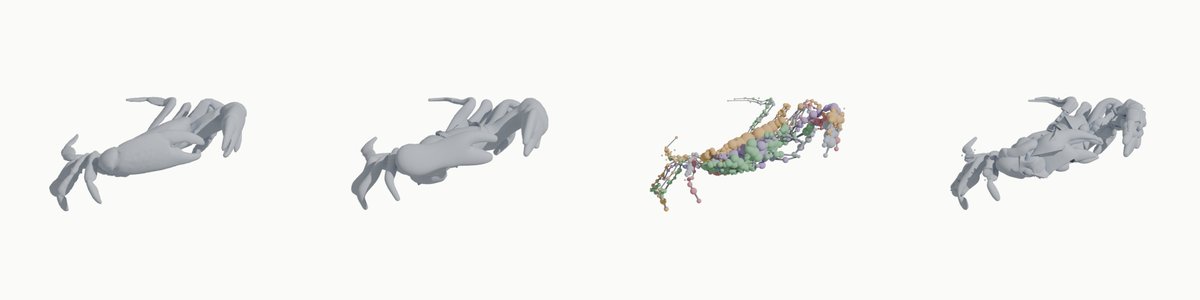
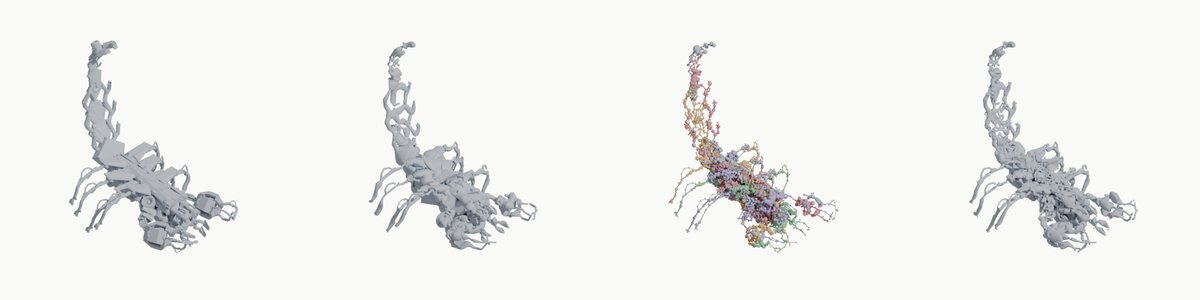
Insects, crabs and spiders as separate pieces: all joined on 3 of 4, outline closer on all 4 (spider 0.80 to 0.87).
Section 64 of 117. Simplified pictures
Clean blockout redraws; 4 of 11 keep every outline within 0.90. The anglerfish's open mouth comes back (tree solid 0.43 to 0.61); the others gain nothing.
Section 7not passed8. Two other tree readers
Ball cover and mesh shrinking both do worse than thinning. Thinning stays as the tree reader.
Section 8ready9. 3D viewer
Ten animals, true model, tree and Skin body side by side, turning together.
Open the viewer1. Which Blender tool makes the body from the tree
The same tree, made into a body four ways in Blender, on all 37 true models. Pass line, set before the run: the Skin modifier stays unless another tool's mean outline overlap with the true model (6 straight views and a three-quarter view, 1 = identical) is higher by 0.03 or more.
Result: the Skin modifier stays. Mean overlap: the tree's own solid 0.77, Skin modifier 0.75, curves 0.75, metaballs 0.73 (0.66 at a smaller size). Only the solid is ahead, by 0.02, and it is a measuring stick, not an editable model. Metaballs break thin tails and toes into beads; curves leave seams at the forks.
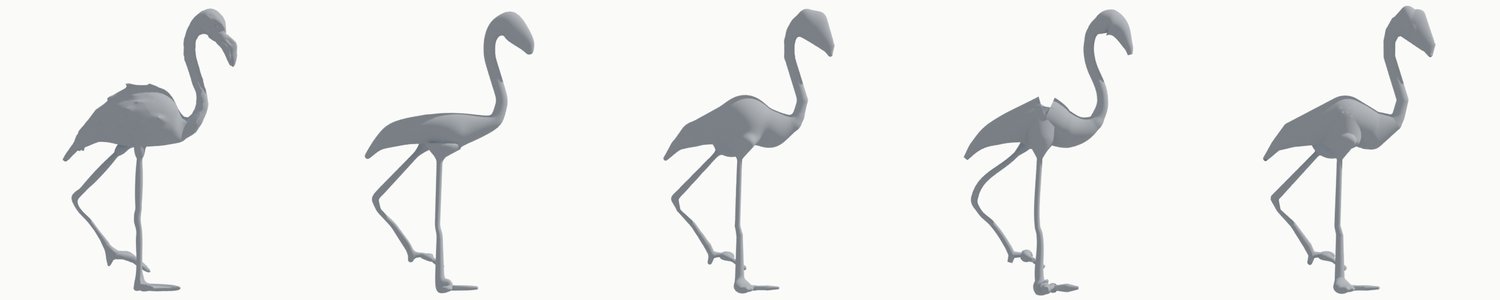
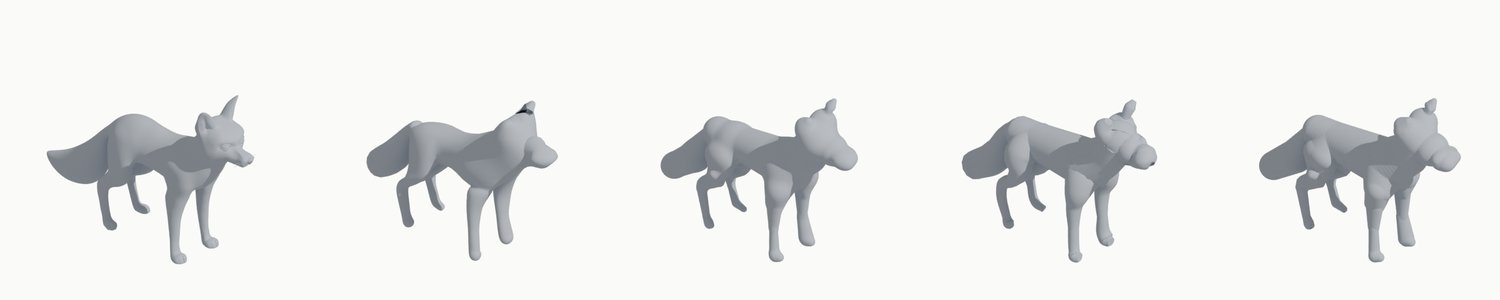
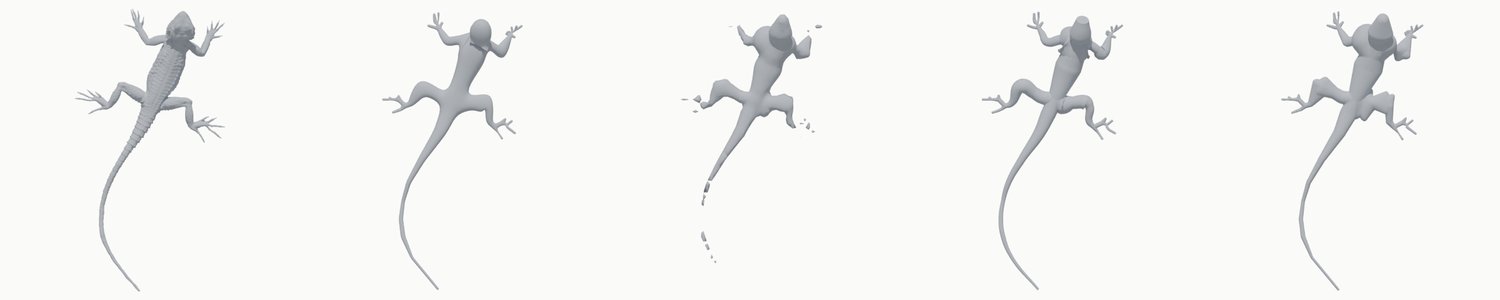
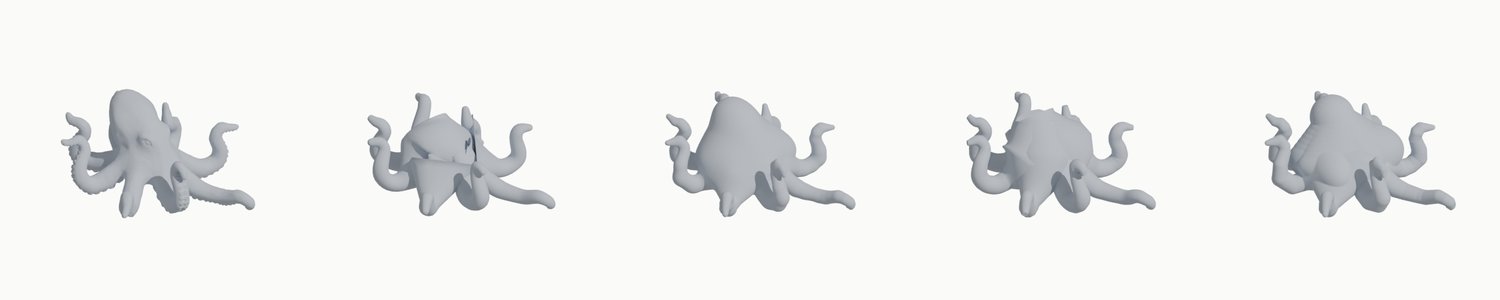
2. The tree of all 37 true models
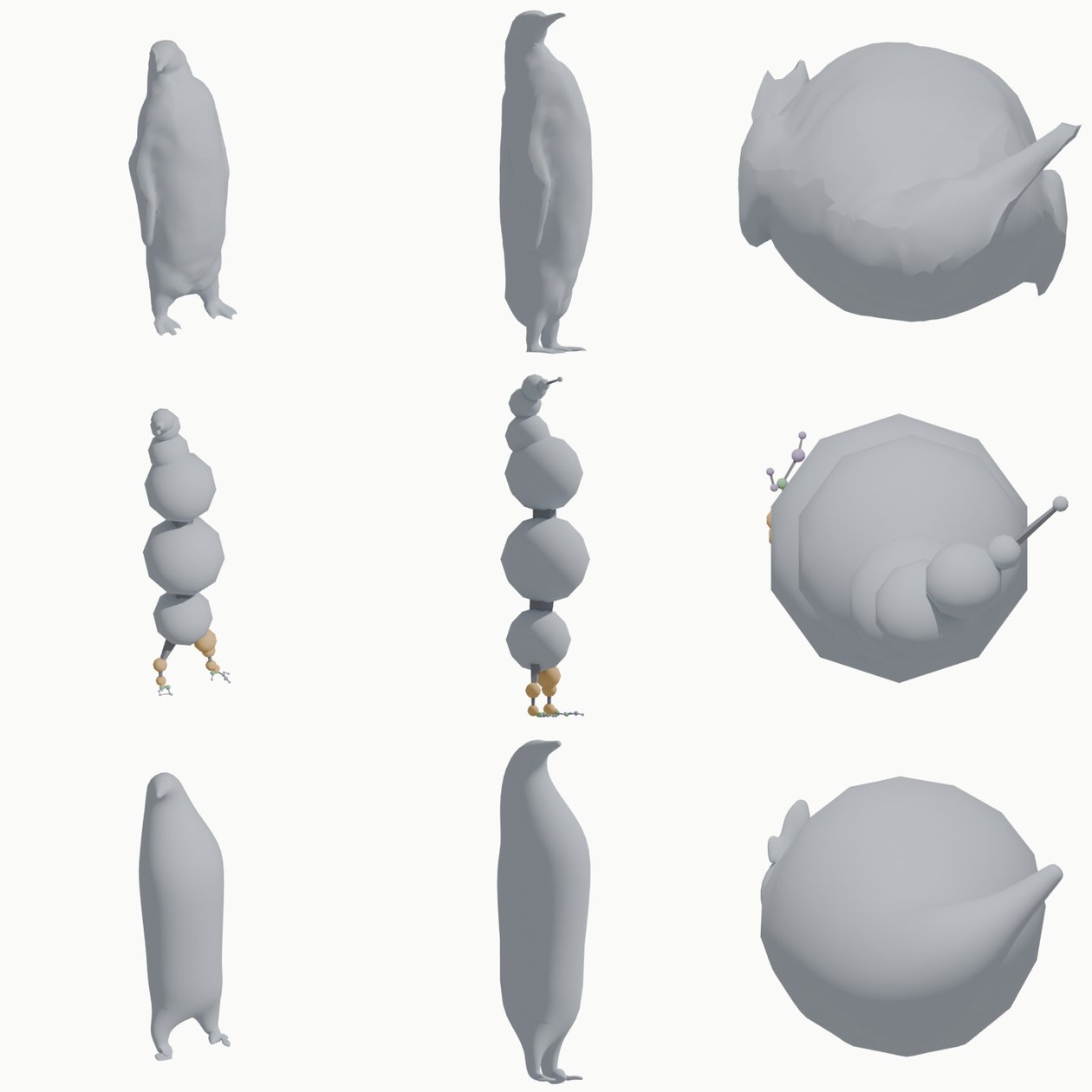
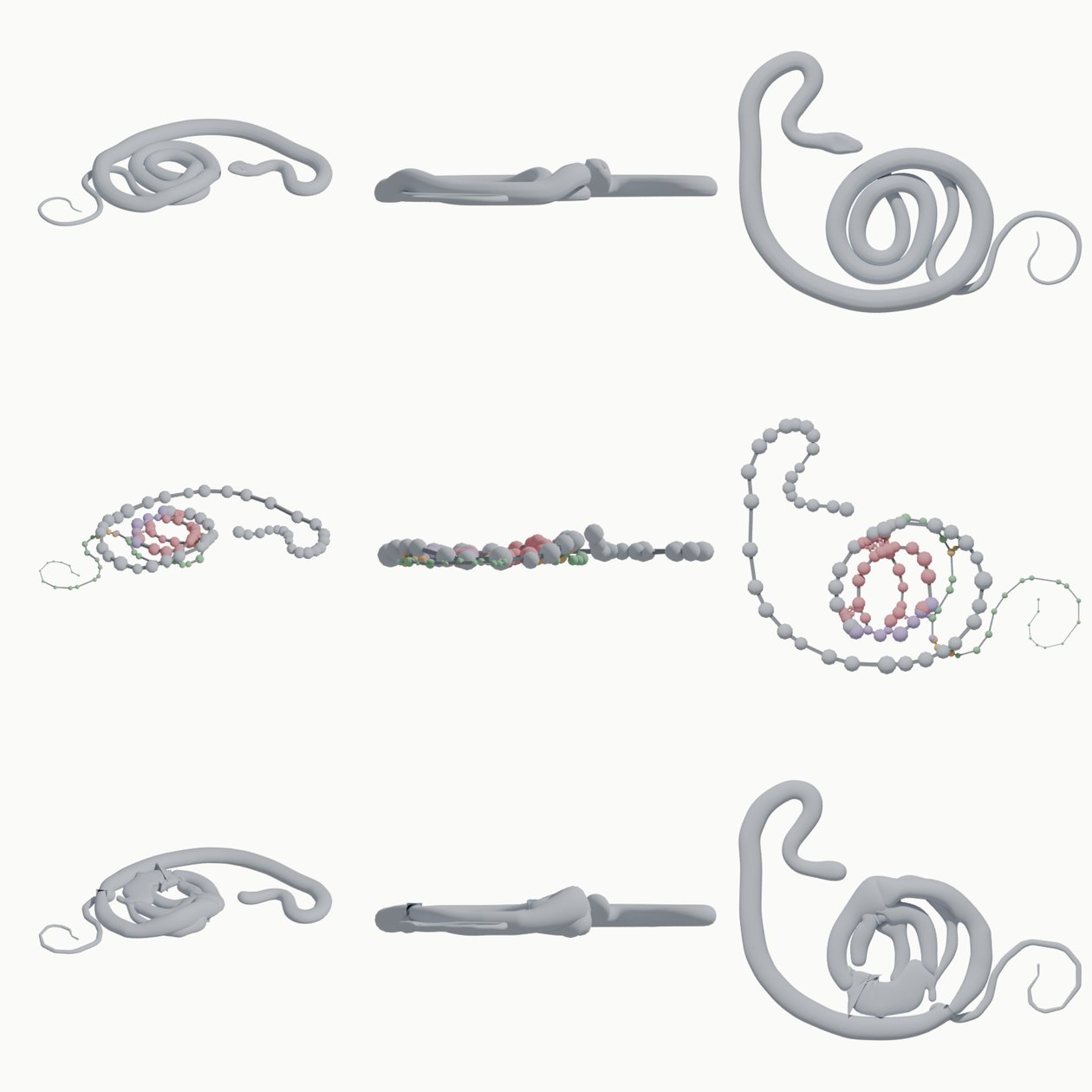
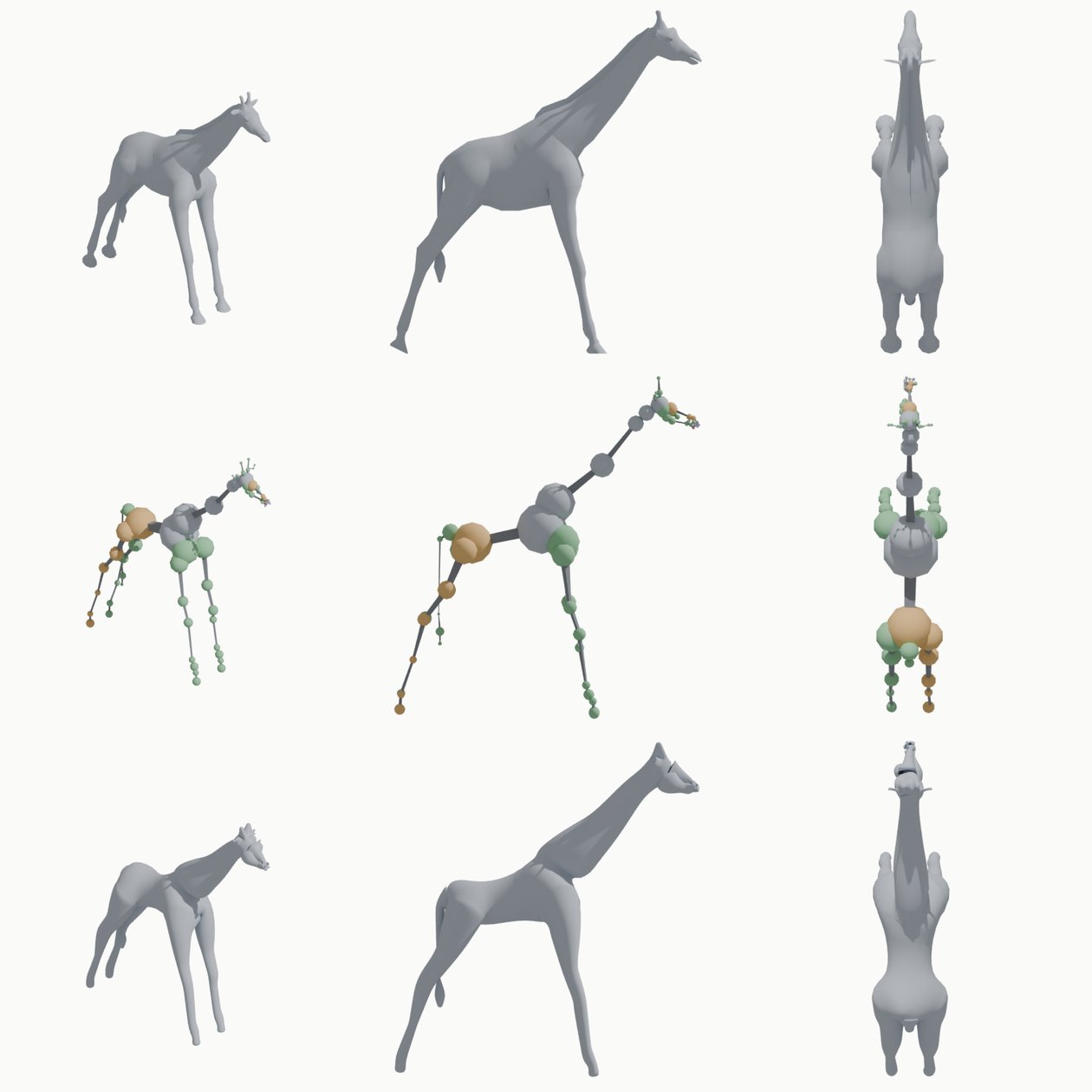
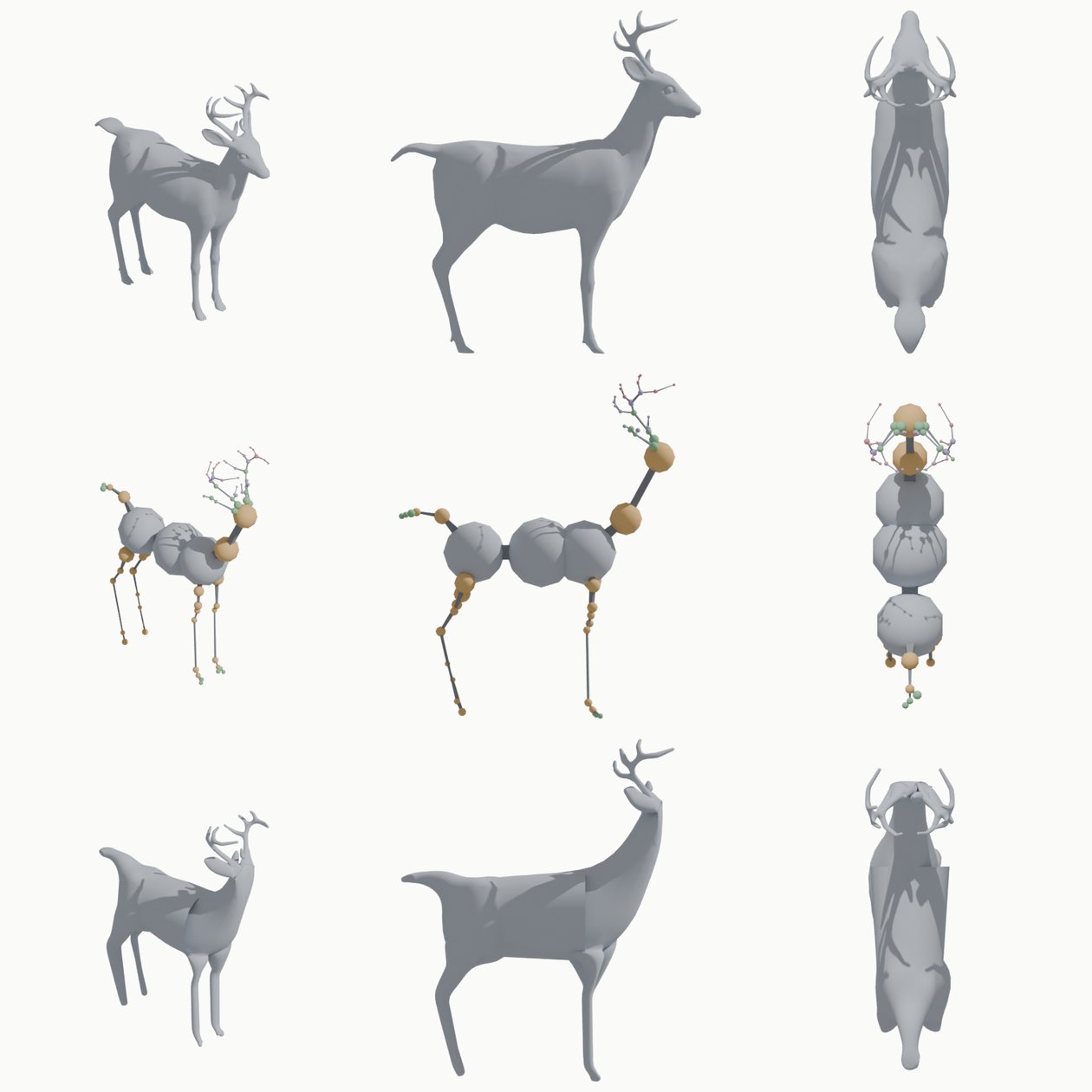
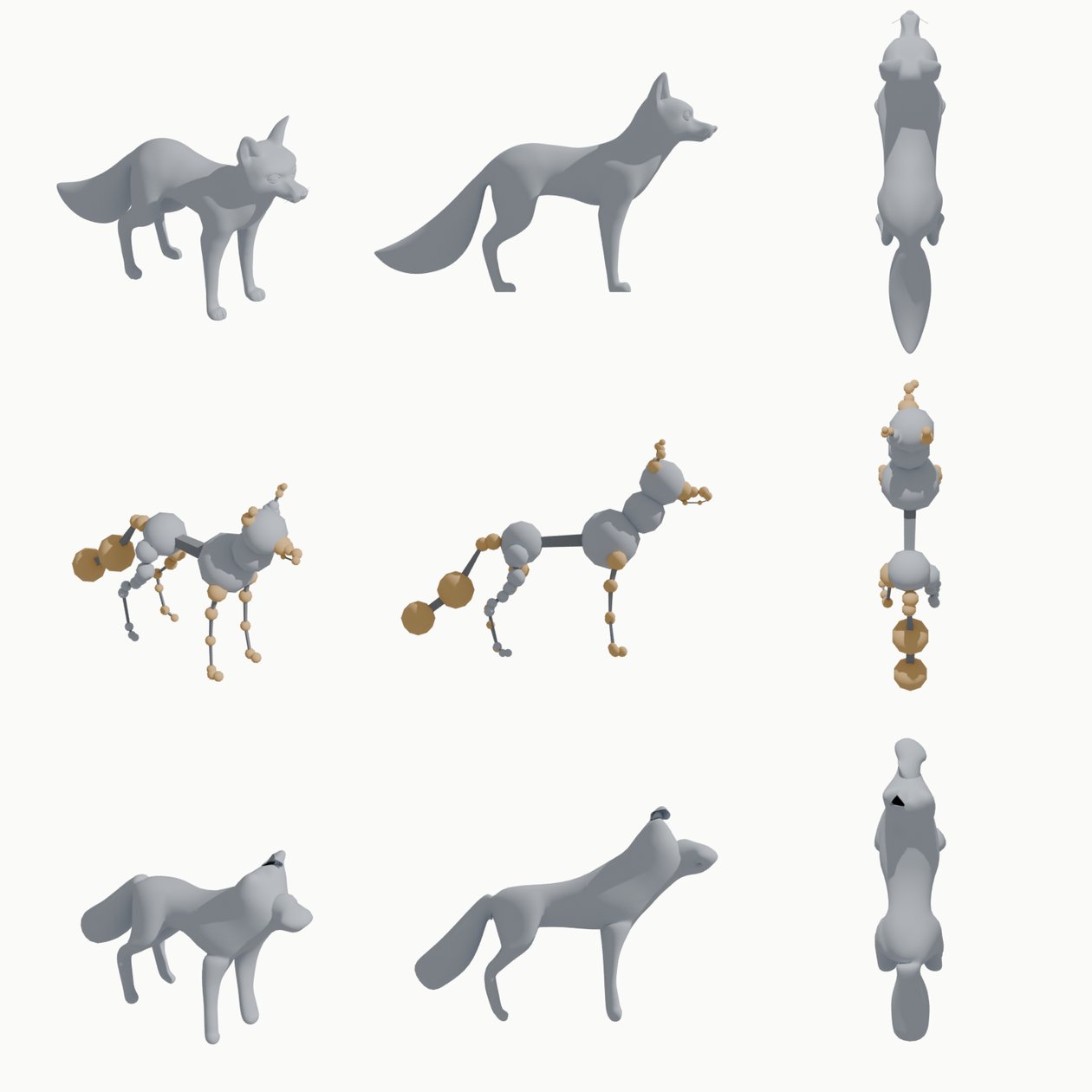
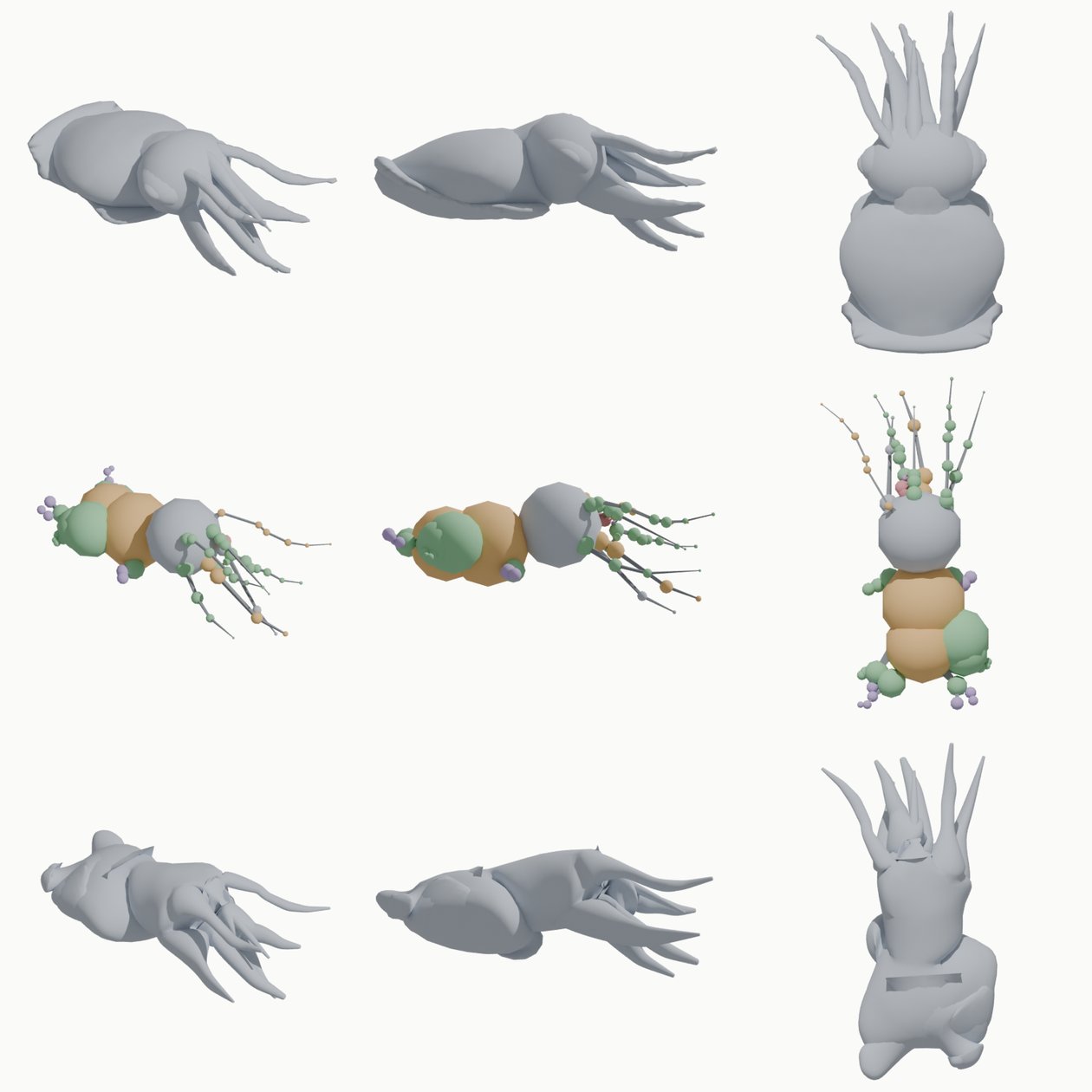
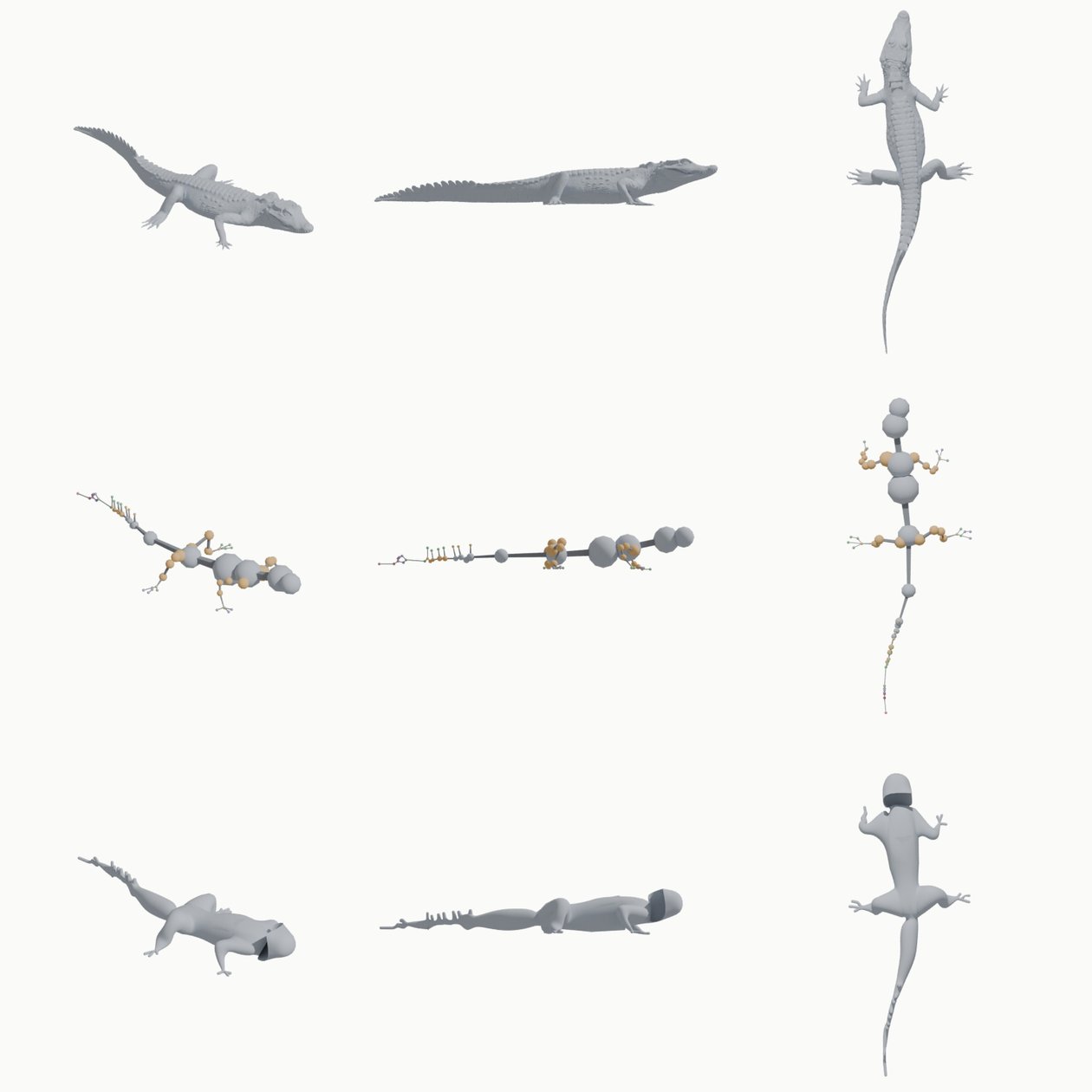
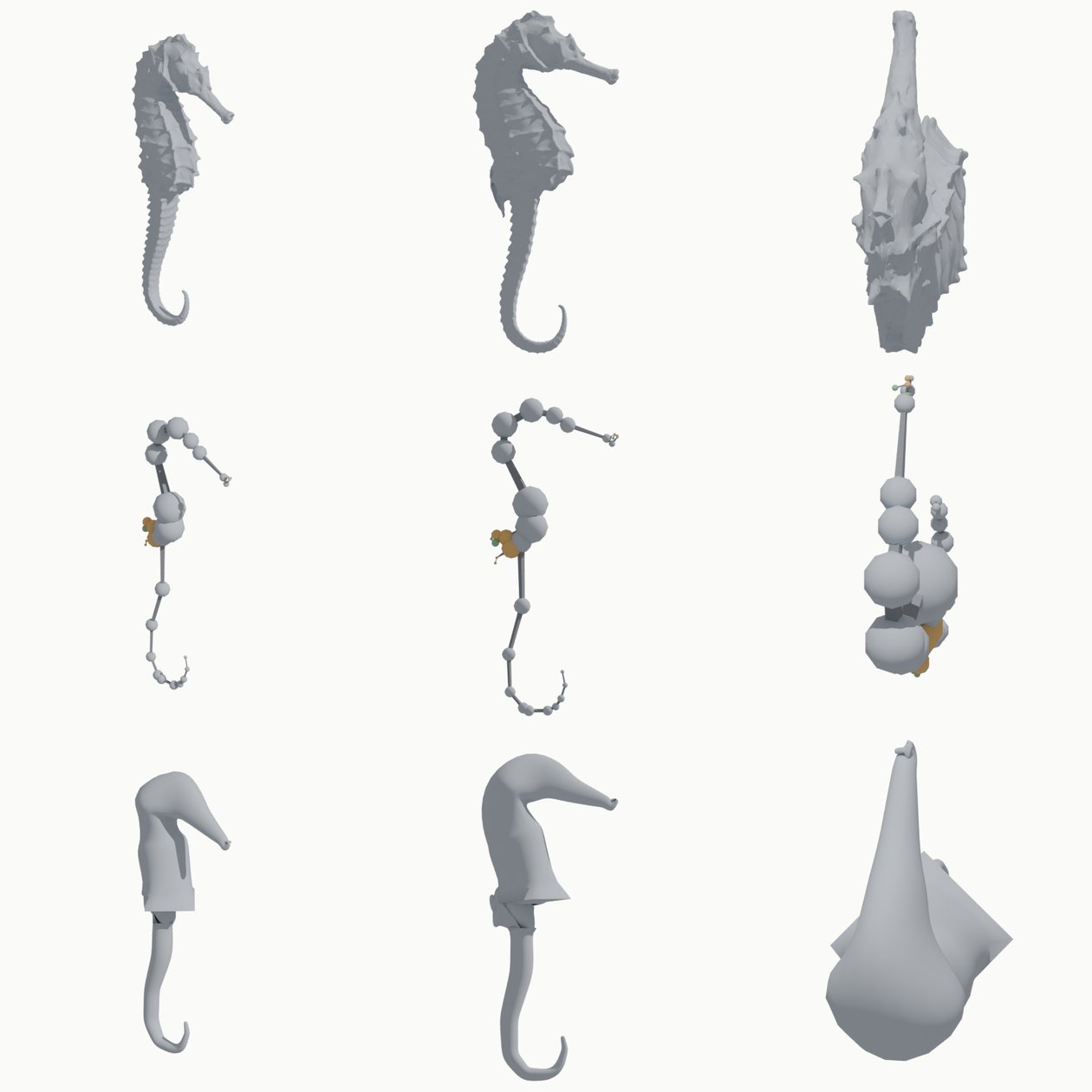
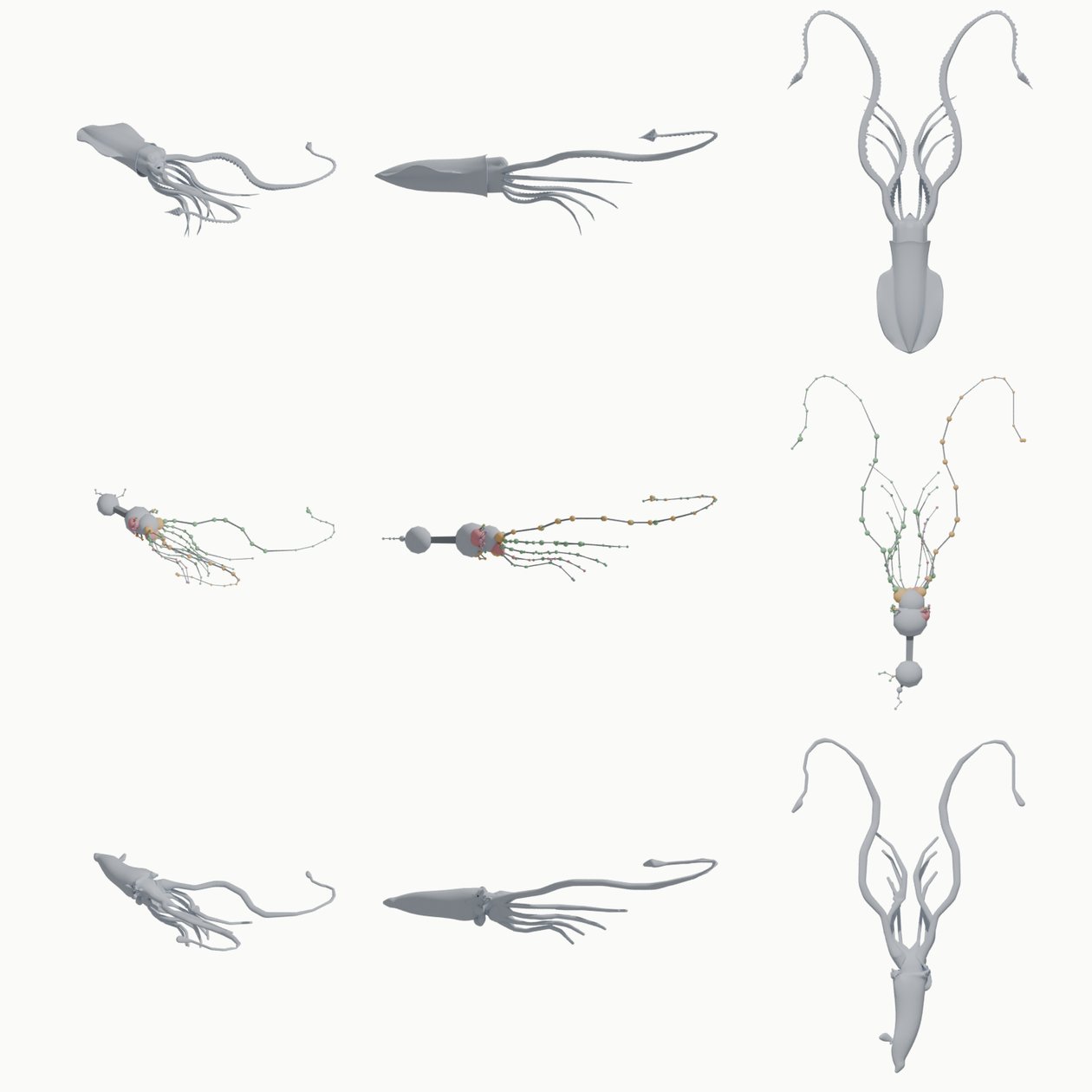
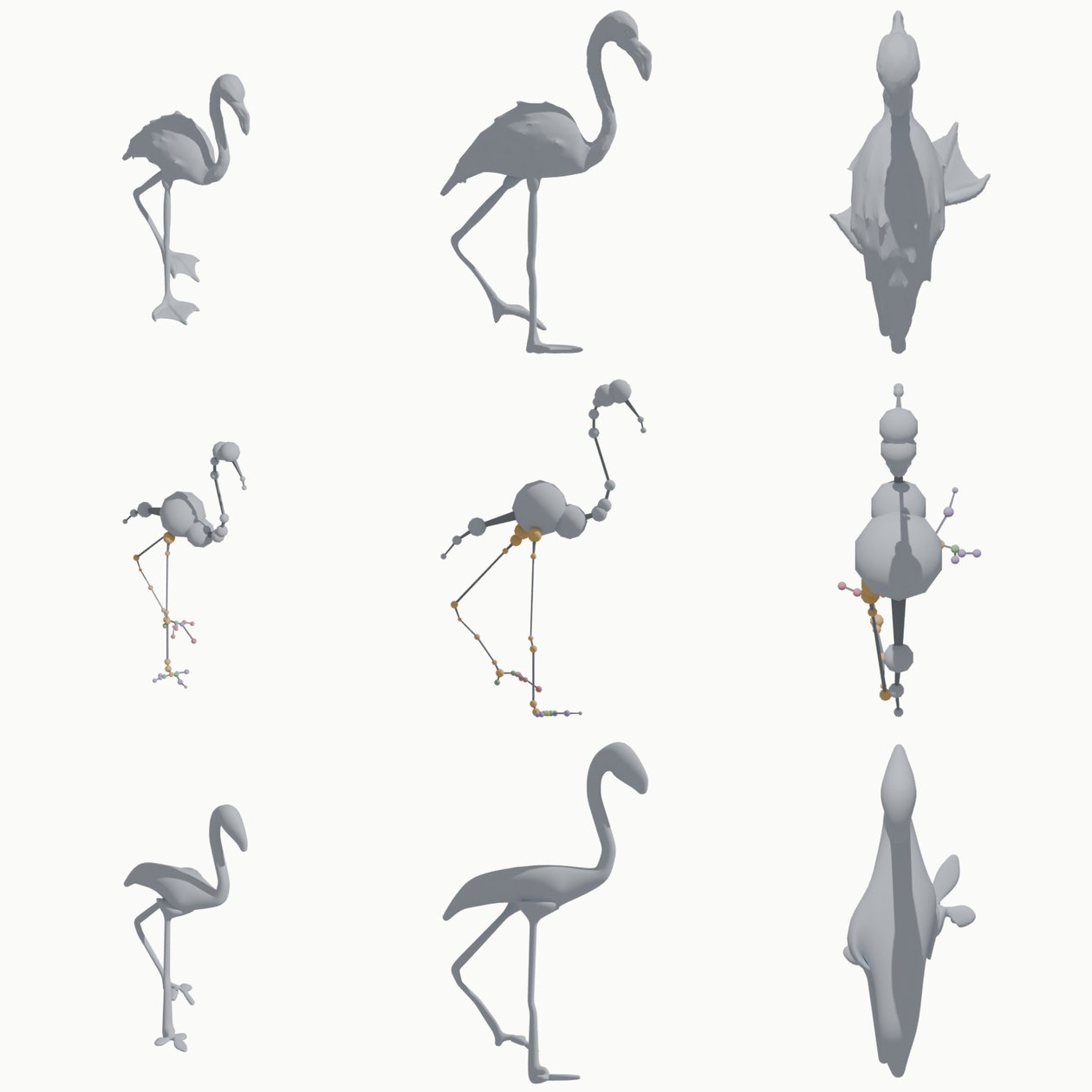
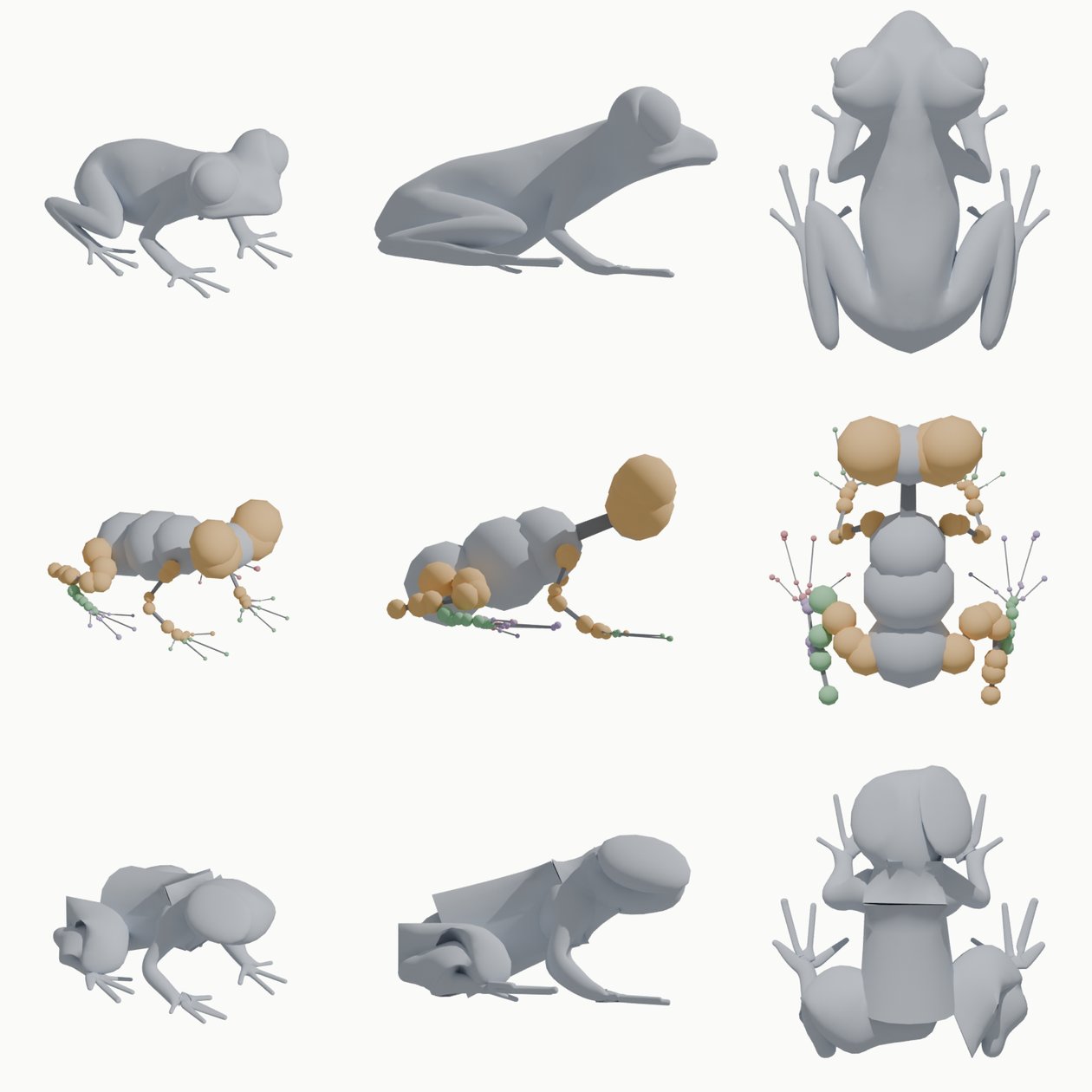
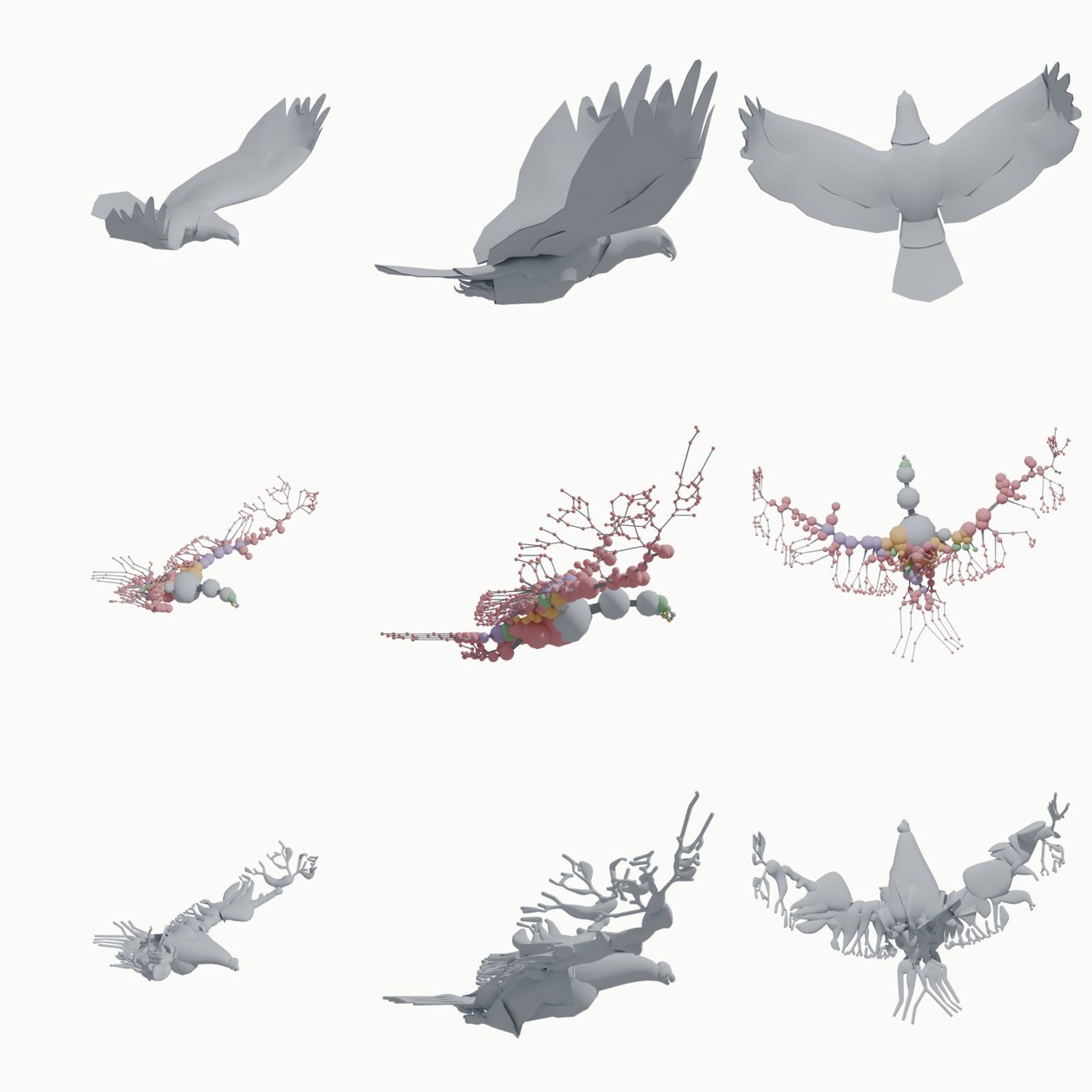
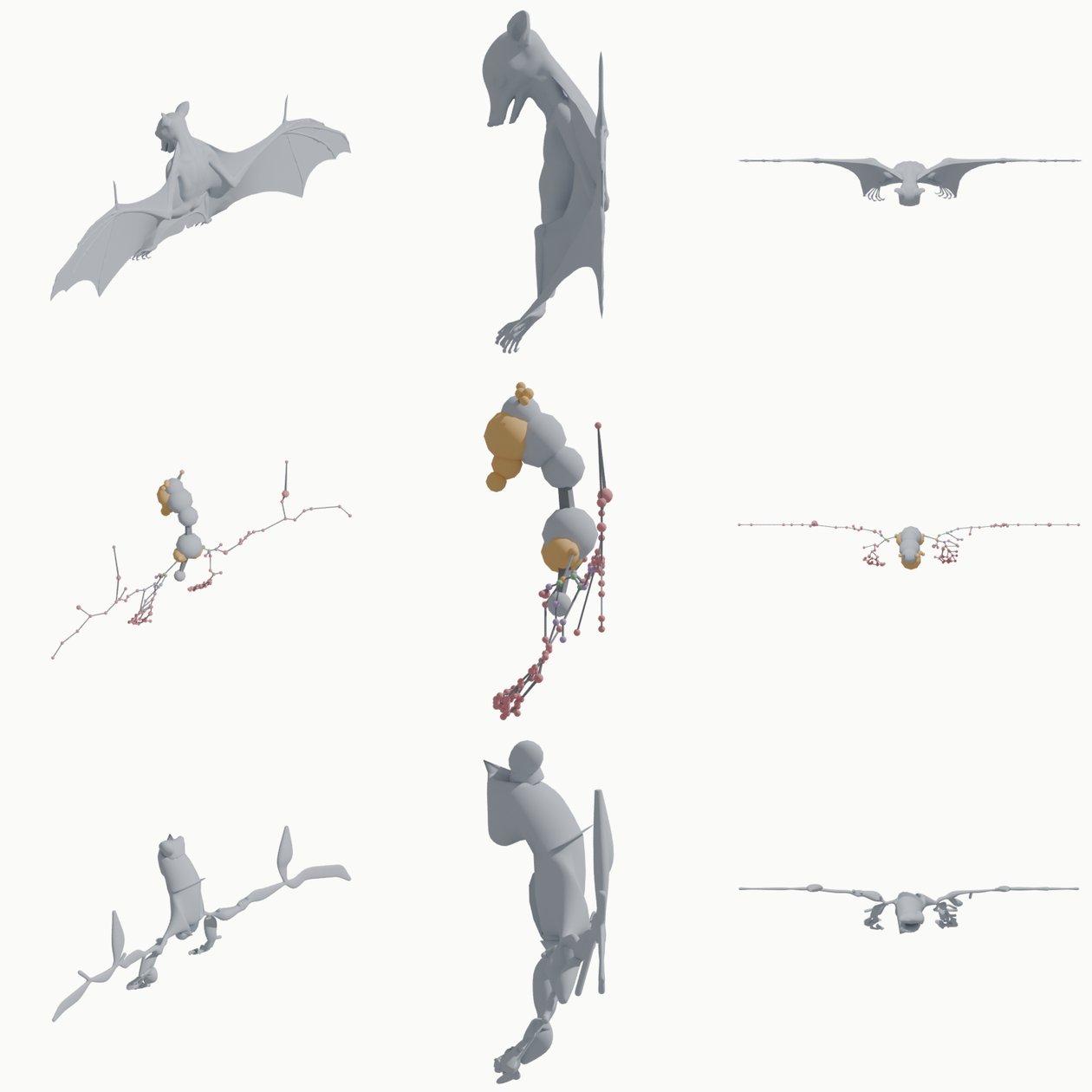
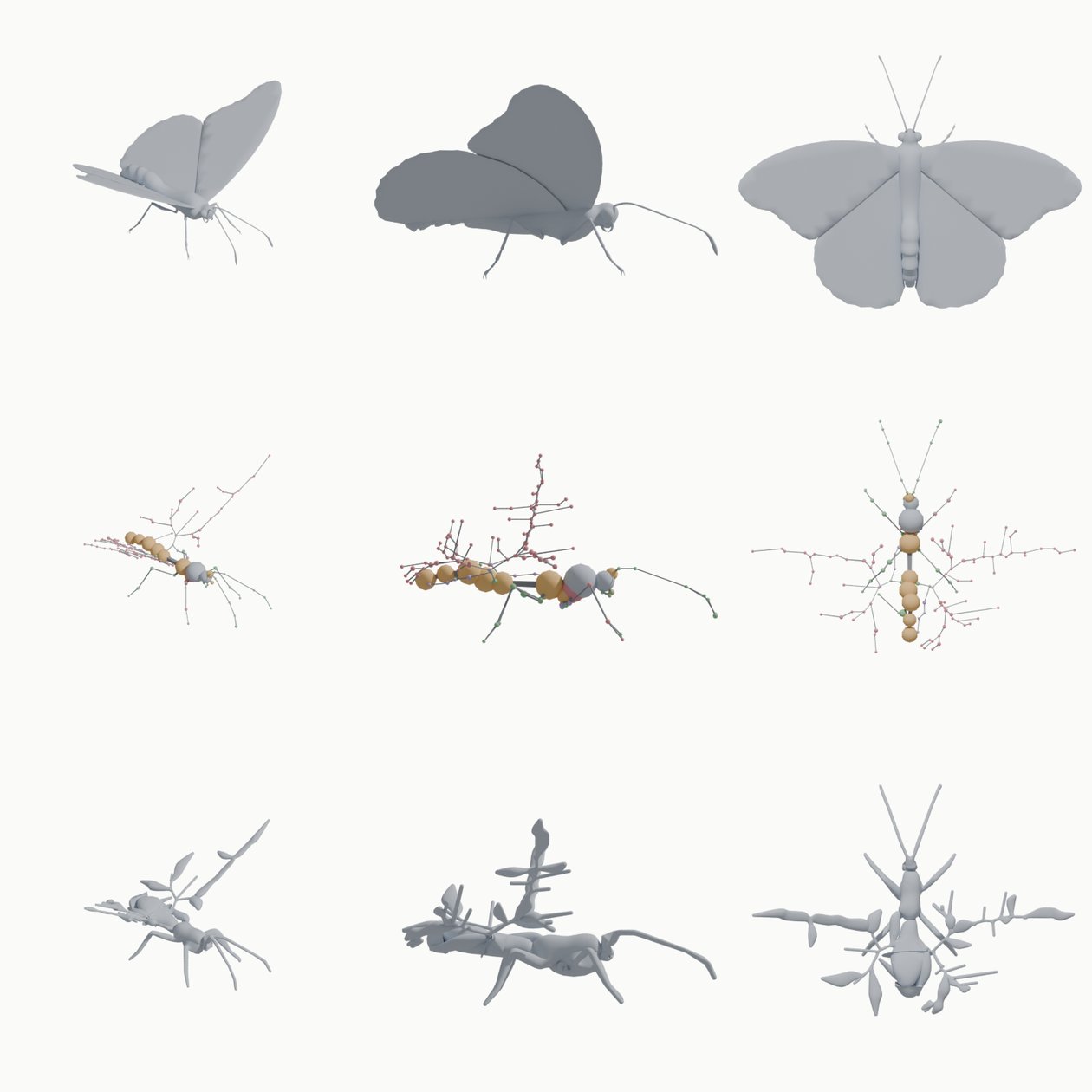
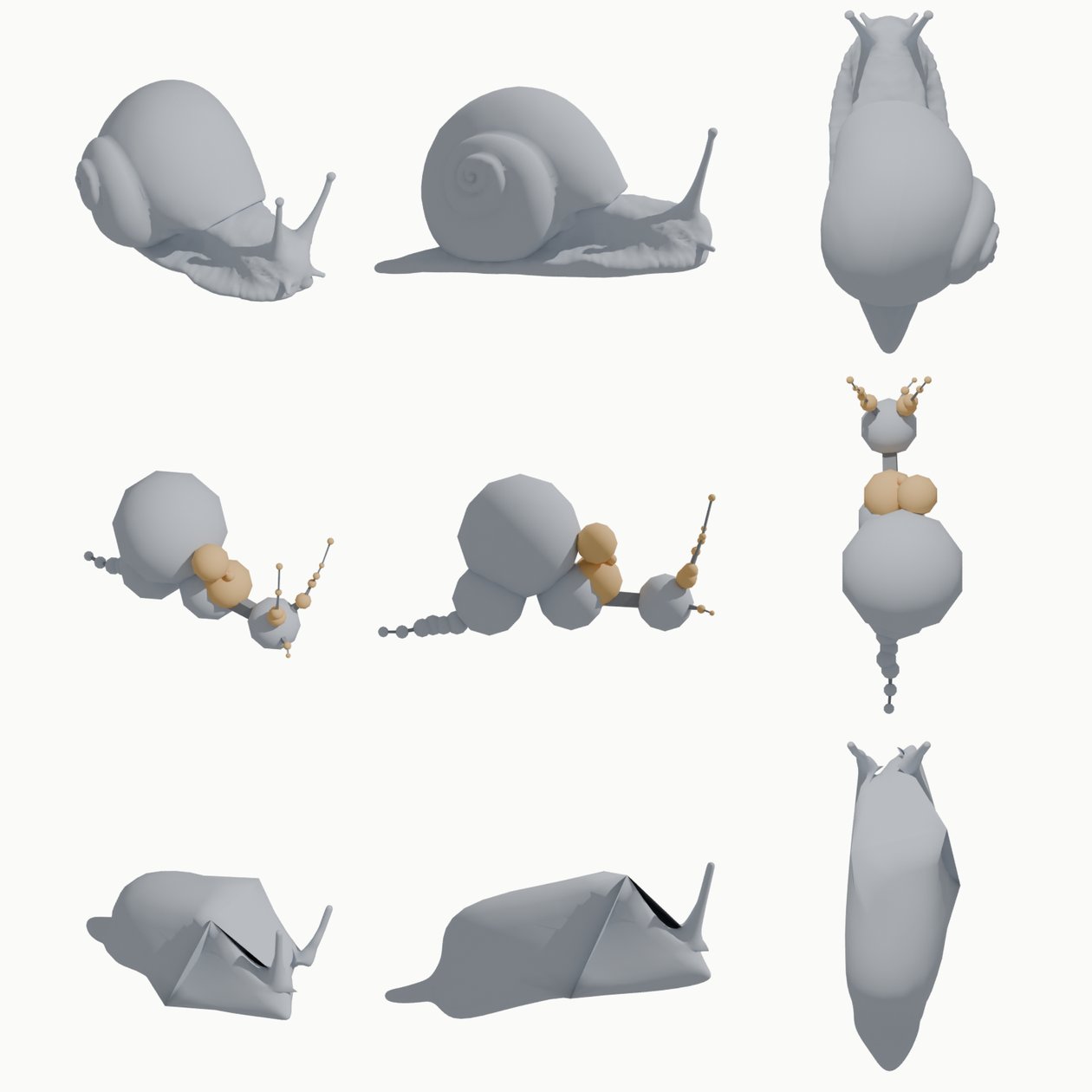
Tree version 2, the same settings for every animal: few points (forks, tips, and where the direction or thickness changes), two thicknesses per point (across and up-down, so flat bodies stay flat), and the body continues only into a clearly thicker branch, so pairs of legs are both branches. Each row: the true model, the tree (balls), the Skin modifier body. Click a row for the side and top views. The grouping below is my reading by eye; turn them in the viewer and judge for yourself.
recognisable17 of 37
Bodies with limbs, long bodies and arms: the tree finds every limb, foot and tail, and the Skin modifier makes a clean continuous body.
Each picture, left to right: true model, tree, Skin modifier body.
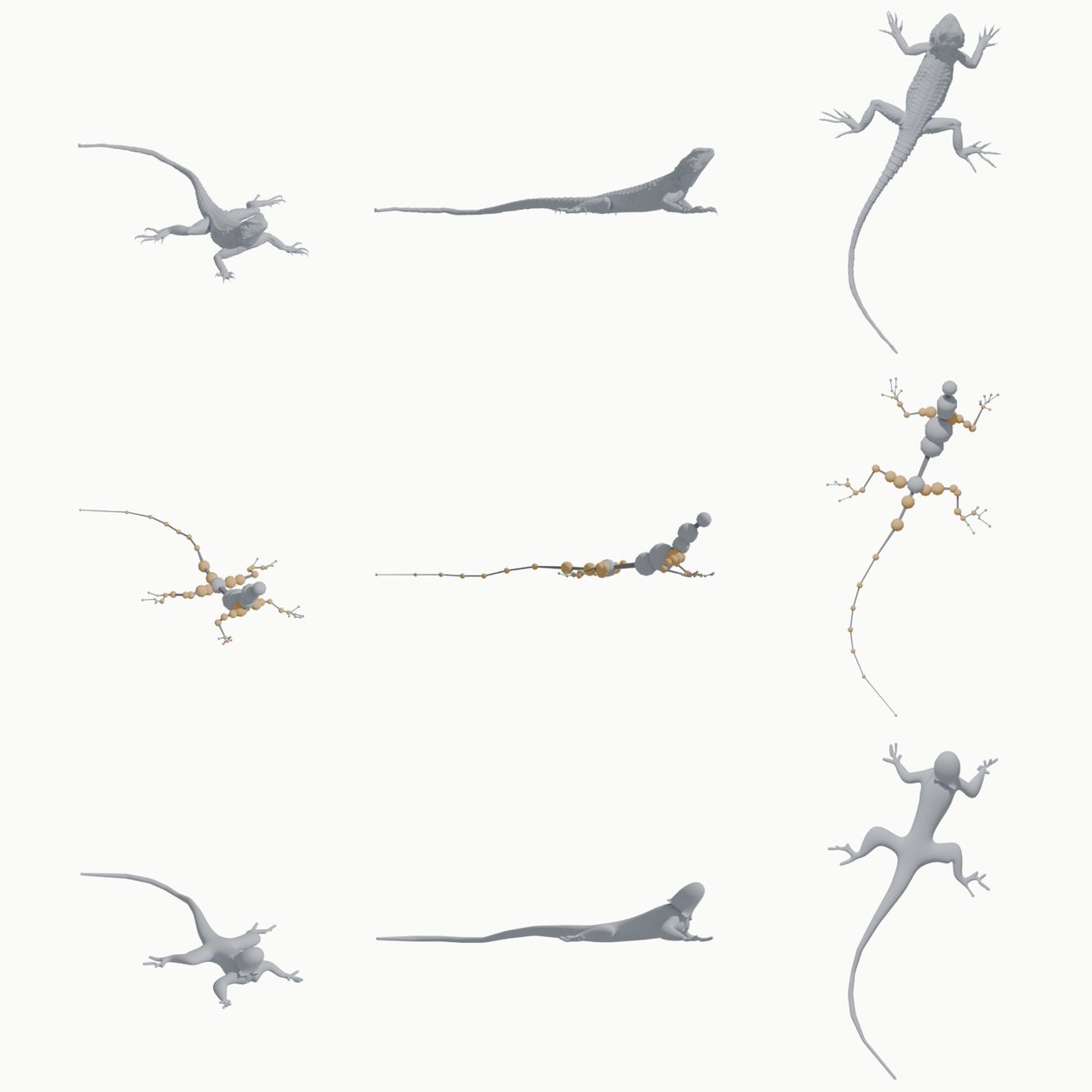
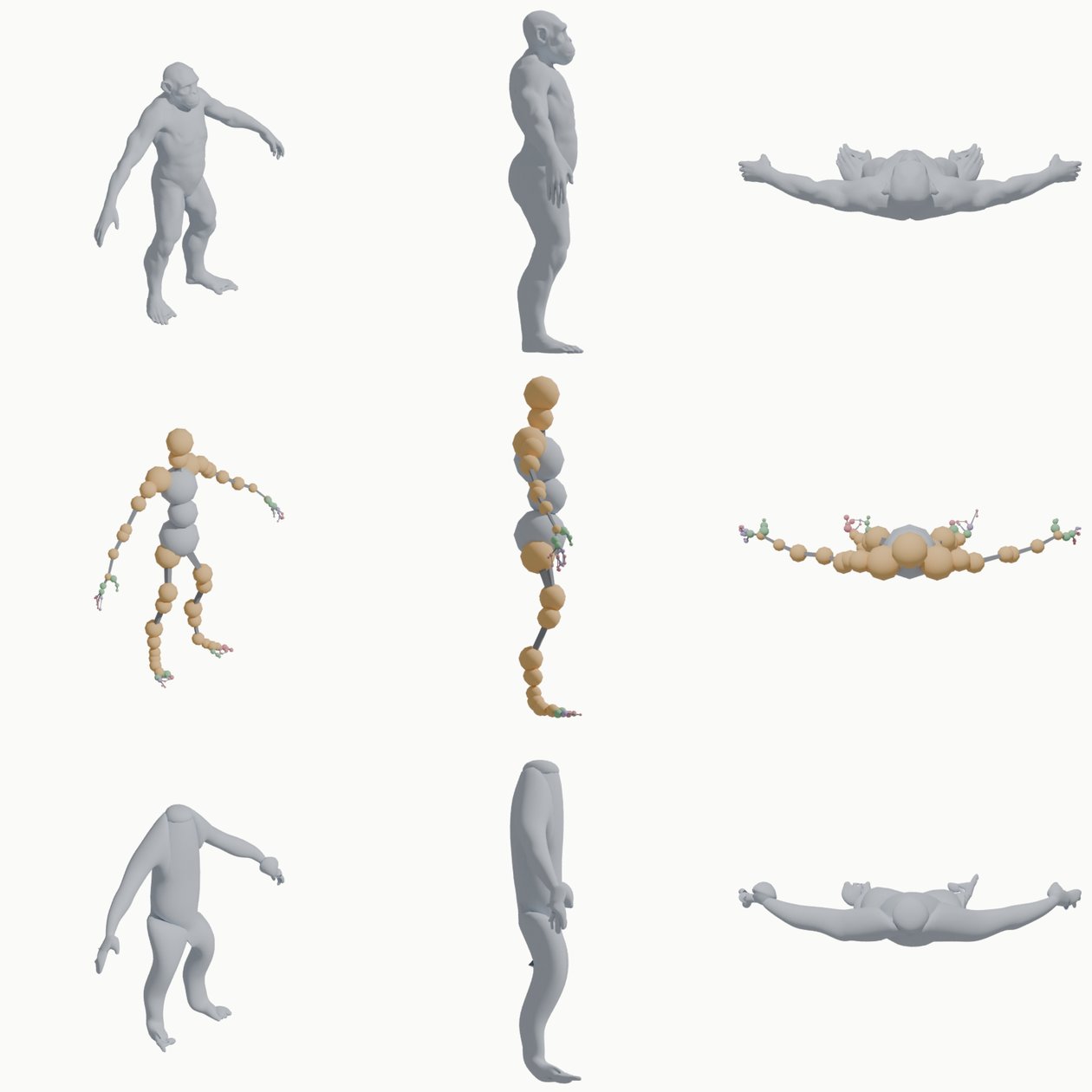
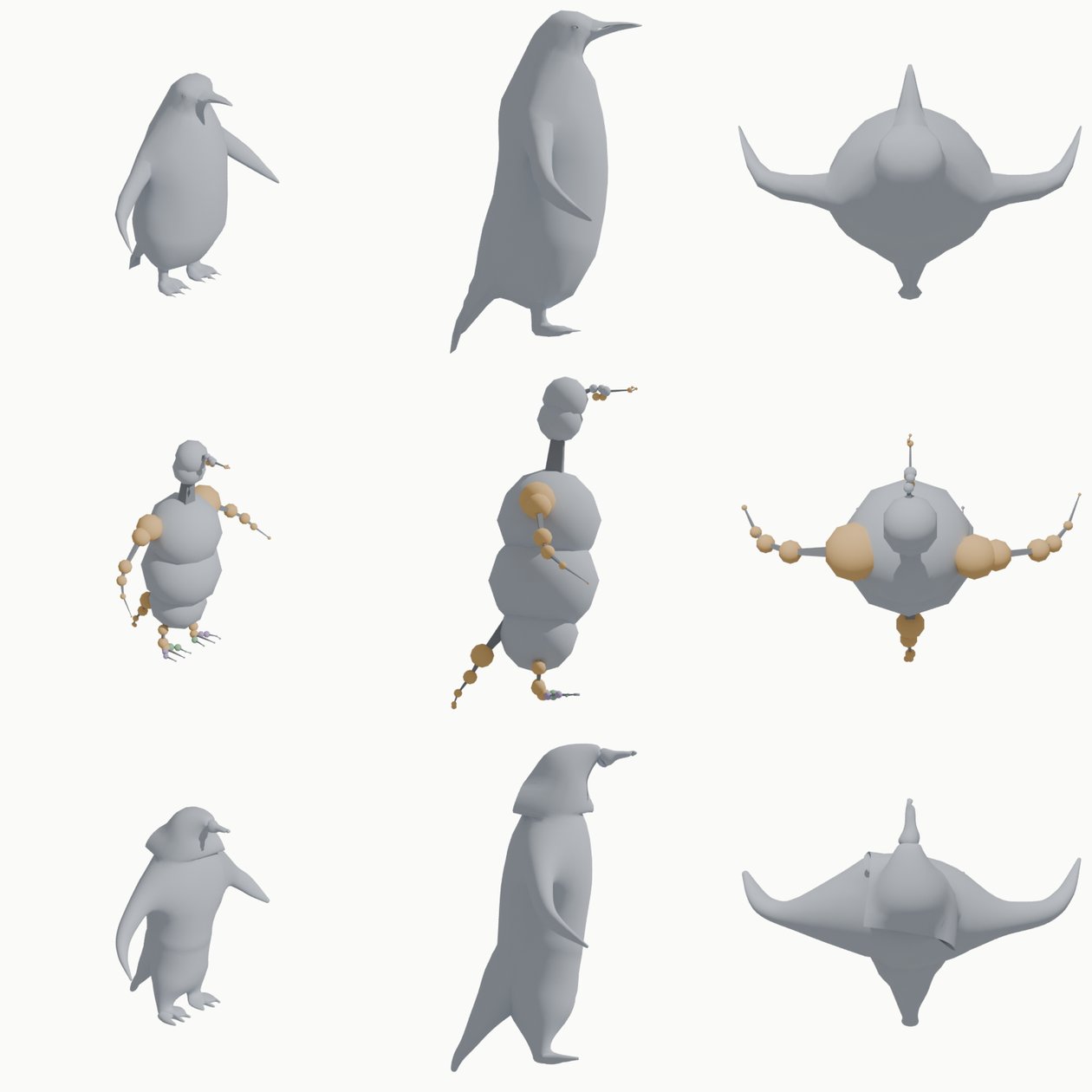
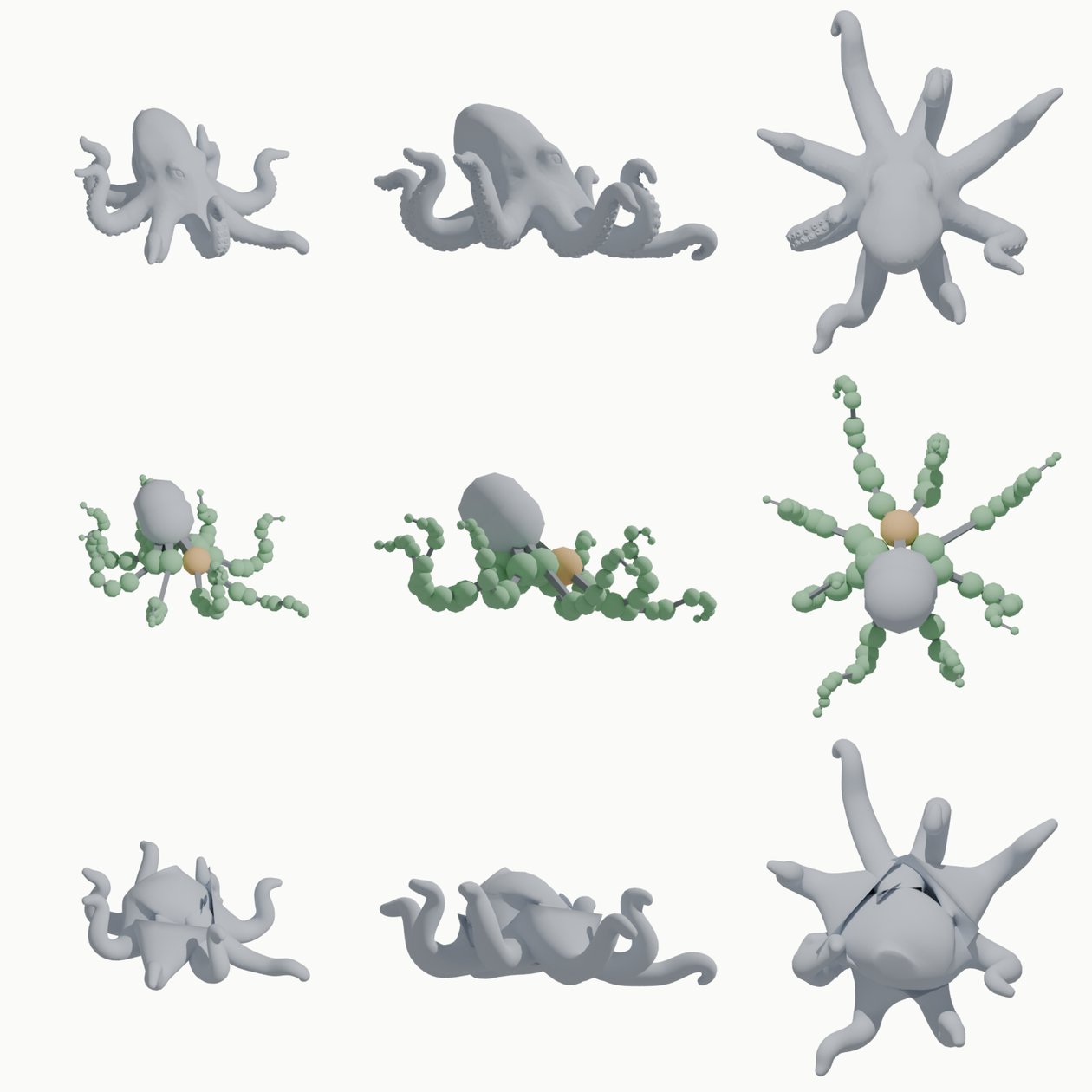
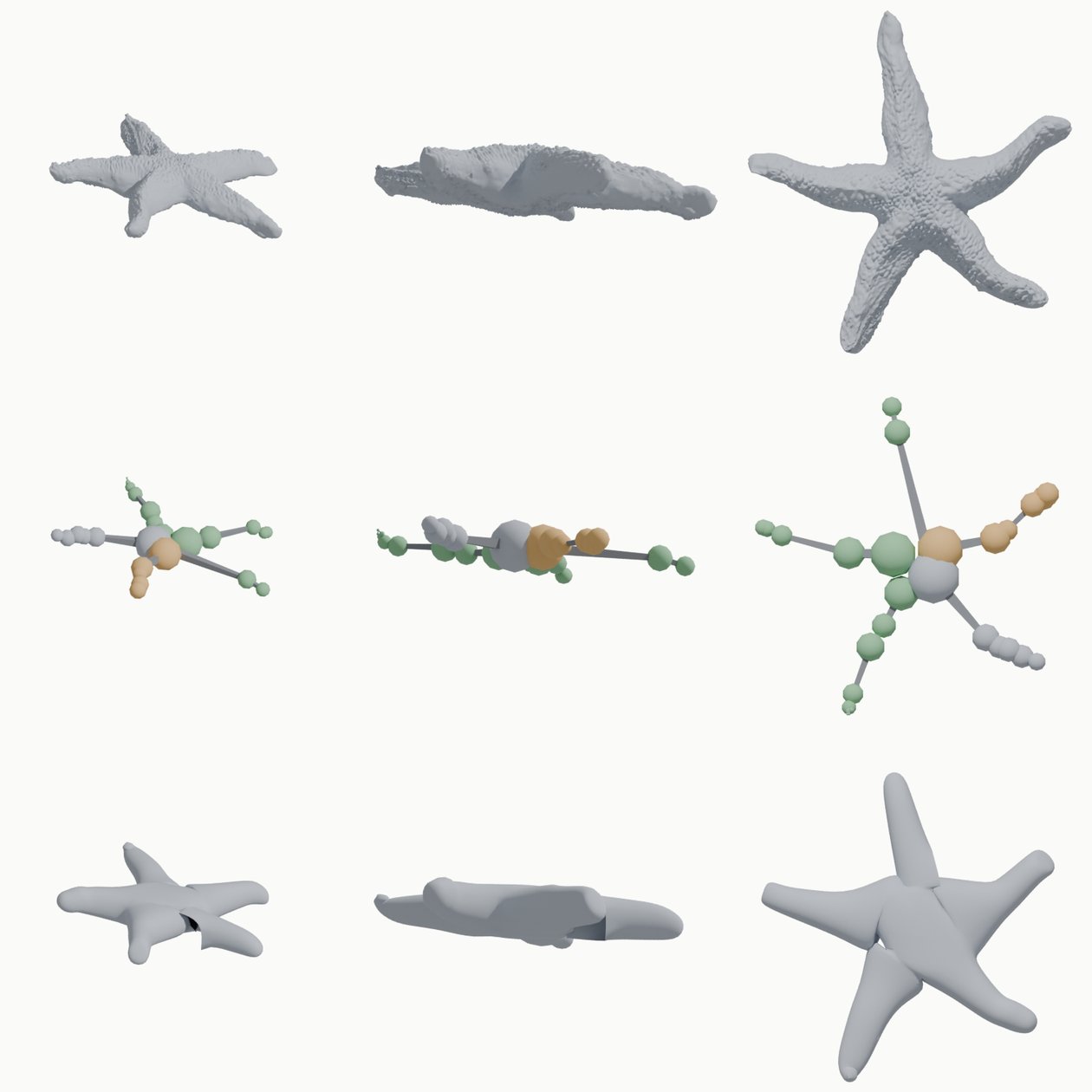
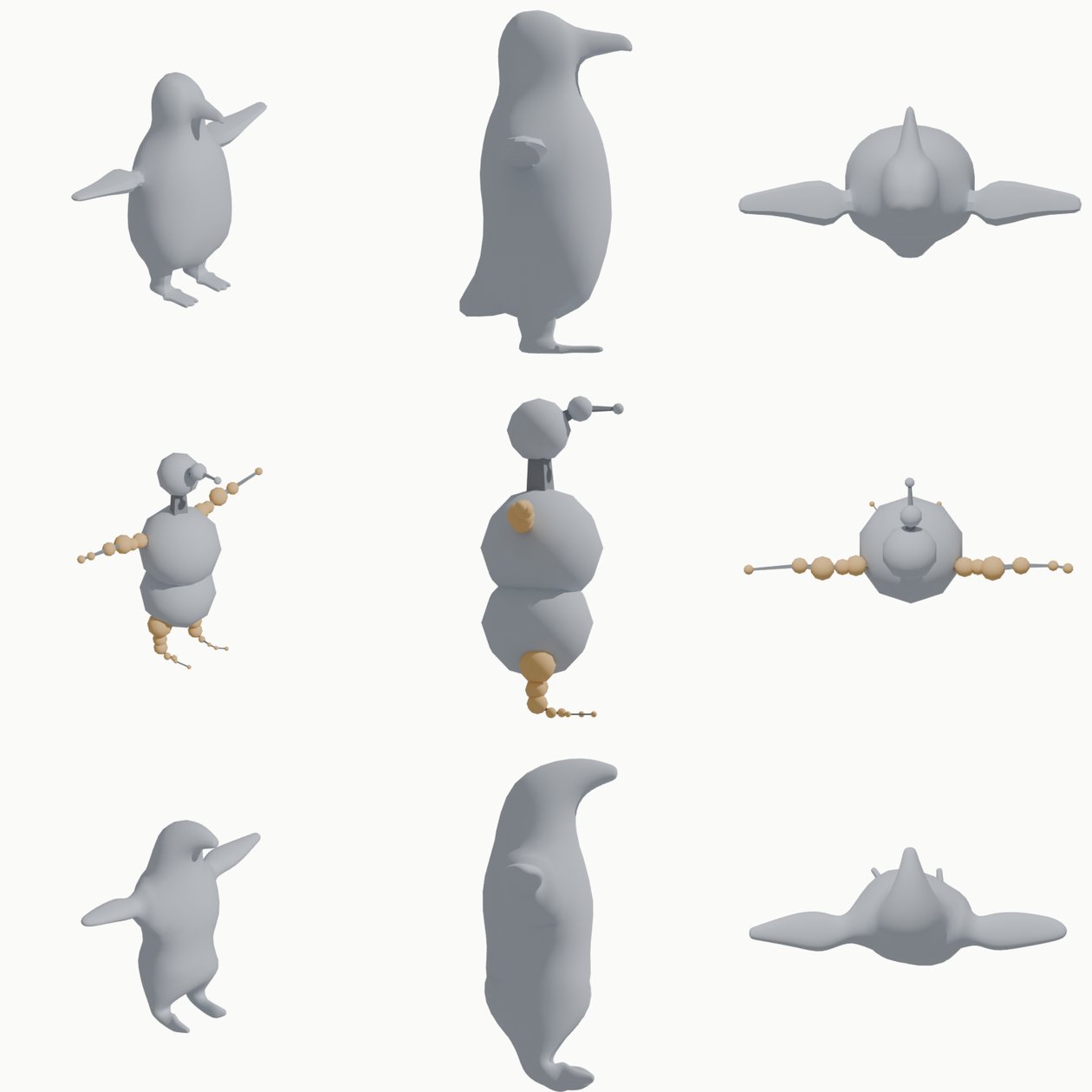
nearly7 of 37
The parts are there, but a flat box-like slab is left where many branches meet on a thick body (the Skin modifier's known weak spot), or thin legs come out lumpy.
Each picture, left to right: true model, tree, Skin modifier body.
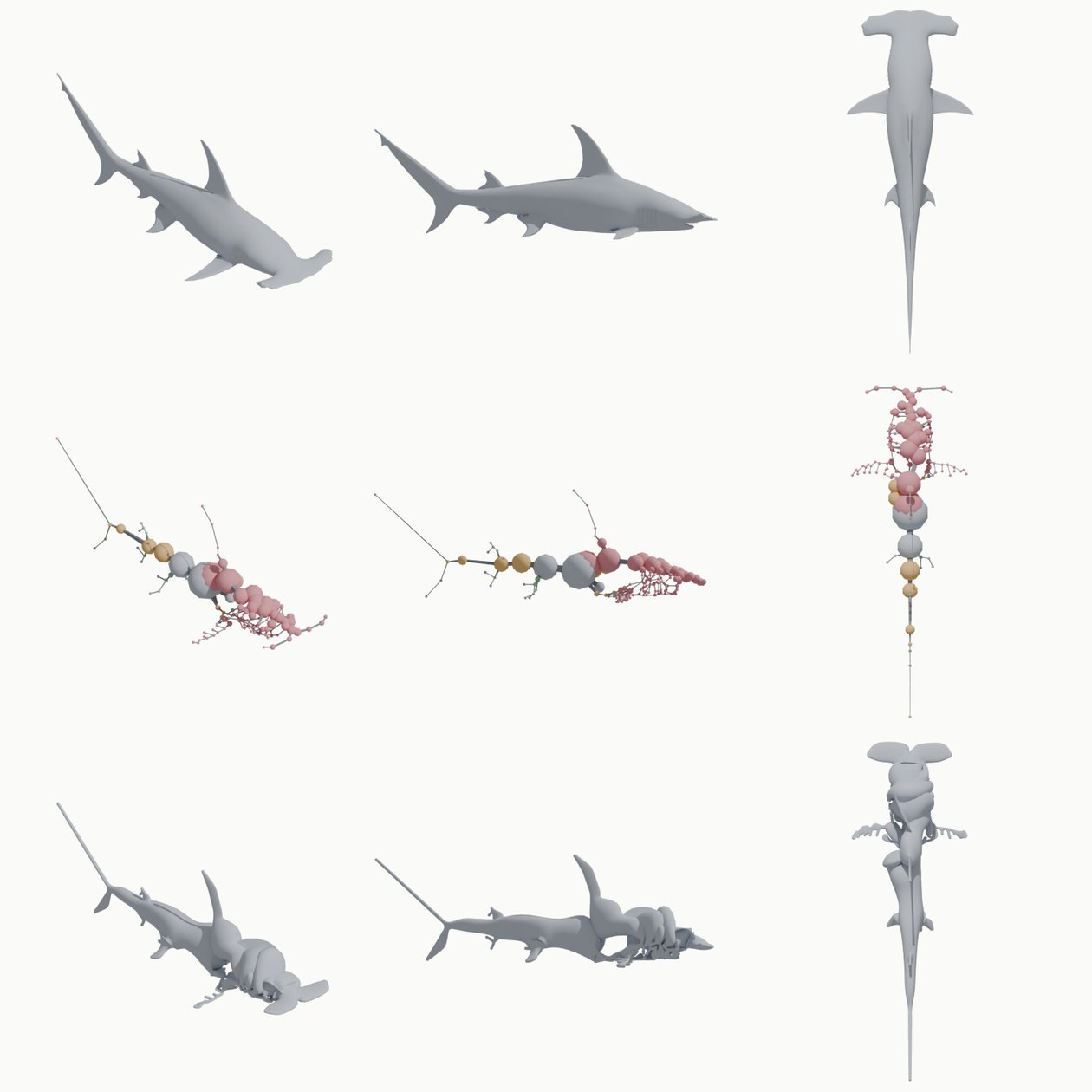
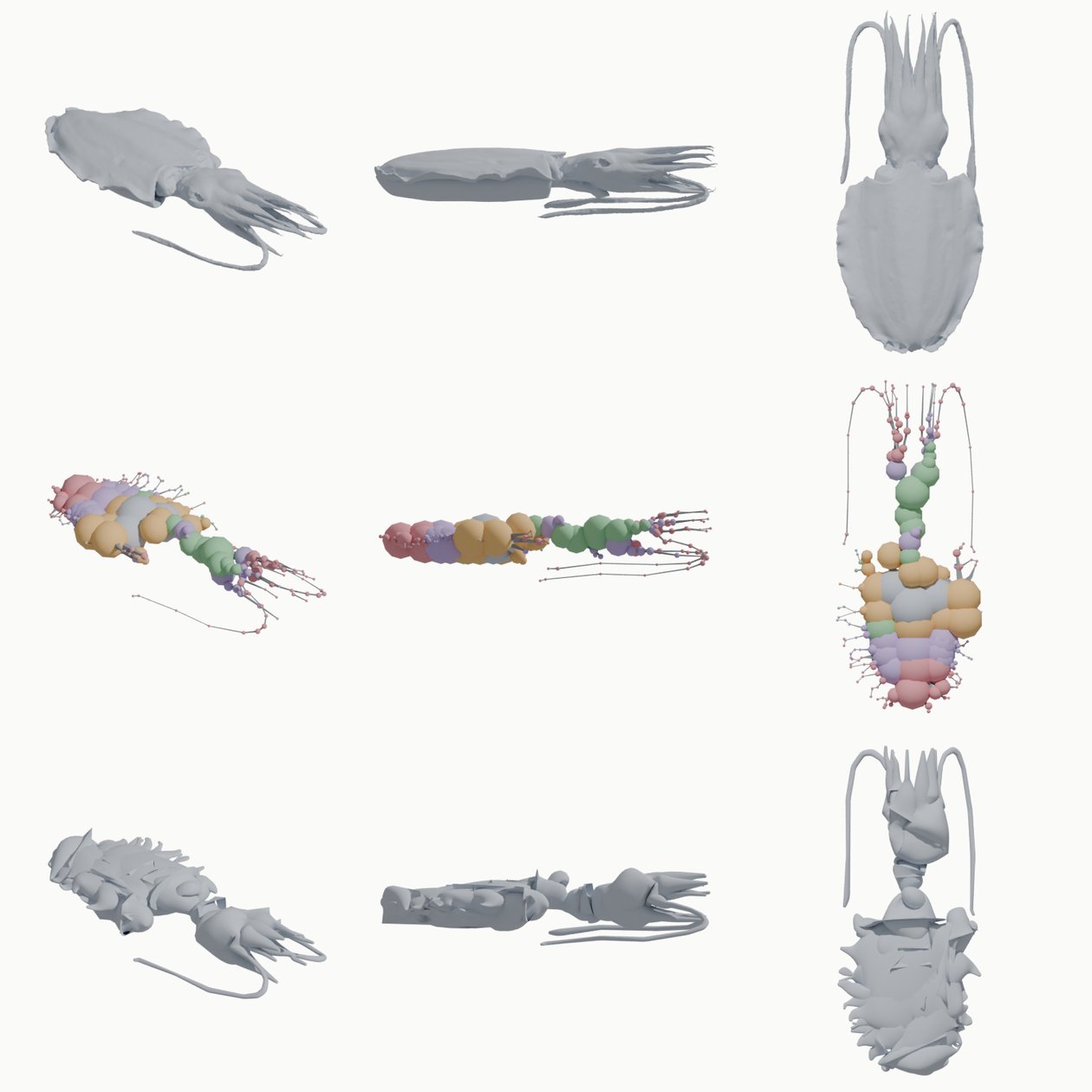
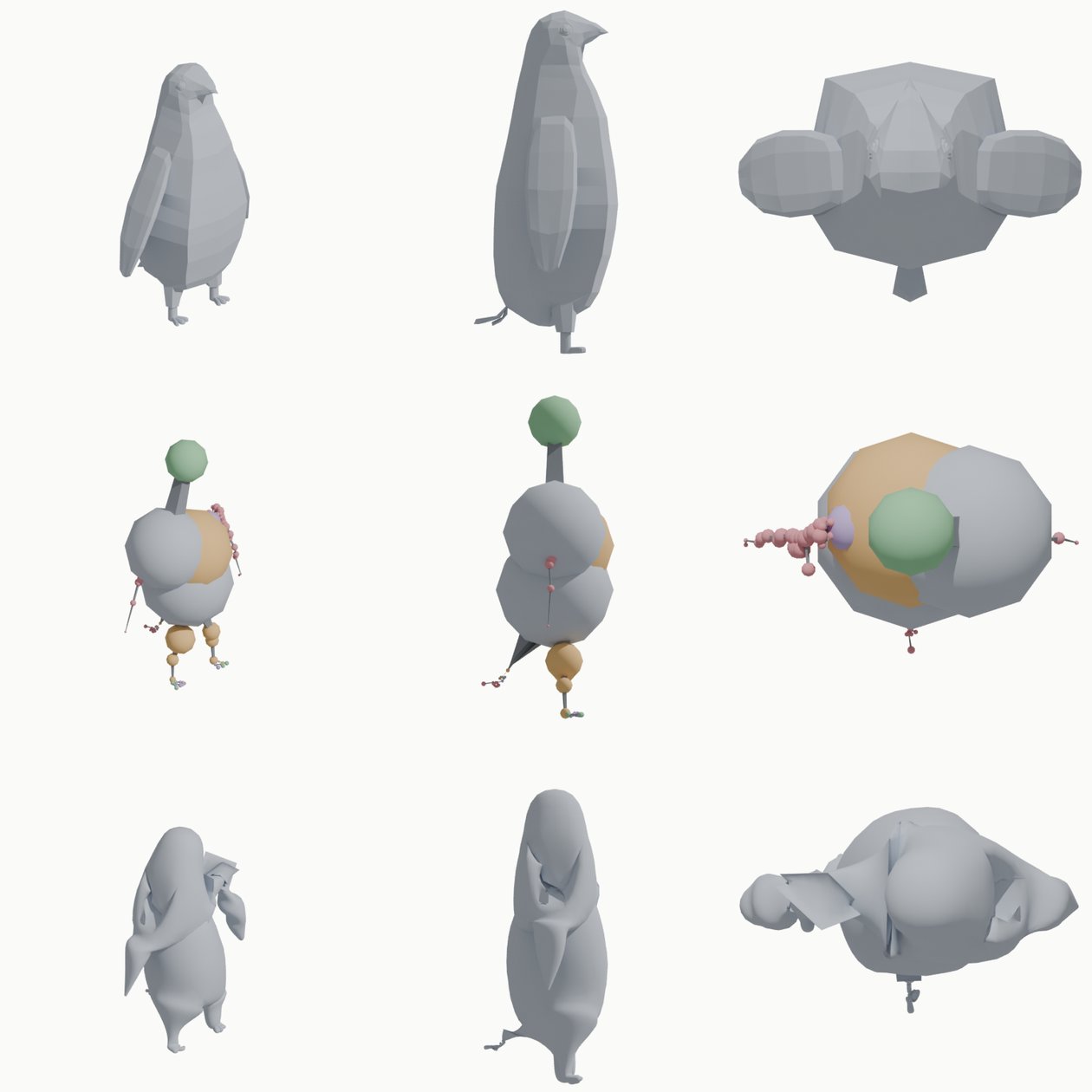
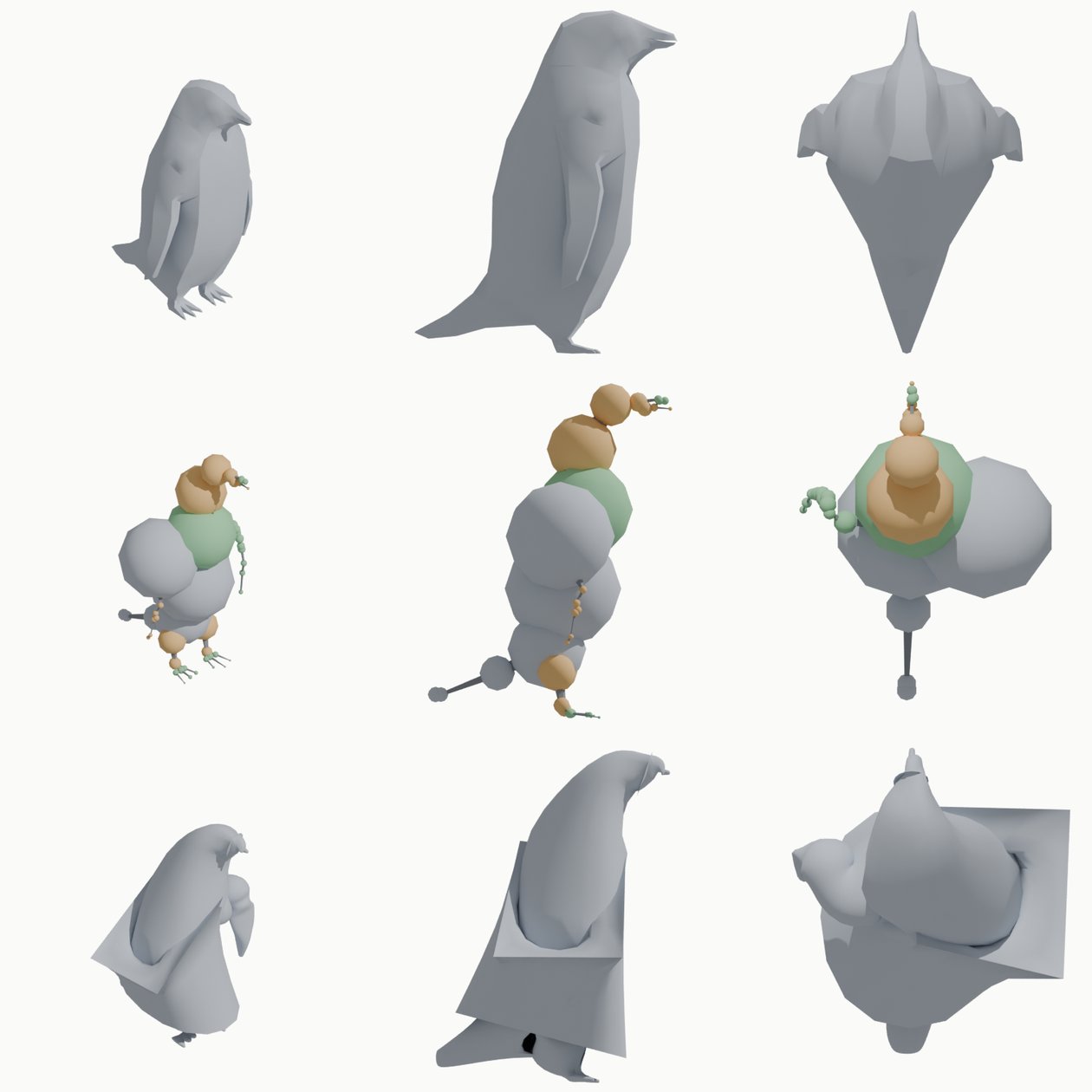
not yet13 of 37
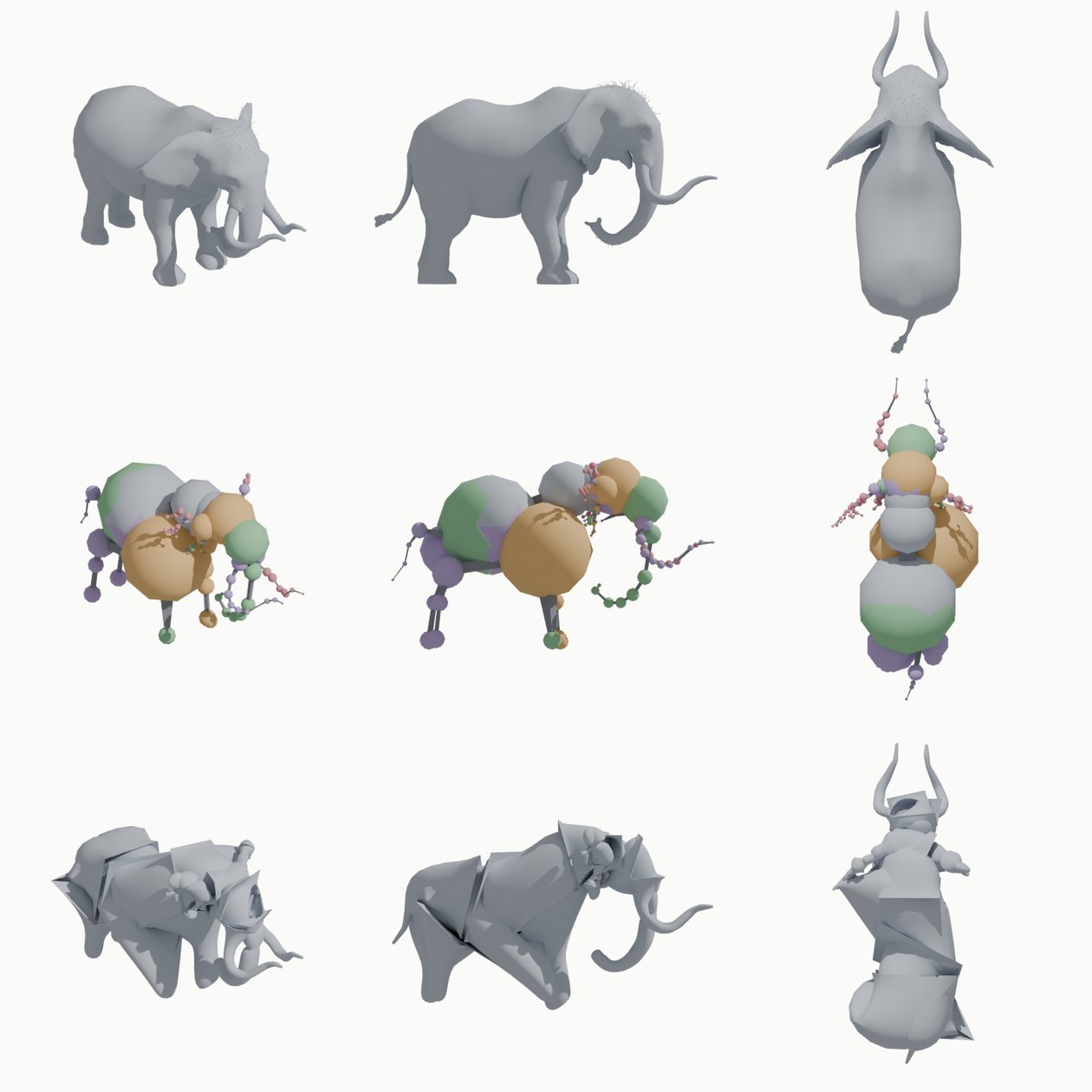
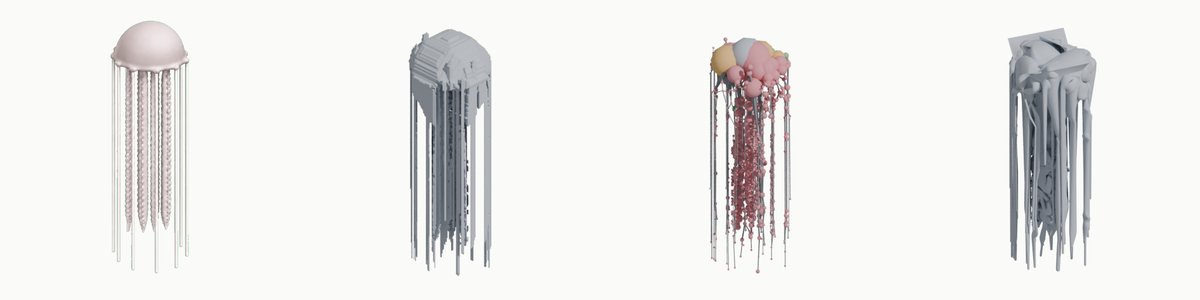
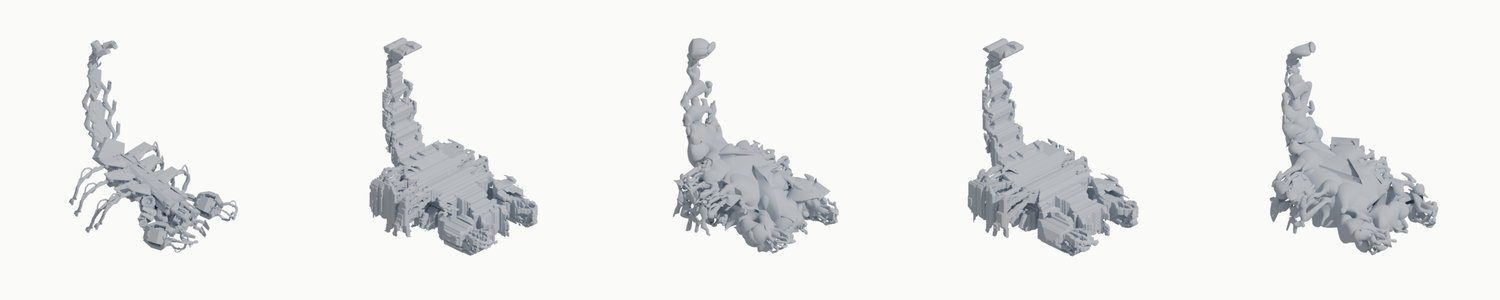
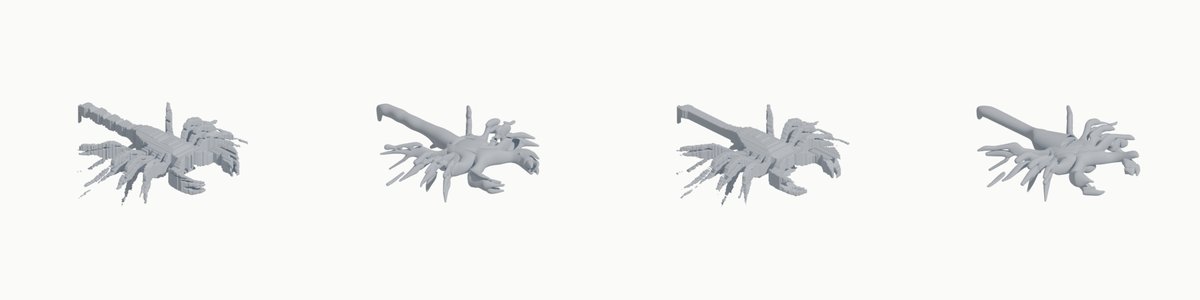
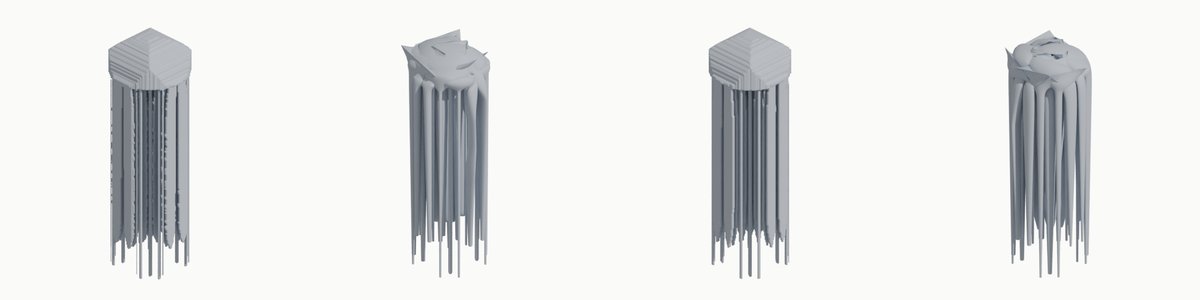
Seven have flat wings, fins or flippers (a tree of round balls cannot hold a thin plate: that is the sheet tool's job); the snail's shell and the jellyfish's bell are hollows; the two anglerfish keep every tooth as a branch; the scorpion is many hard plates; the elephant's thick body leaves slabs.
Each picture, left to right: true model, tree, Skin modifier body.
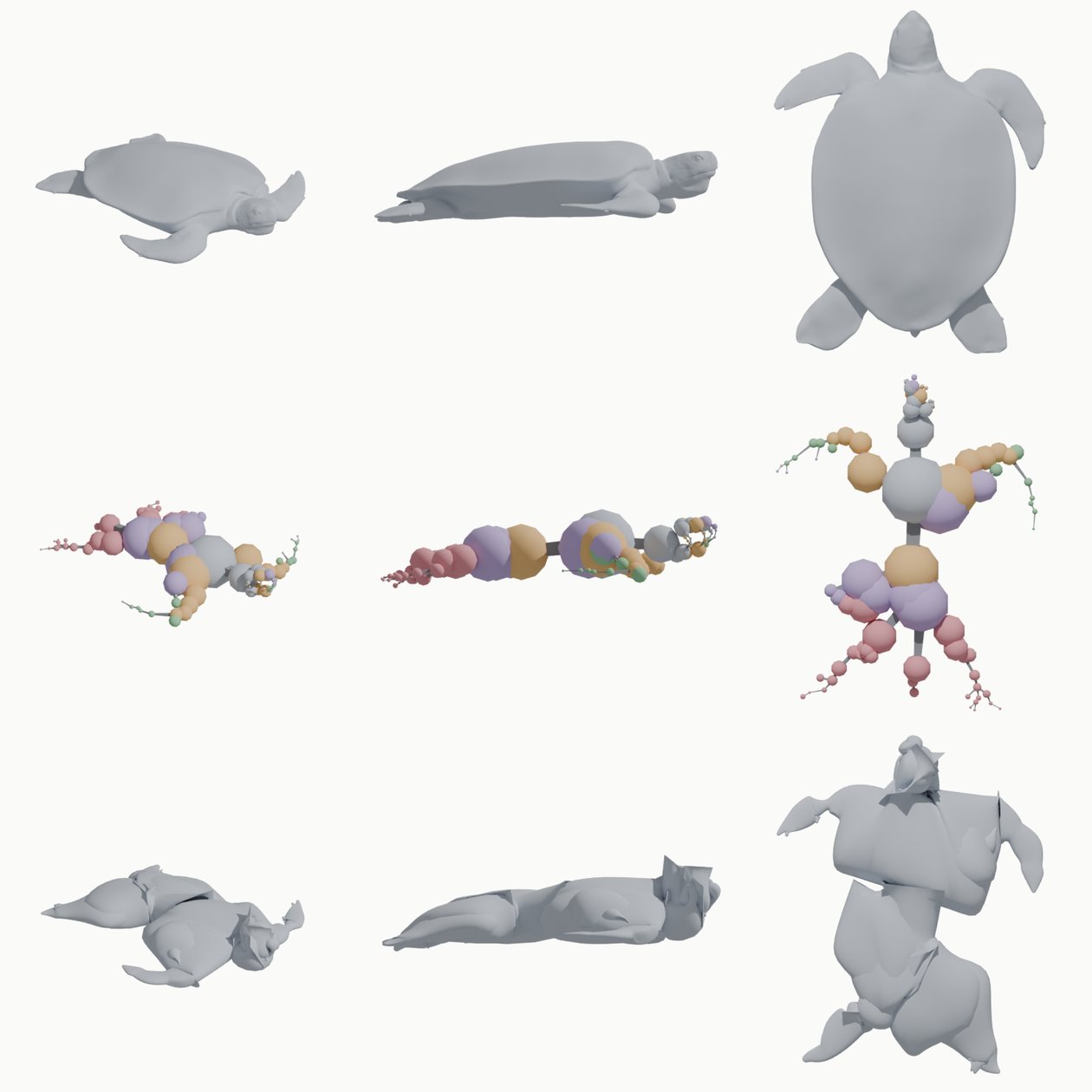
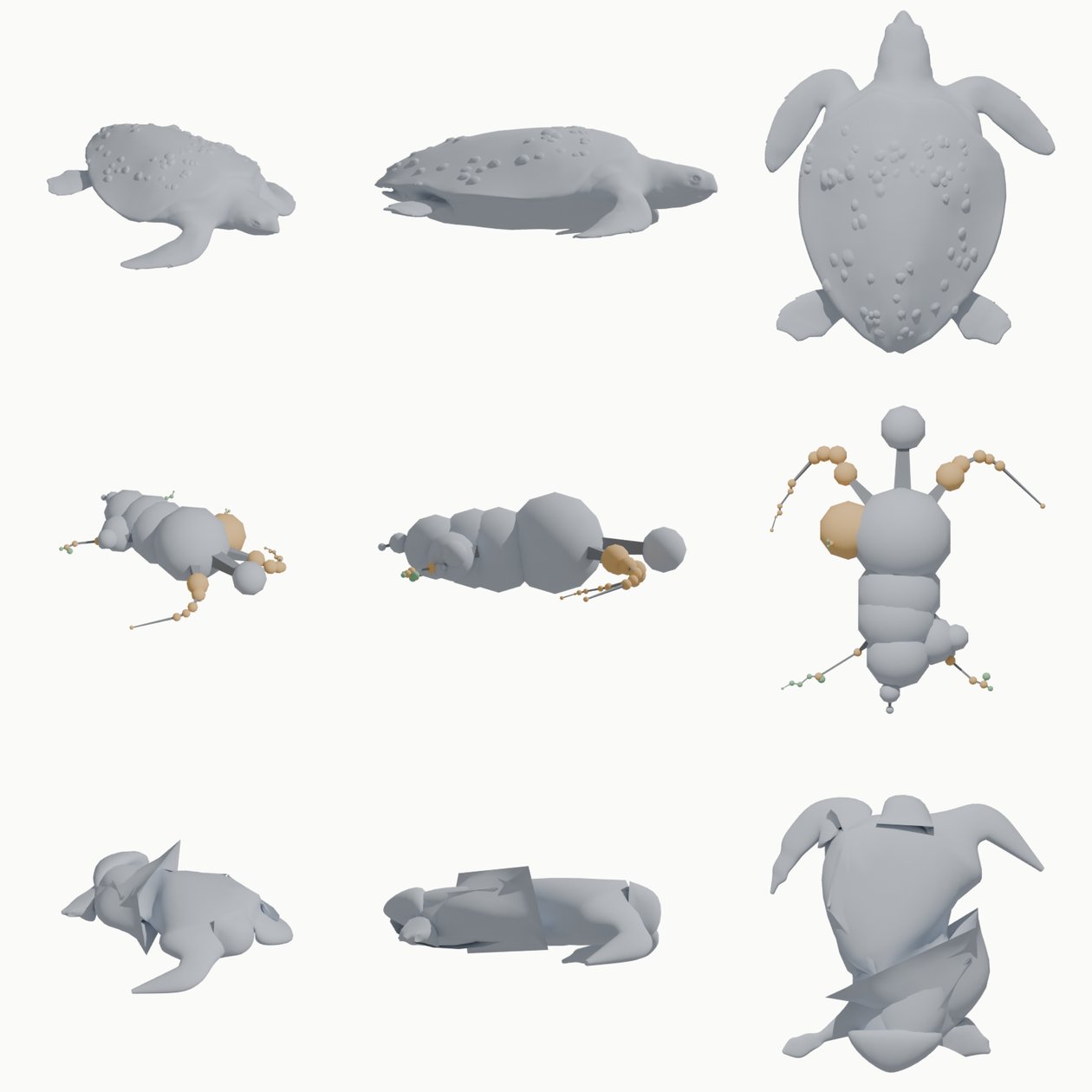
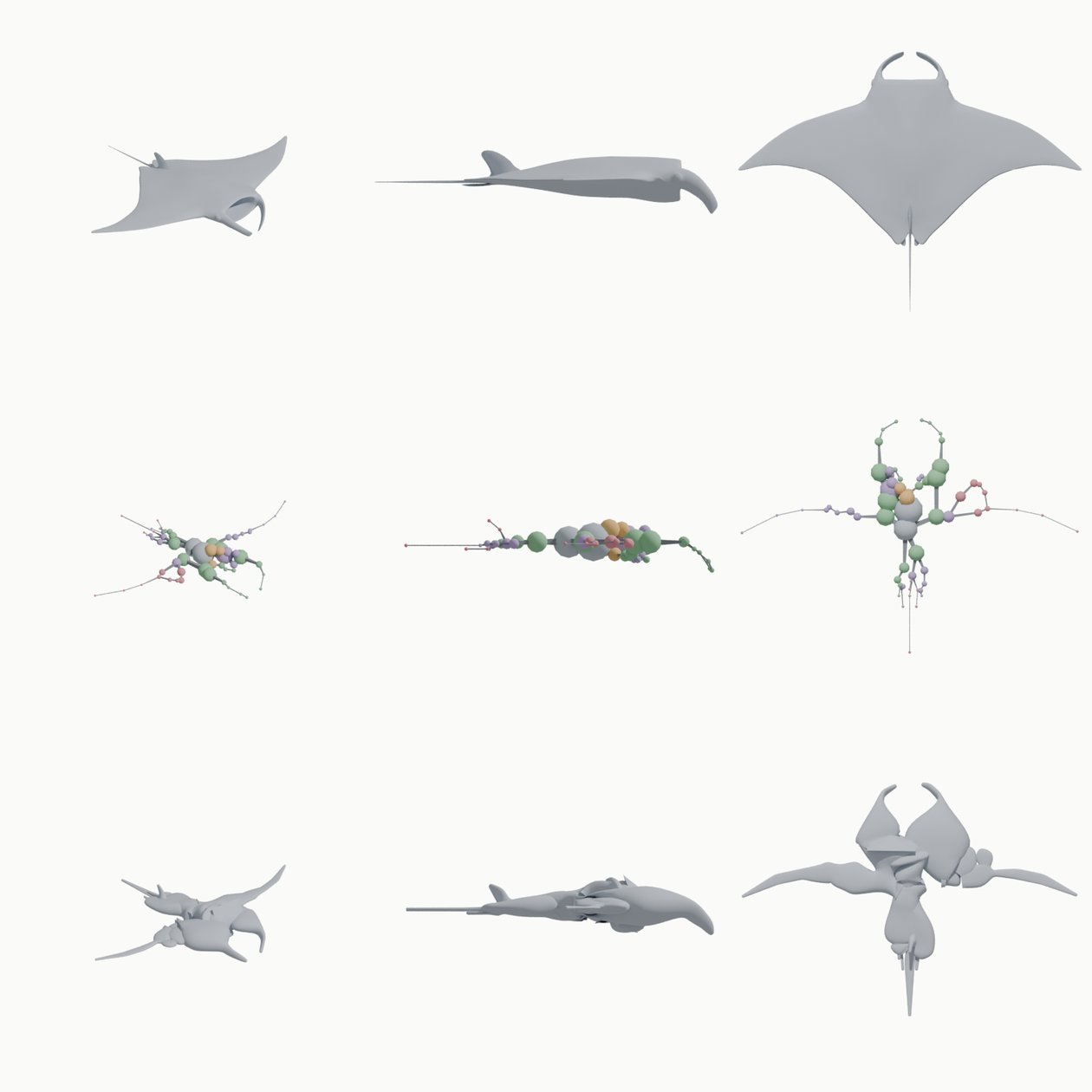
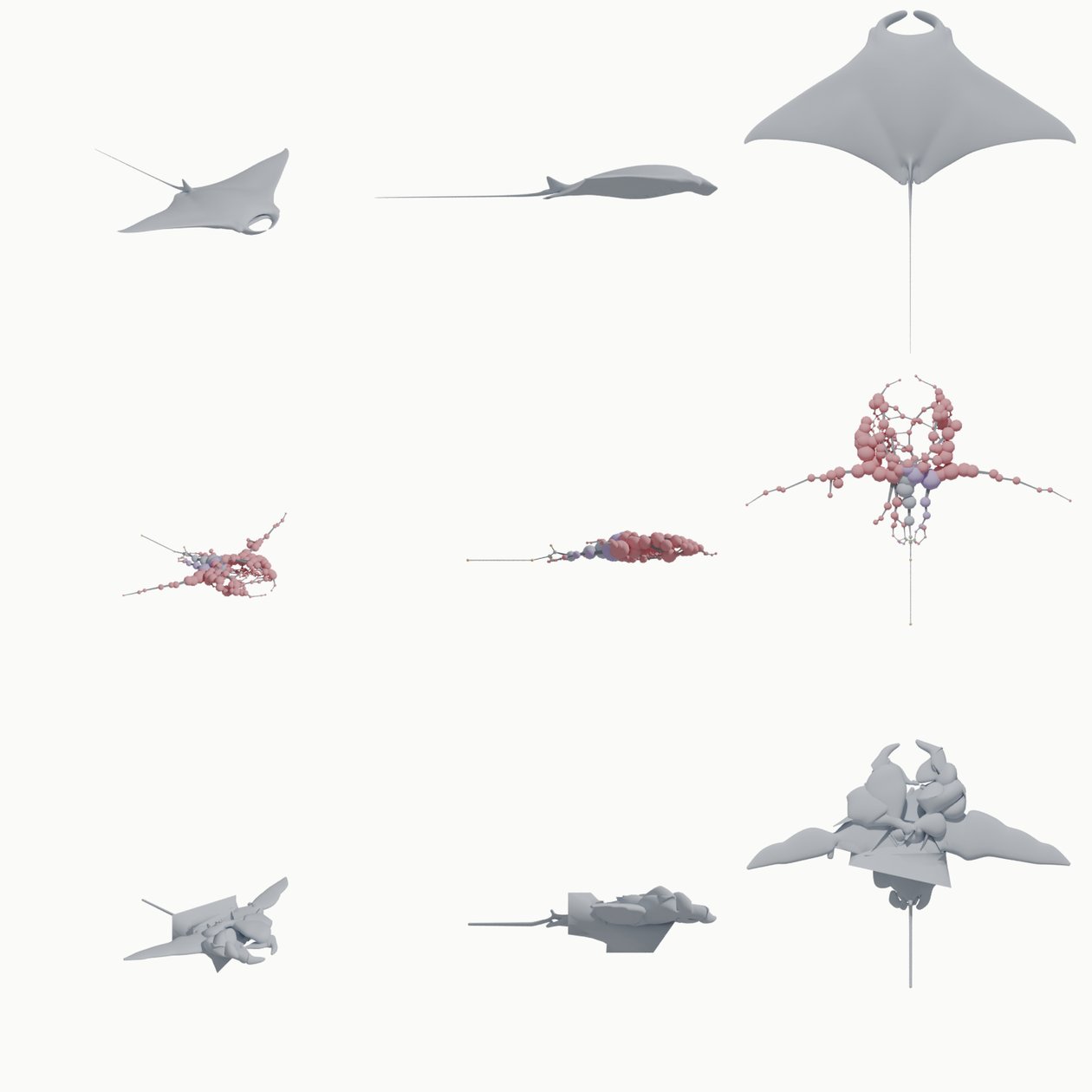
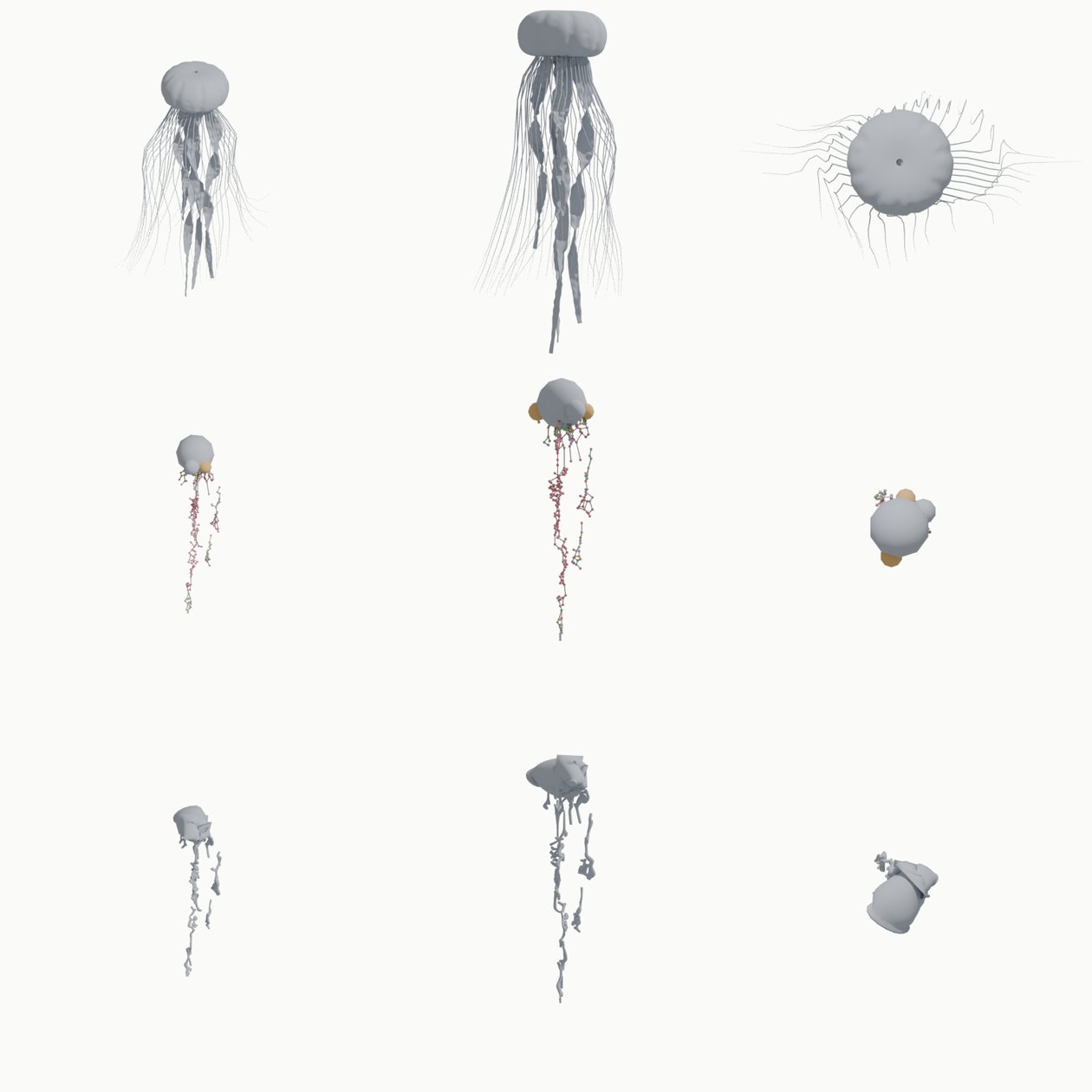
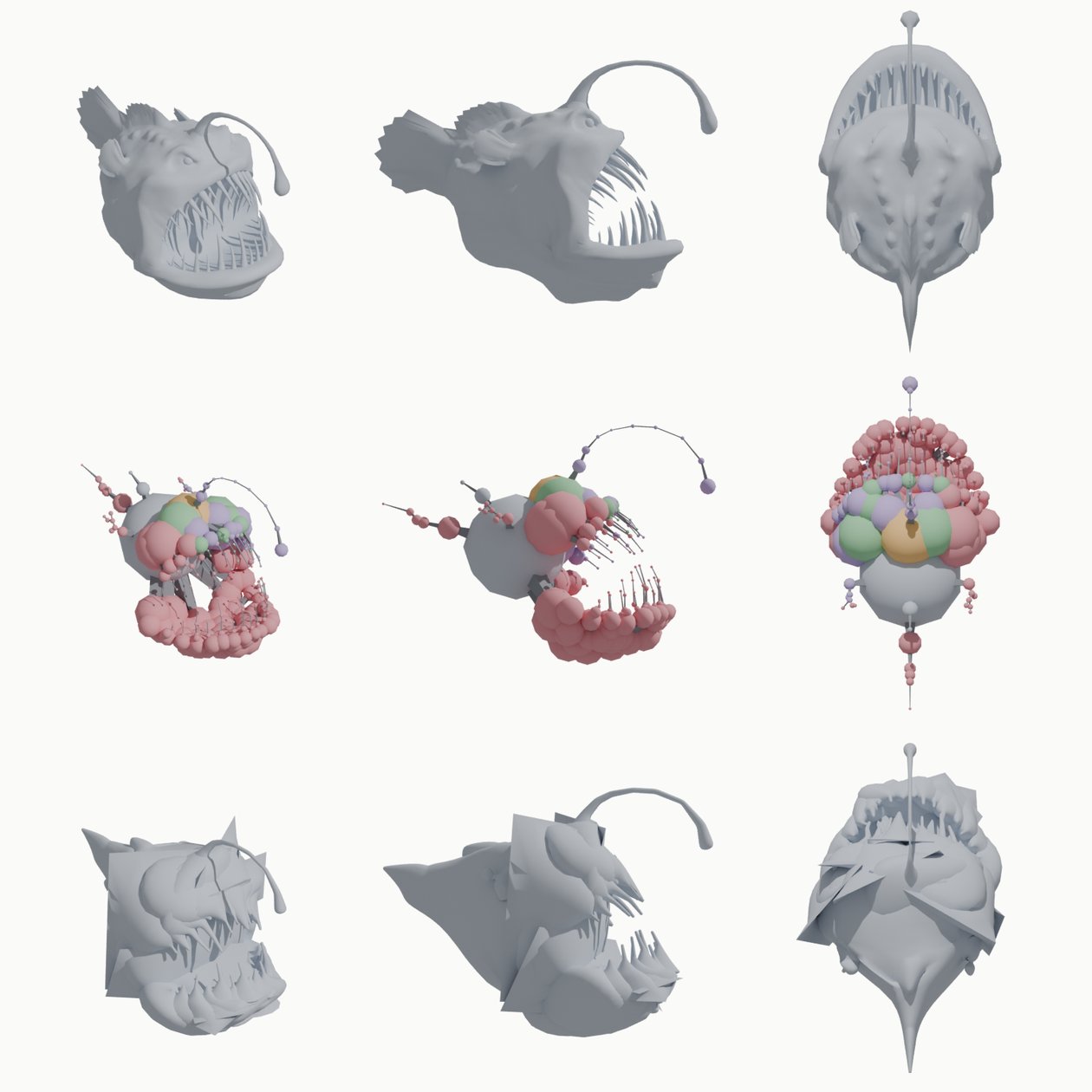
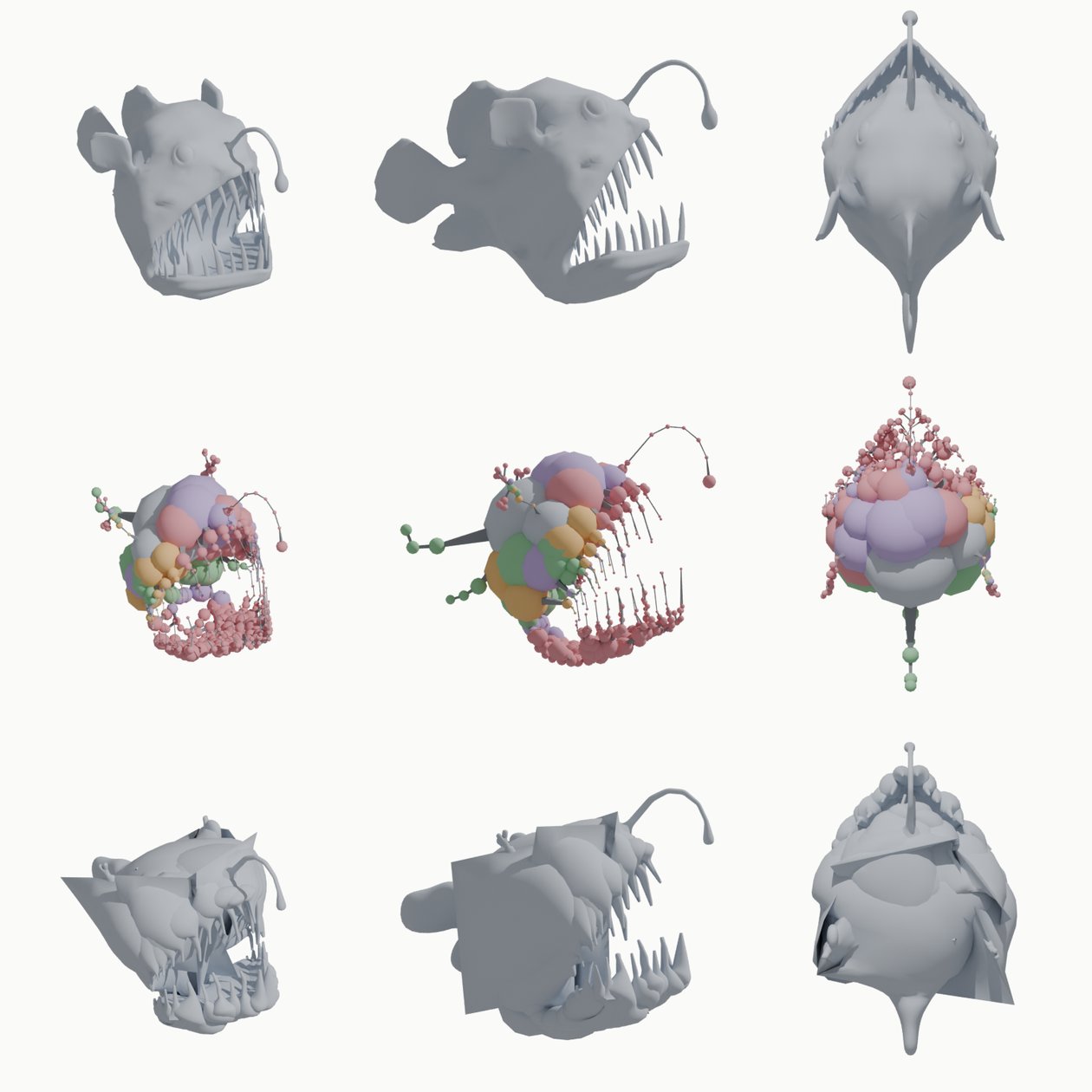
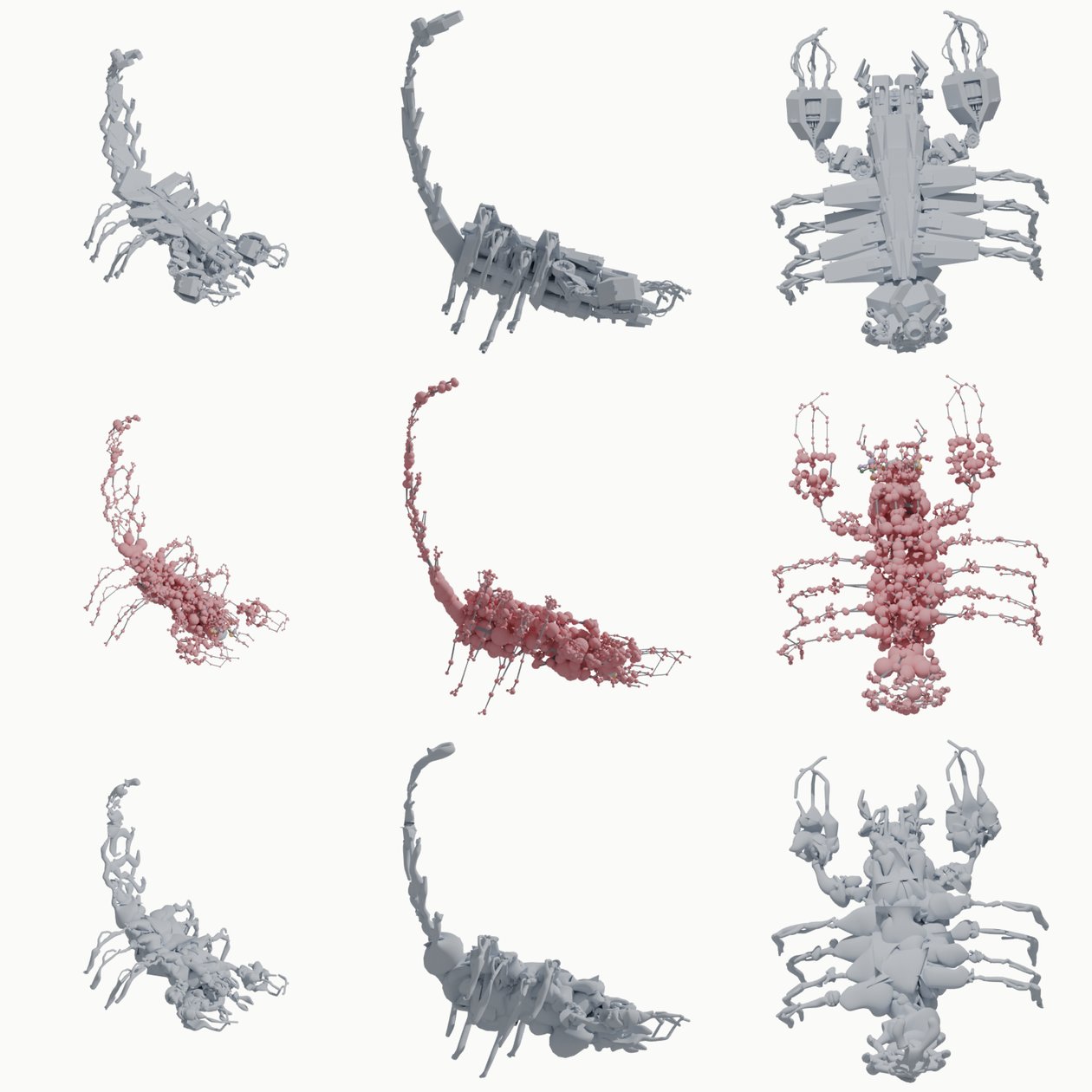
3. Does the tree find every limb and toe? Made-up creatures with known trees
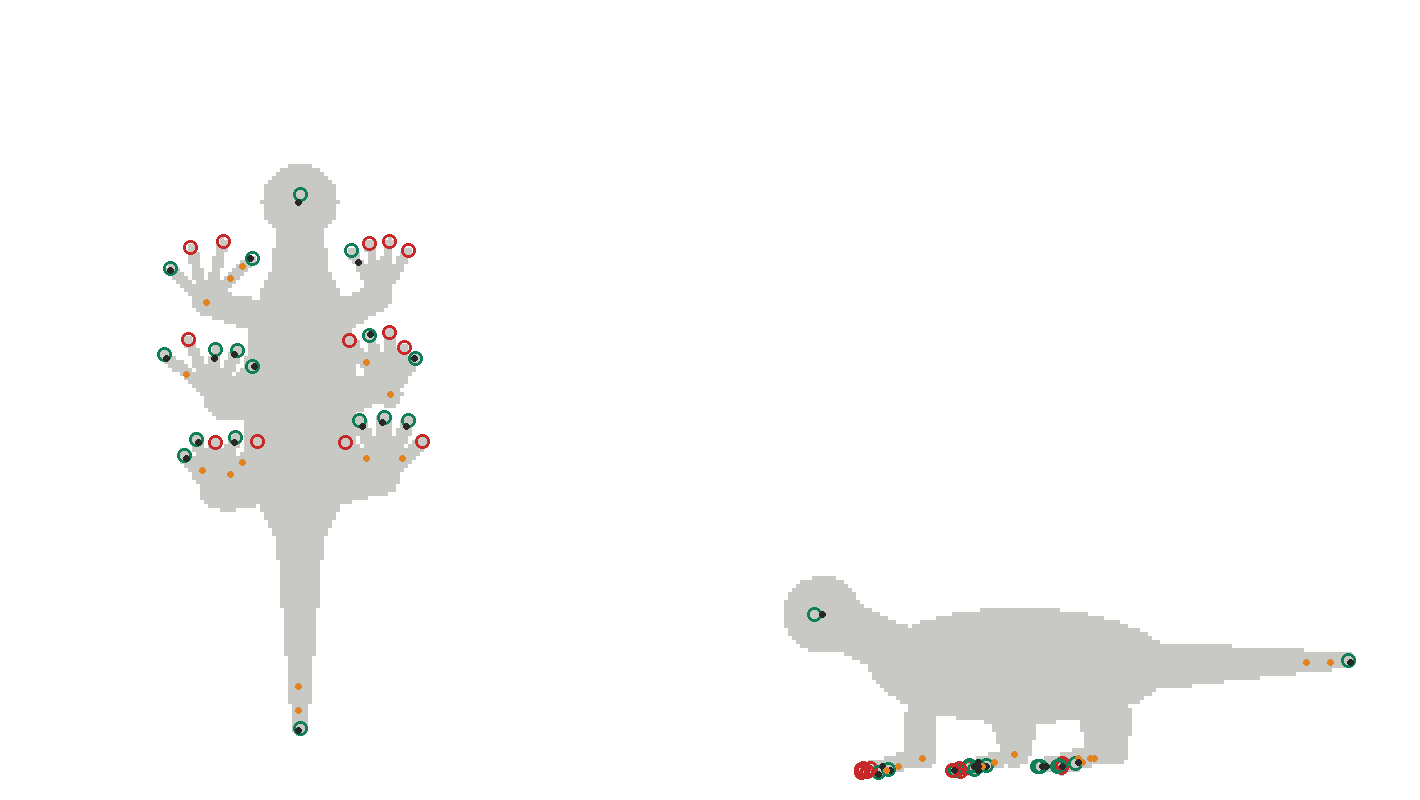
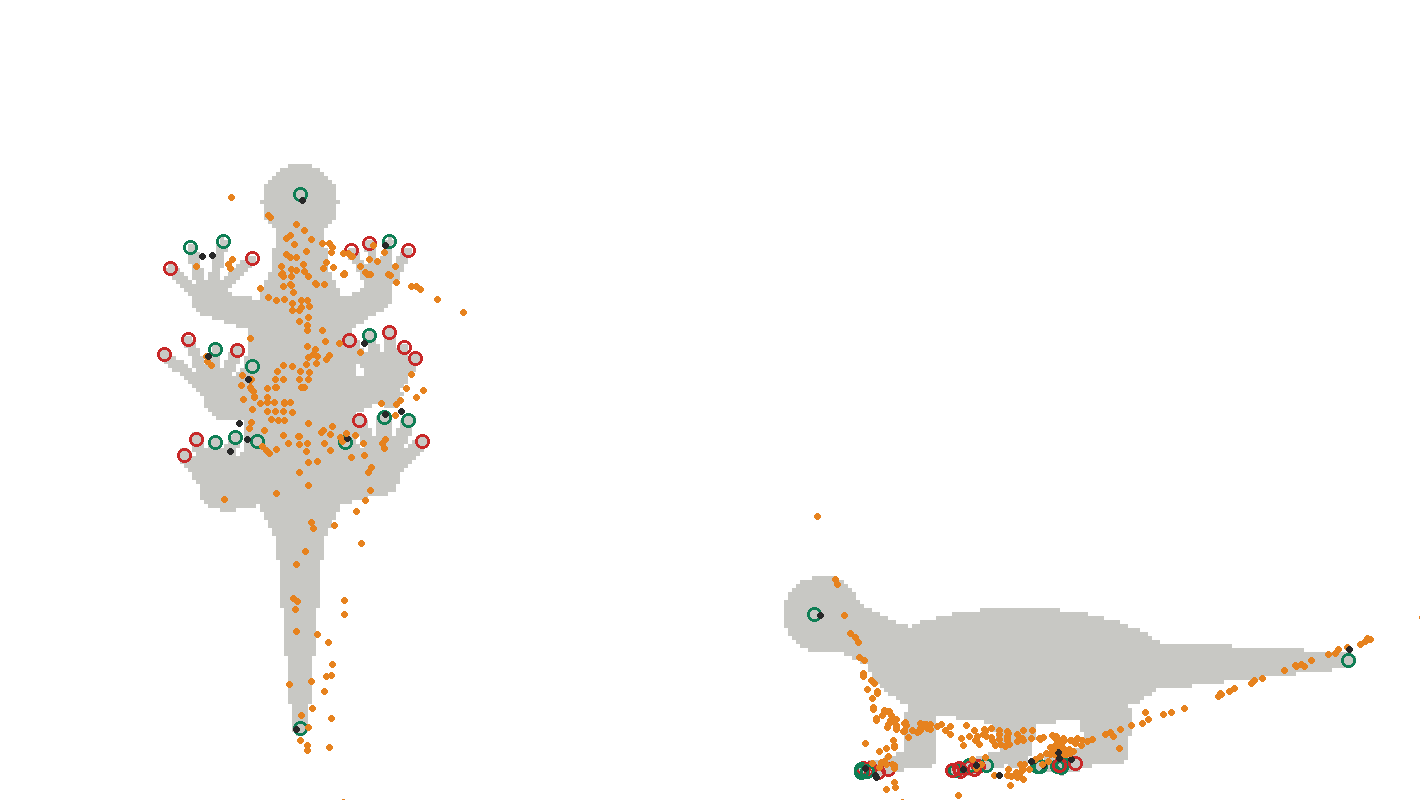
20 made-up creatures (a body, neck and head, tail, two or three pairs of legs with three to five toes, sometimes open jaws and fins), each with a known tree, scored on 20 more the method had never seen. Pass line, set before the run: at least 95% of the true tips found (one tree tip per true tip), at least 90% of the tree's tips real, and forks within one thickness of where they should be.
Result: not passed. On the unseen creatures the tree finds 91% of the tips (heads, tails and fins all, toes 91%, jaws only 65%: two jaws of an open mouth often merge into one), but 14% of its tips are extra (small side shoots near the feet). Forks land within 0.73 of a thickness: that part passes. (These numbers are after the code review's fixes; the review also found that the scorer skipped any creature whose tree failed, which changed nothing here but did change section 8.)
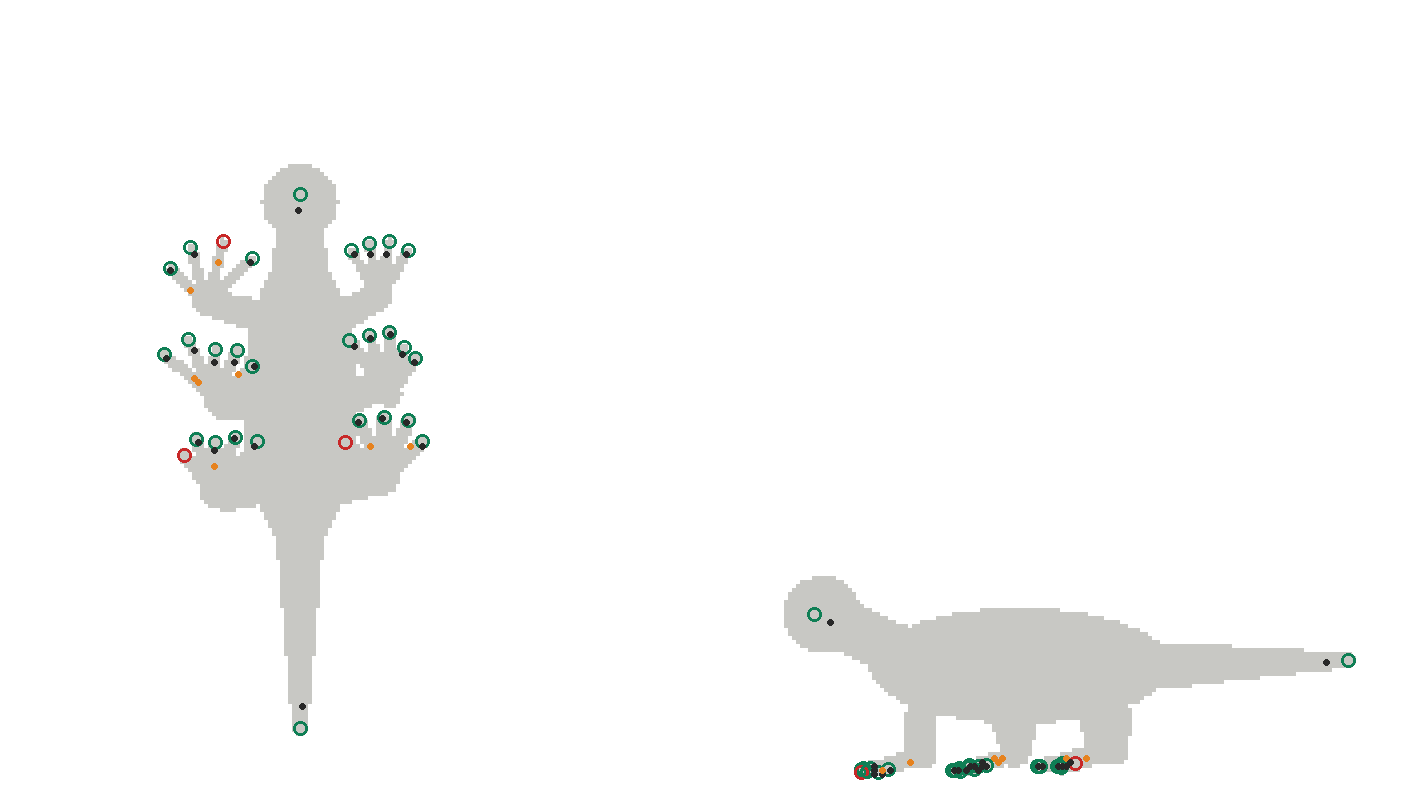
When toes are short stubs that barely leave a large ankle (3 to 5 grid cells), the tree finds only a third of them. I built the dedicated step you asked for: lay each wide limb end flat, where the gaps between toes show, read the toes from that flat outline, and rebuild the foot as a palm with one chain per toe, as artists do.
It did not help, even after the review fixed it counting the wrist as a finger: 32% of stub toes with it and without it; with long toes it adds extra tips (real tips 86% to 82%), and it mistakes a few heads for hands. At this resolution the gaps between stub toes are not in the shape at all, flat or not. What an artist does here is look at a close-up of the hand; for us that means a close-up picture of each hand and foot, carved at a finer grid. That is a proposal for the next round, not tested yet.
Every head and tail, every fin, every leg; forks in the right place. The weak spots are close-together branches: stub toes, and the two jaws of a narrow open mouth.
4. How the tool is chosen for each part
You asked to see the choice itself tested. 50 made-up parts with a known right tool, 10 each of lump, tube, branched, sheet and hollow (a cup), each in two forms: the true shape, and the shape carved from six pictures, as our pipeline sees it. All five tools were fitted to every part, then three rules picked one:
- Smallest error: the tool whose surface is closest (what we do today).
- Simplest near-tie: among the tools within 10% of the smallest error, the simplest (lump, then tube or sheet, then hollow, then branched).
- Shape reading, as artists do it: read what kind of shape the part is before fitting anything. A cup if much of its hull is empty and enclosed; a sheet if it is thin for its size; a tube if it is long and thin; branched if it has three or more tips; otherwise a lump.
Pass line, set before the run: the right tool on at least 90% of the true shapes and 80% of the carved ones, and at most 10% of last week's passable real parts lost to the choice.
50 / 50
Shape reading and simplest near-tie both choose right every time. Smallest error gets 39: it gives every lump to the hollow tool, because a cup with no opening is a lump and fits equally well. When two tools fit equally, only a rule that prefers the simpler one gets it right.
33 / 50 at best
Lumps, tubes and branched parts are still right (shape reading: 30 of 30). But every cup comes out of carving filled in, so it is a lump, and 9 of 10 sheets come out thickened into curved disks. No rule can recover these, because the carved shape no longer holds the answer. Smallest error "gets" the cups only because it calls everything round a cup.
22% lost
On the special set, 18 parts would pass if the best tool were picked in hindsight; the smallest-error choice gets 14, the near-tie choice 15. The pass line was at most 10% lost. Same cause: the carved part does not show what it is.
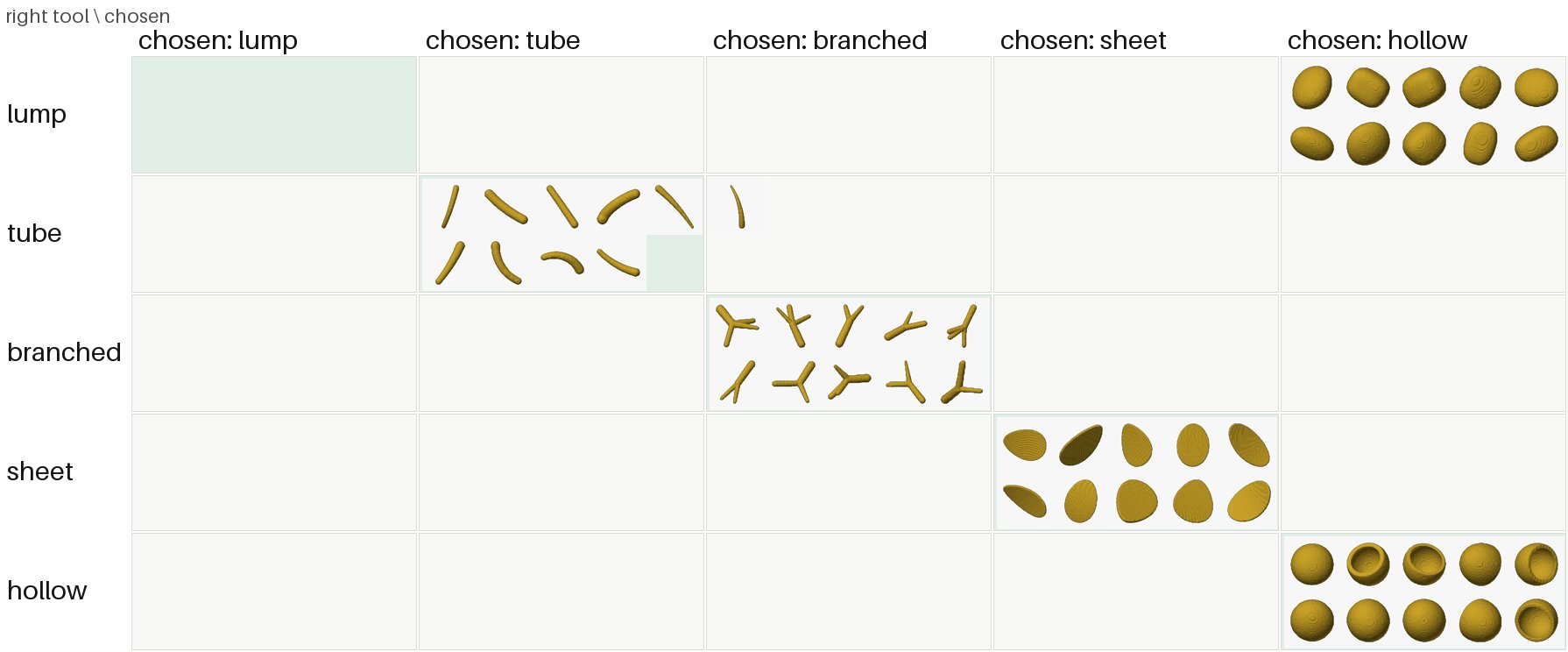
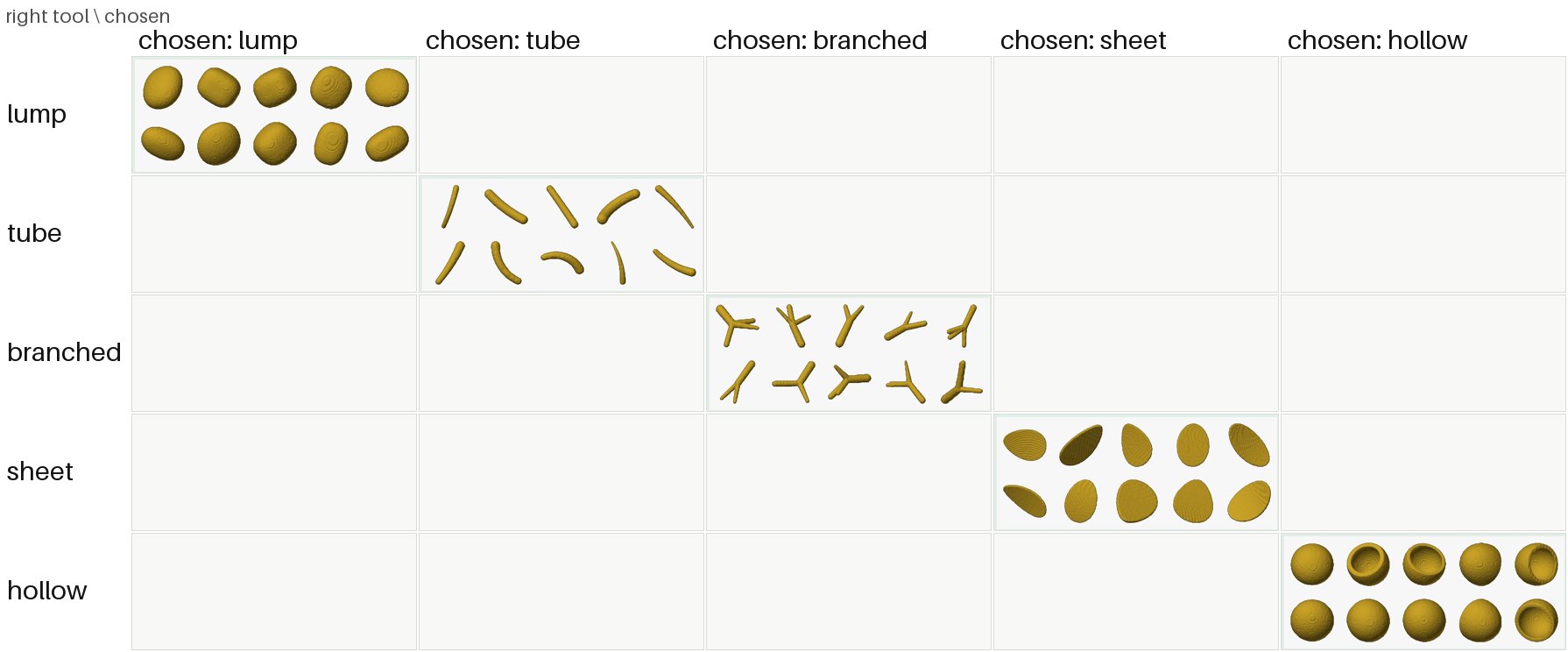
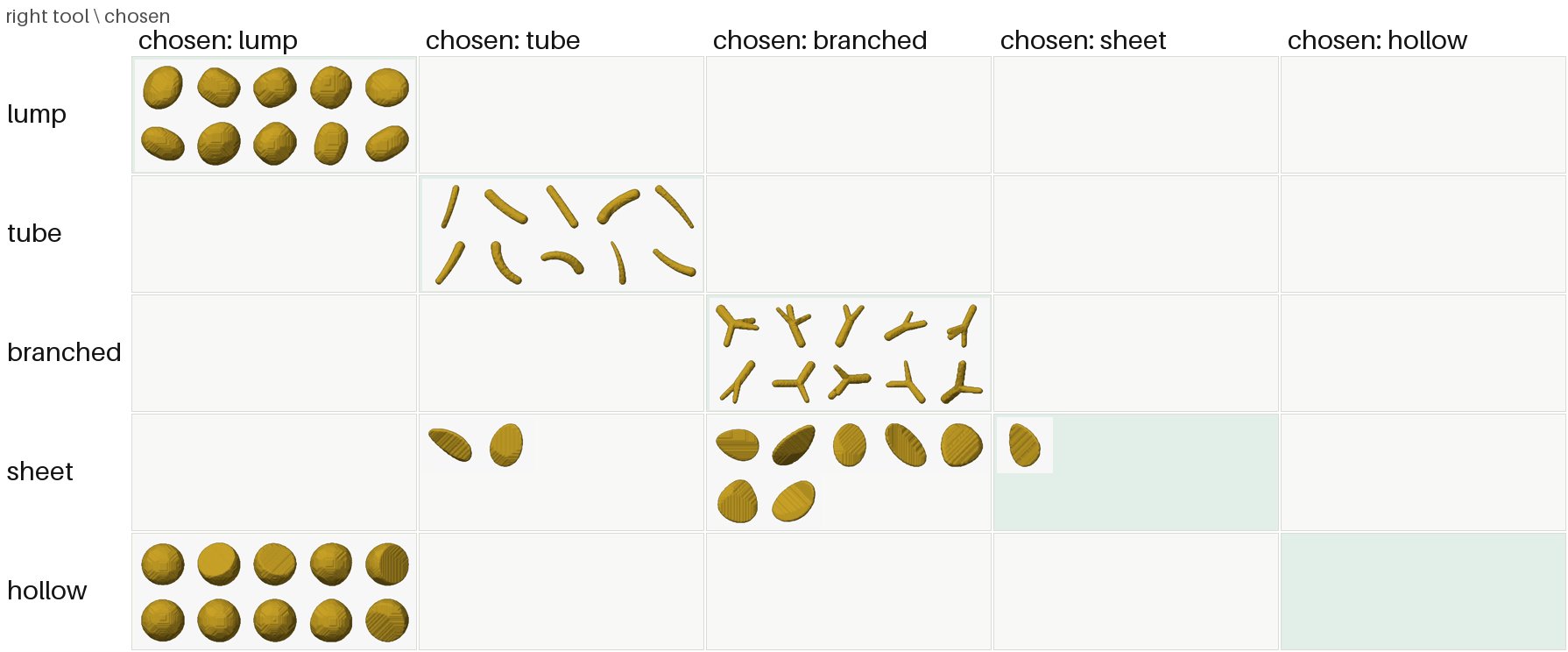
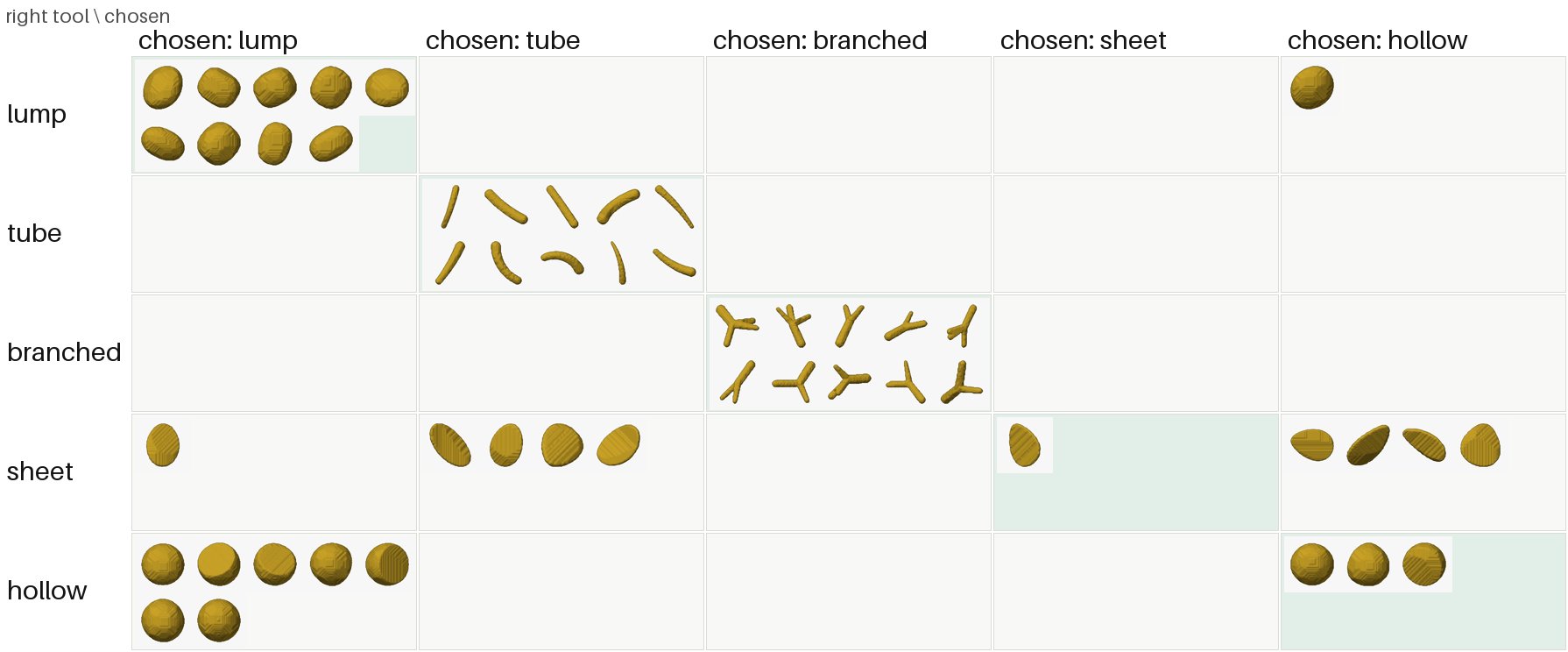
What each choice looked like
Each strip: the part (gold), then the five tools fitted to it (blue), with their error; the frame marks the one smallest error chose.




The choosing works: read the shape first, and prefer the simpler tool when two fit equally. What breaks it is what carving throws away. Outlines cannot show the inside of a cup or how thin a sheet is. An artist would just know that a wing is a sheet and a shell is hollow. The next round's options for this are in chat.
5. The tree from pictures
The real use: the tree read from pictures, not from a true model. Tried here on the six true models' rendered pictures (six straight views and the four special angles, painted perfectly by part), so the true model can judge. Three ways of reading it, against last week's result (each part's best tool fitted to the carved block). Pass line, set before the run: beat last week's result on the outline from a view no carving used, for at least 5 of 6 animals, and keep 9 in 10 branches.
Result: not passed by any of the three. The best one, a tree per painted part, beats last week only on the coiled snake (0.89 against 0.88 from the held-back view), ties on the scorpion (0.82) and loses on the other four (0.74 to 0.84, against last week's 0.80 to 0.92). By eye it is the most faithful of the three; the numbers favour last week's blocks, which hug the carved outline.
One lesson from the rerun after the code review: on the octopus the tree itself got slightly better (its own solid 0.66 to 0.69), but the Skin modifier broke into a large flat sheet at one crowded junction, and its score fell from 0.83 to 0.74. Skin is fragile where many thick branches meet, which is also where the 37 true models showed their slabs.






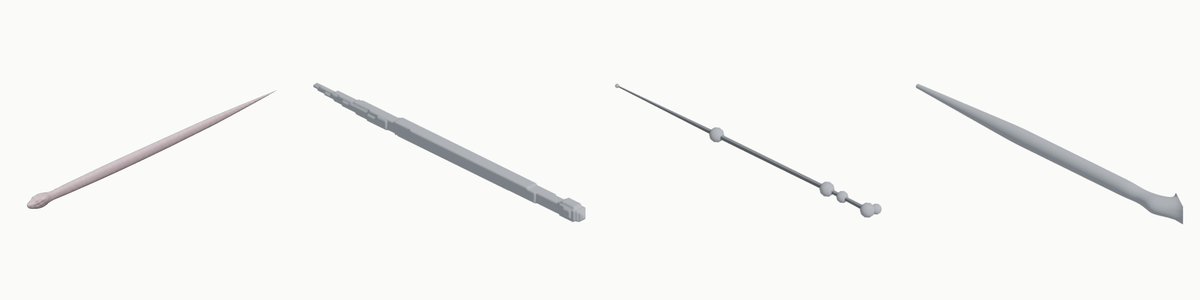
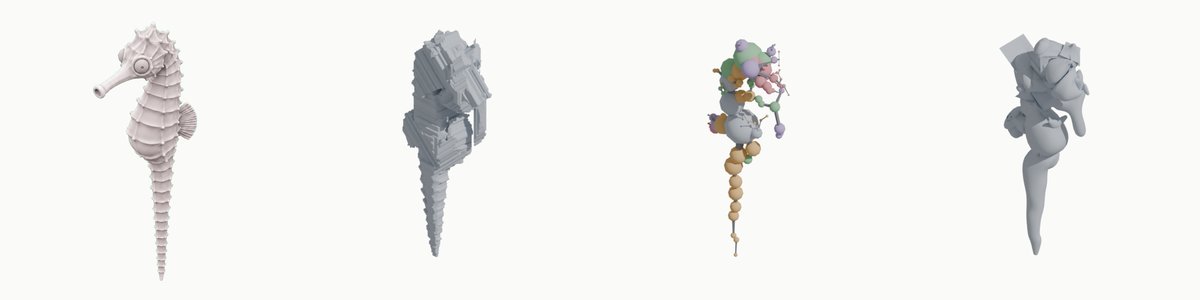
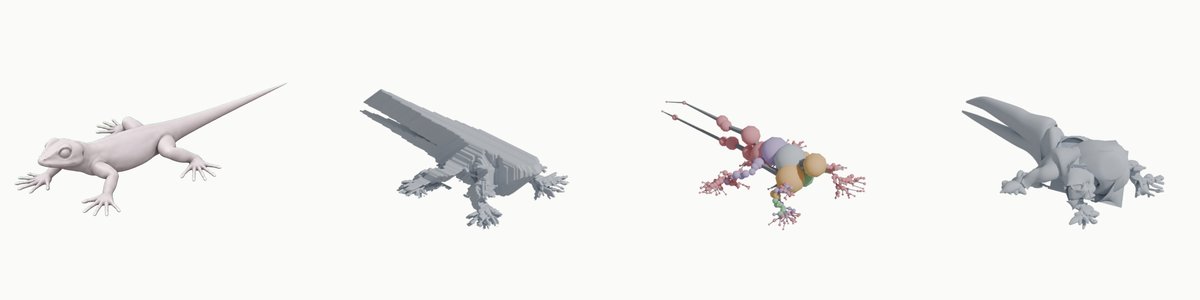
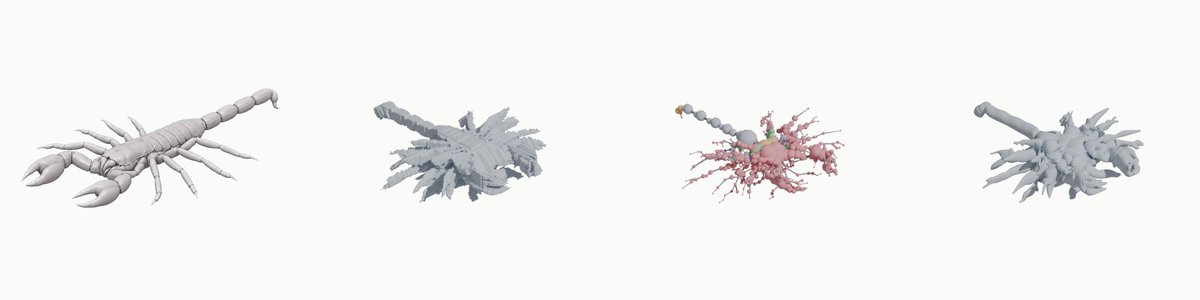
The seven AI animals (no true model behind them)
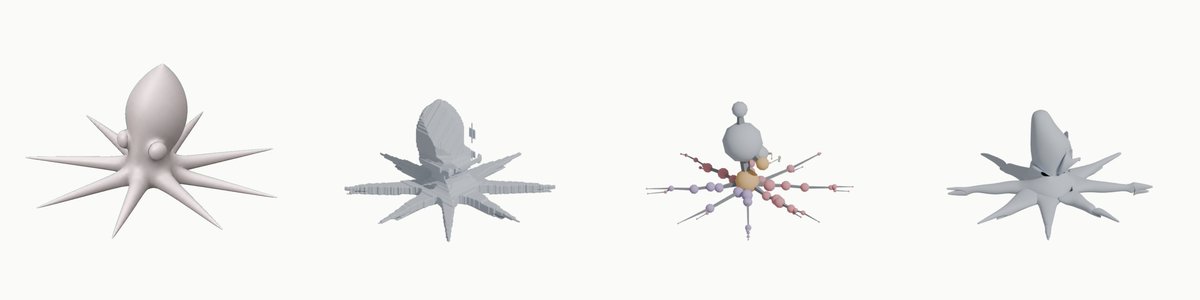
The tree from the shape carved from the AI pictures (six straight views and the special angles). The octopus becomes recognisable, which no earlier attempt managed; the agama keeps the slab its disagreeing drawings carve; the jellyfish and scorpion remain tangles.
Each picture, left to right: AI drawing (a view not used for carving), carved block, tree, Skin modifier body.
6. Hard-shelled animals as separate pieces
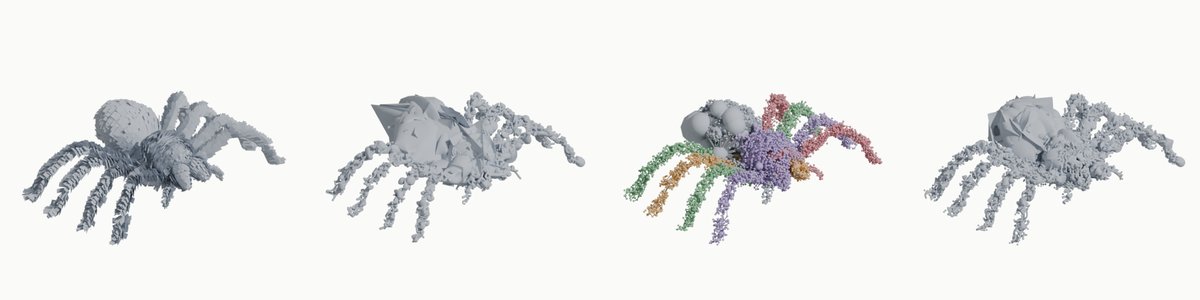
Artists build insects, crabs and scorpions from separate rigid pieces, one per leg segment and plate, each fitted into its neighbour, not as one skin. I tried the same on our four hard-shelled models. The pieces are the model's own mesh pieces (the scorpion's file is stored as loose triangles, so its corners are joined first). Each piece gets its own small tree and Skin body, and tiny details merge into the piece they touch.
Pass line, set before the run: every piece within one grid cell of the piece it belongs to, so nothing floats.
Result: the outline is closer on all four, and the joins pass on three of four. Crab 23 of 23 pieces joined, spider 21 of 21, scorpion 74 of 74 (two more pieces touch nothing even in the model's own file). On the ant 16 of 19 are joined; three small pieces (1 to 2% of the ant each) sit just over a cell from their neighbour. (These are the numbers after the code review, which found that the first joins test allowed a gap of two cells, and that joining corners at the same place had glued the ant's and crab's separate parts into one.)
- Ant: one tree 0.66, pieces 0.71
- Crab: 0.84 to 0.88
- Scorpion: 0.83 to 0.86
- Spider: 0.80 to 0.87
Pieces help most where one tree had to bend through narrow joints and crowded forks: the ant's waist, the spider's eight legs meeting at one body. The scorpion's file is many thin decorative plates, so its pieces still look tangled. A model built from pictures would have to declare its pieces (one paint colour per plate or segment); there will be no mesh to split.
7. Simplified pictures
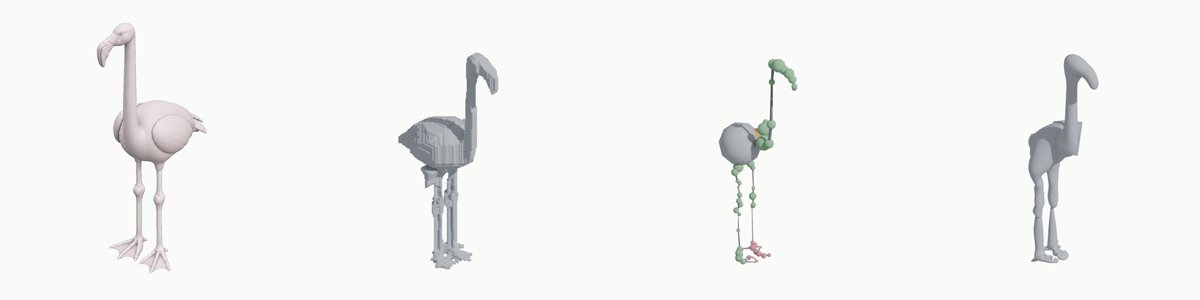
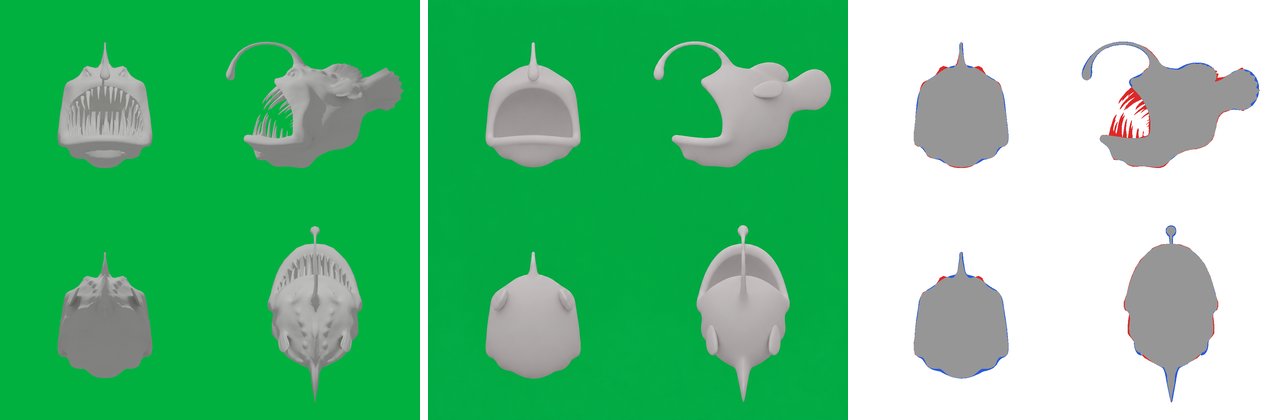
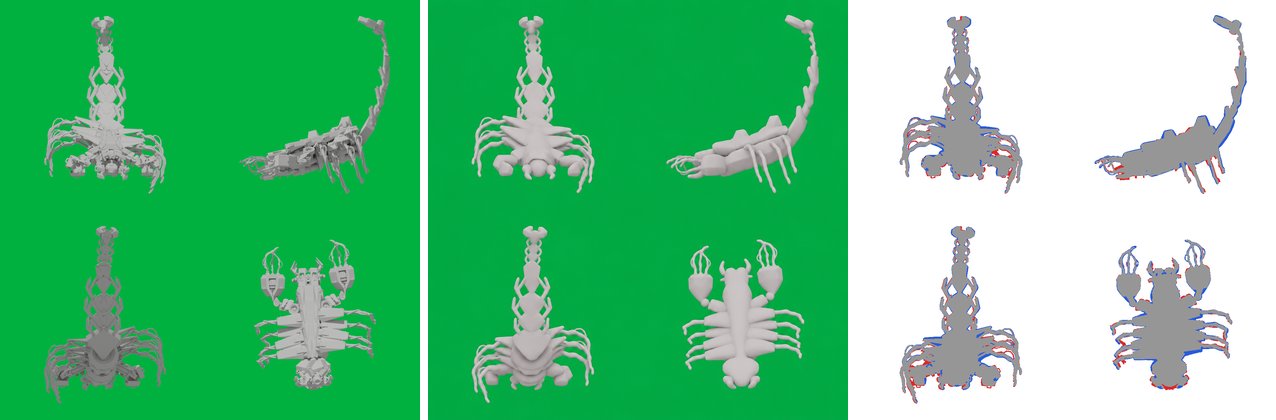
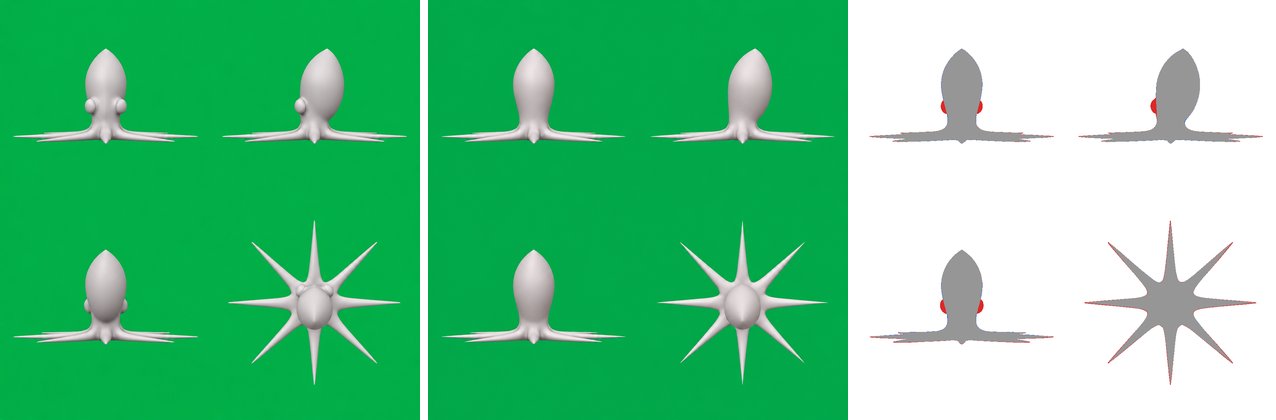
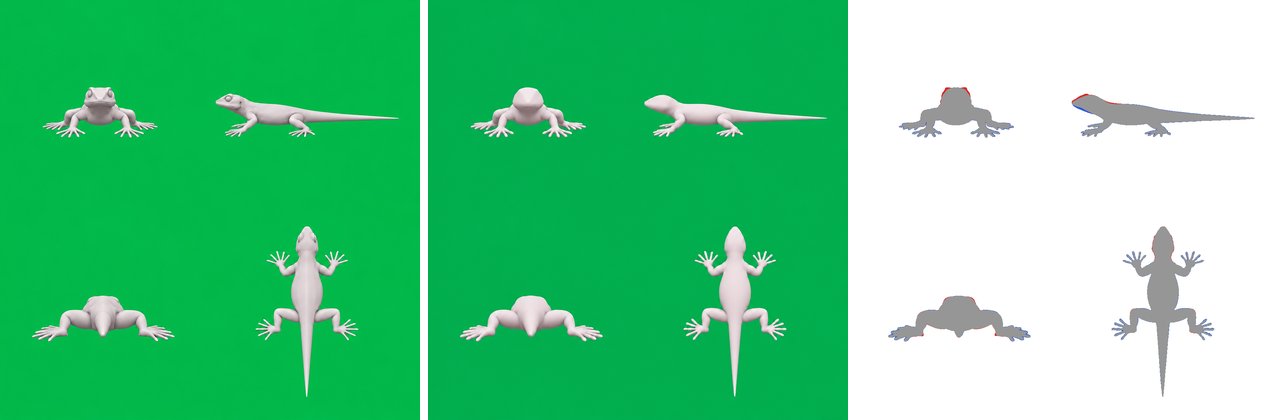
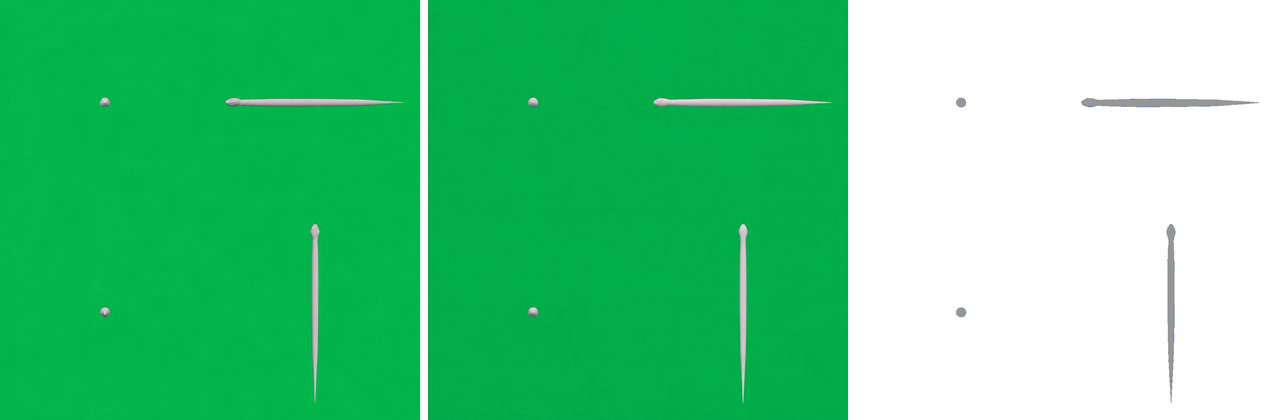
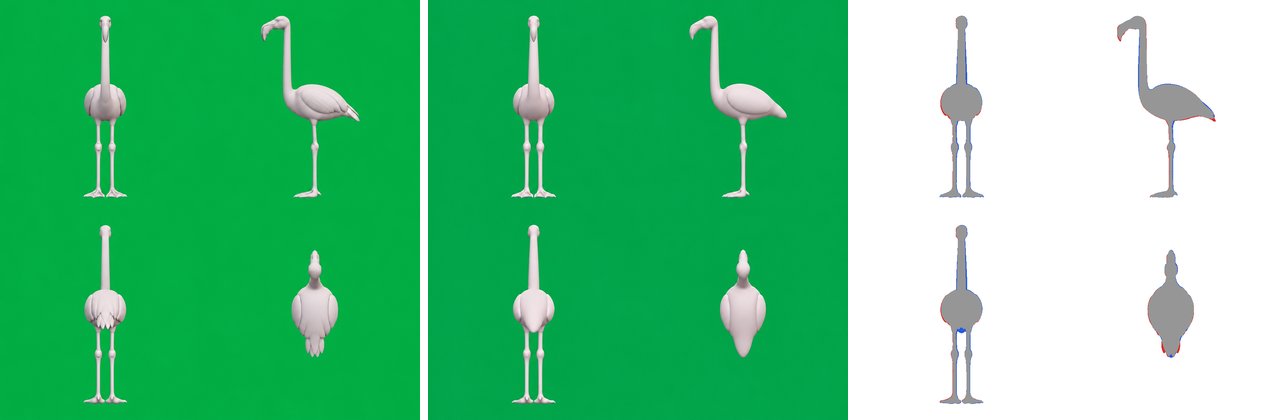
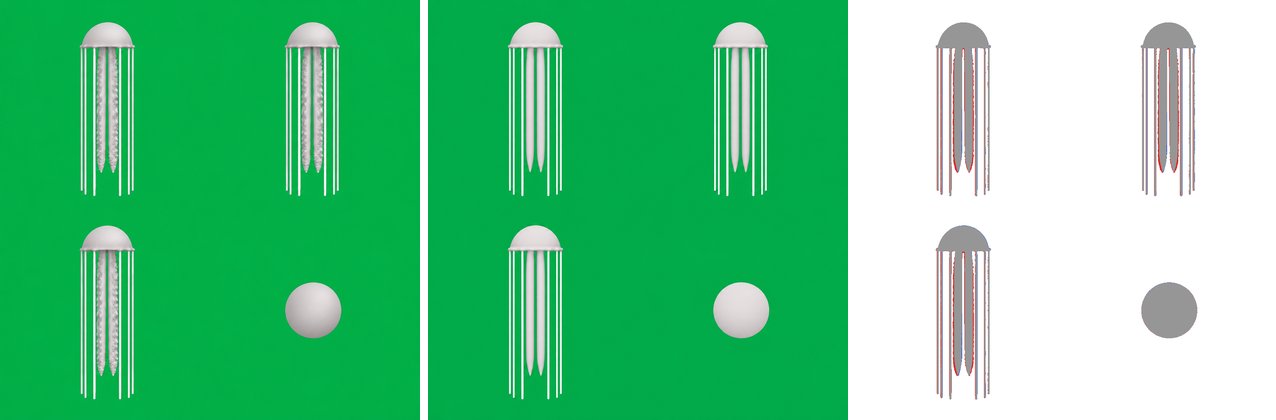
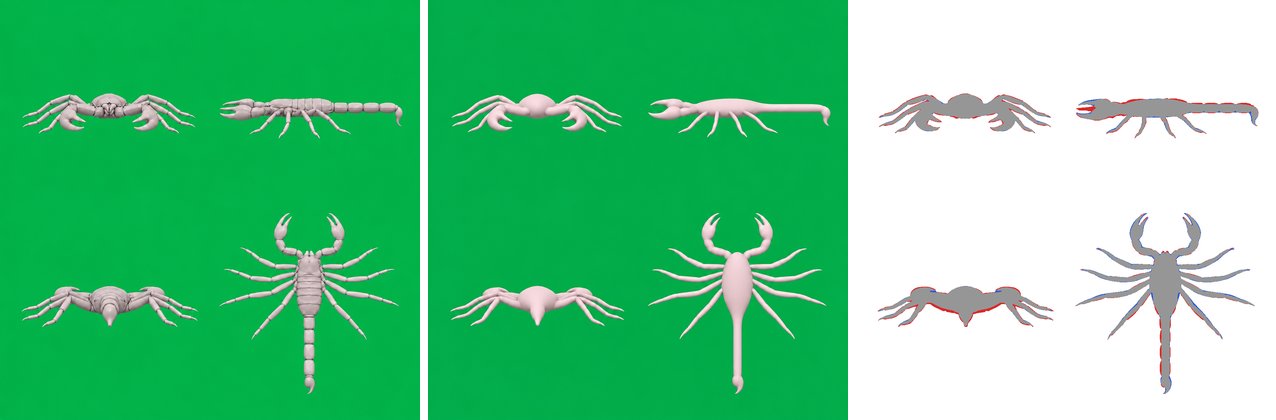
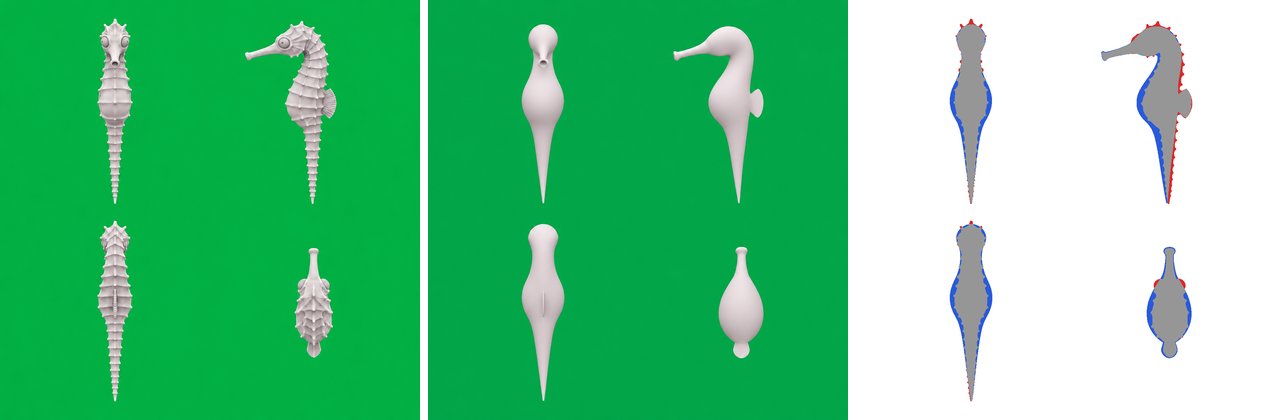
Artists block out the large forms first and add small details last, as separate pieces. So I asked the image tool (through Codex) to redraw each reference sheet as a smooth clay blockout: the same pose, cameras and size, with teeth, claws, spines, scales, feathers and eyes removed. This was done for the four true models' rendered sheets and the seven AI animals' sheets, with at most three redraws each.
Pass line, set before the run: every view's outline overlaps the original's by at least 0.90, the details are gone by eye, and the views still agree with each other.
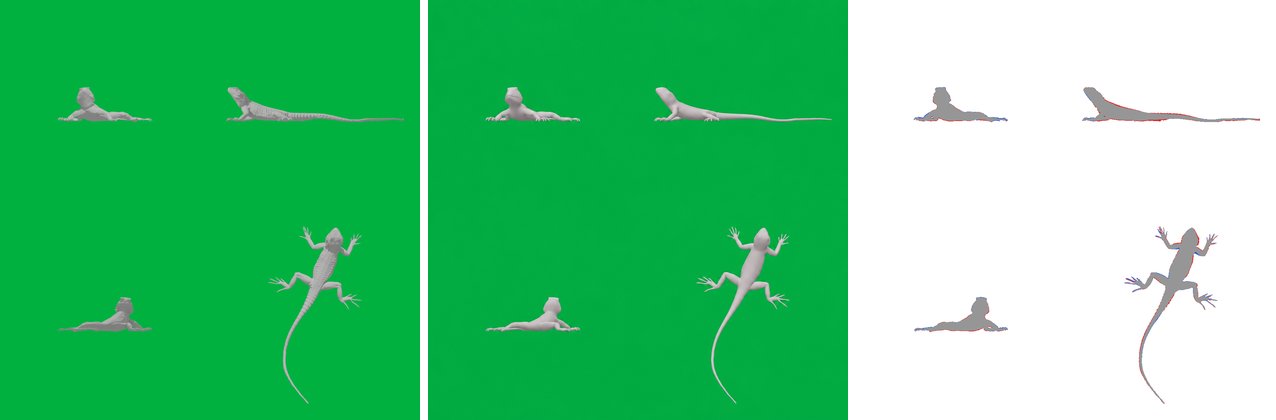
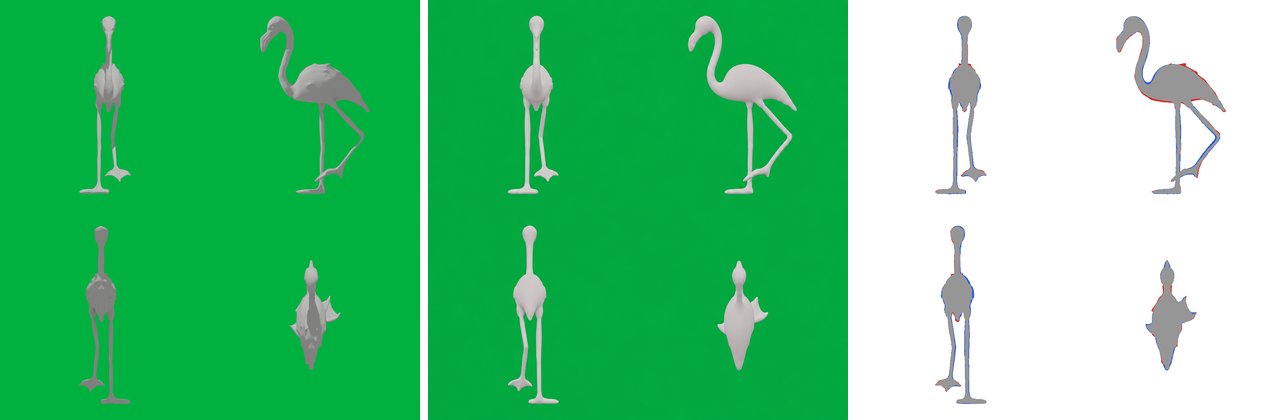
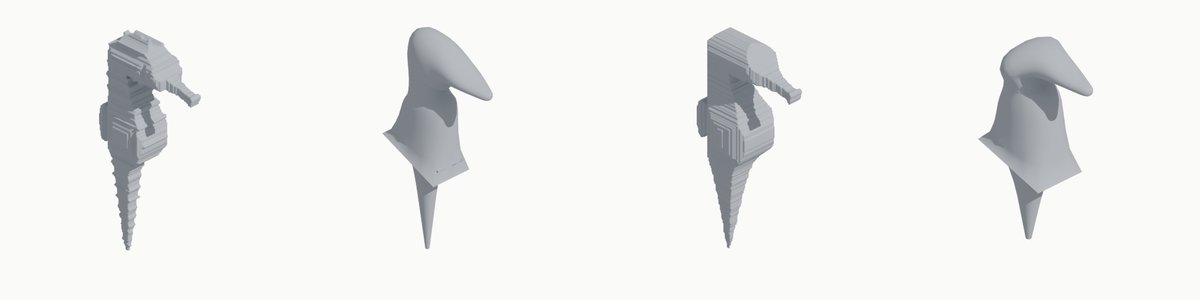
Result: 4 of 11 pass the line, and 10 of 11 look right by eye. The anglerfish, AI agama, octopus and racer snake pass. The others miss mostly because their legs, tentacles or tail are thin, so a shift of a few pixels costs a lot of overlap. The one real failure is the AI seahorse: its body was redrawn wider, as a bottle shape.
Each row, left to right: the original sheet, the simplified sheet, and their outlines laid over each other (grey kept, red removed, blue added).
True models (rendered sheets)
What the simplified sheets change downstream
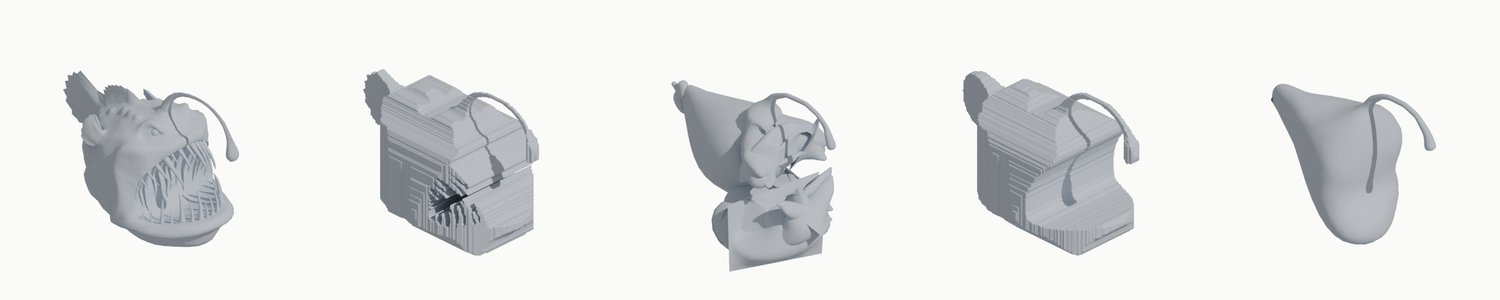
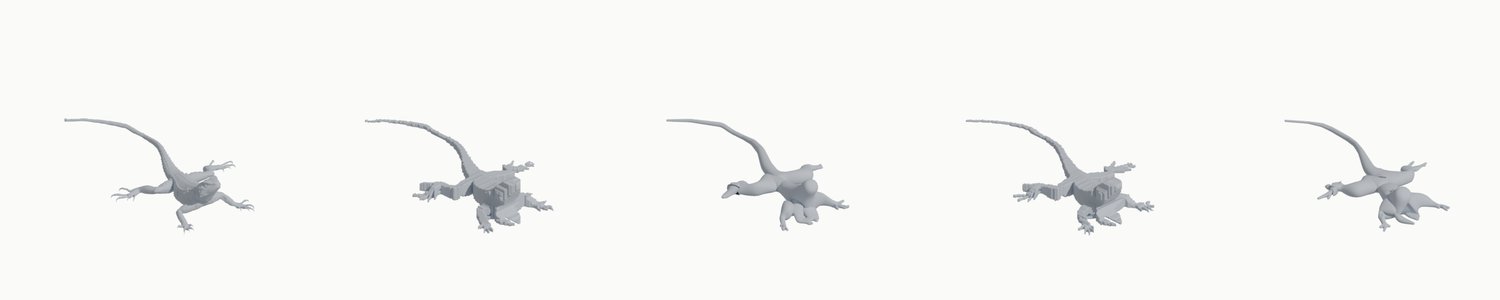
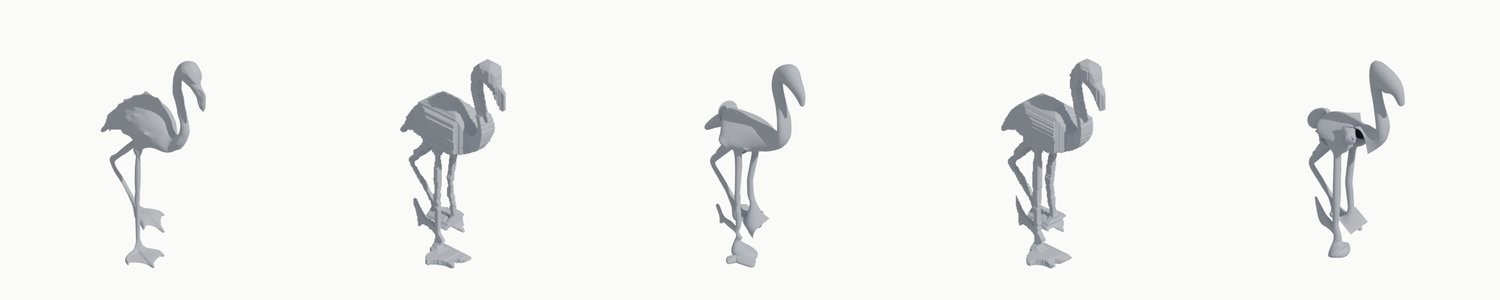
Each sheet was carved into a shape (four views), the tree read from it, and both compared with the true model. The anglerfish gains clearly: with the teeth gone, the carved mouth opens, the shape overlaps the true model better in 3D (0.69 to 0.74), and the tree's solid jumps from 0.43 to 0.61 with 19 points instead of 111. The other three lose a little (agama 0.66 to 0.70 in 3D but its tree 0.49 to 0.48; flamingo 0.74 to 0.70; scorpion 0.33 to 0.30): their redraws moved thin legs and plates a few pixels, and the true model they are measured against still has its details.
Each row, left to right: true model, then from the original sheet the carved shape and its tree's Skin body, then the same from the simplified sheet.
AI animals
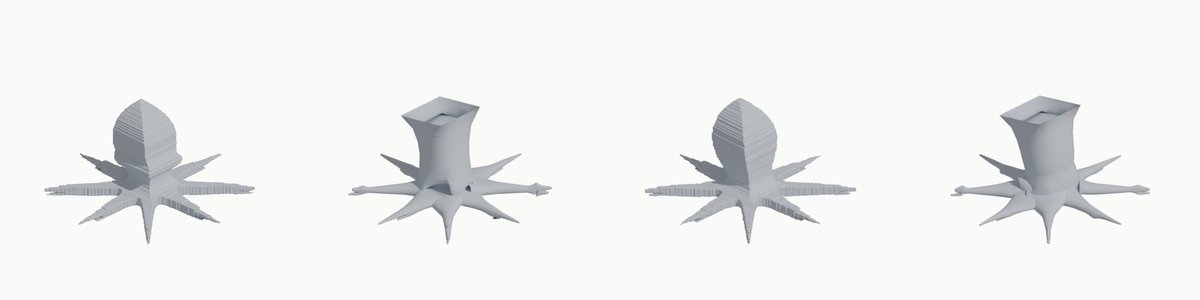
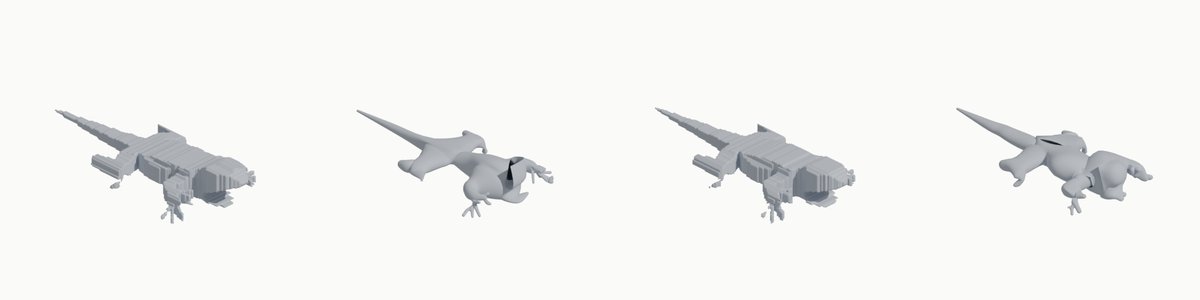
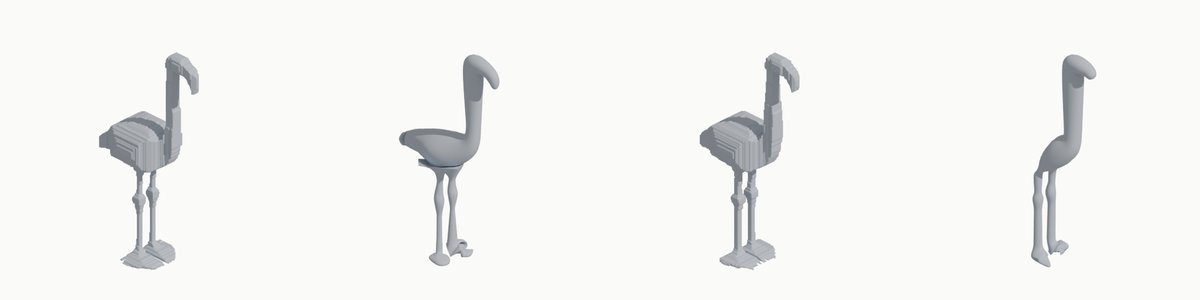
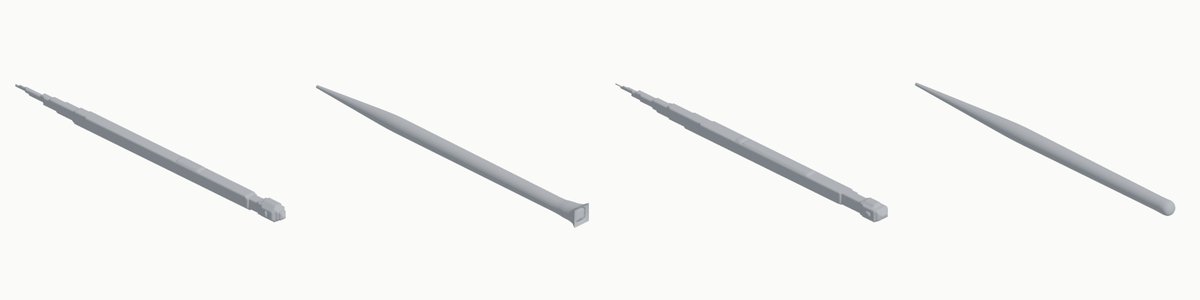
The AI animals, carved from each sheet
Each row, left to right: from the original AI sheet the carved shape and its tree's Skin body, then the same from the simplified sheet. There is no true model to measure against: judge by eye.
8. Two other ways to find the tree
The tree so far comes from thinning: peel the shape layer by layer down to its centre line. The research turned up two other well-known ways, and I tried both on the same unseen creatures with the same pass line.
- Ball cover (as in Coverage Axis, 2022): the fewest balls that together cover the shape, joined into a tree. It is close to how artists place ZSpheres.
- Mesh shrinking (Au and others, 2008): pull the surface inward, round by round, until it collapses onto its centre line, then read the tree from where it collapsed.
Result: neither beats thinning, and none of the three passes.
- Thinning (tree v2): 91% / 86%
- Ball cover: 83% / 51%
- Mesh shrinking: 43% / 5%
- Pass line: 95% / 90%
Ball cover puts one ball over several toes when they are close, and its tips stop short of the real ones. It is good for the body and poor for hands.
Mesh shrinking, in my simplified version, does not settle on a clean centre line: the shrunk surface scatters into a loose cloud, partly outside the body, and every loose point becomes a false "tip" (230 tips for 30 real ones on this creature). With stronger settings, tried on the practice creatures, it collapses the whole animal to a few points instead. Its first score (97% found) was wrong: half its runs had crashed and the scorer skipped them, which the code review caught. A faithful version needs the paper's later clean-up steps; given that thinning is already closer, I stopped there.
9. Turn the models yourself
The 3D viewer shows ten animals as three models side by side: the true model, its tree (balls coloured by level: body, limbs, toes) and the Skin modifier body made from it. Dragging one turns all three. Fox, chimpanzee, octopus, flamingo, agama, frog, giraffe, deer, elephant and anglerfish: the good, the nearly and the not-yet groups of section 2.