Two ways of telling the fits more than the outlines do, each tested on the true models first, where
the answer is known: cut-in-half views (step 2, newest first), and fitting each part straight to the pictures
(step 1).
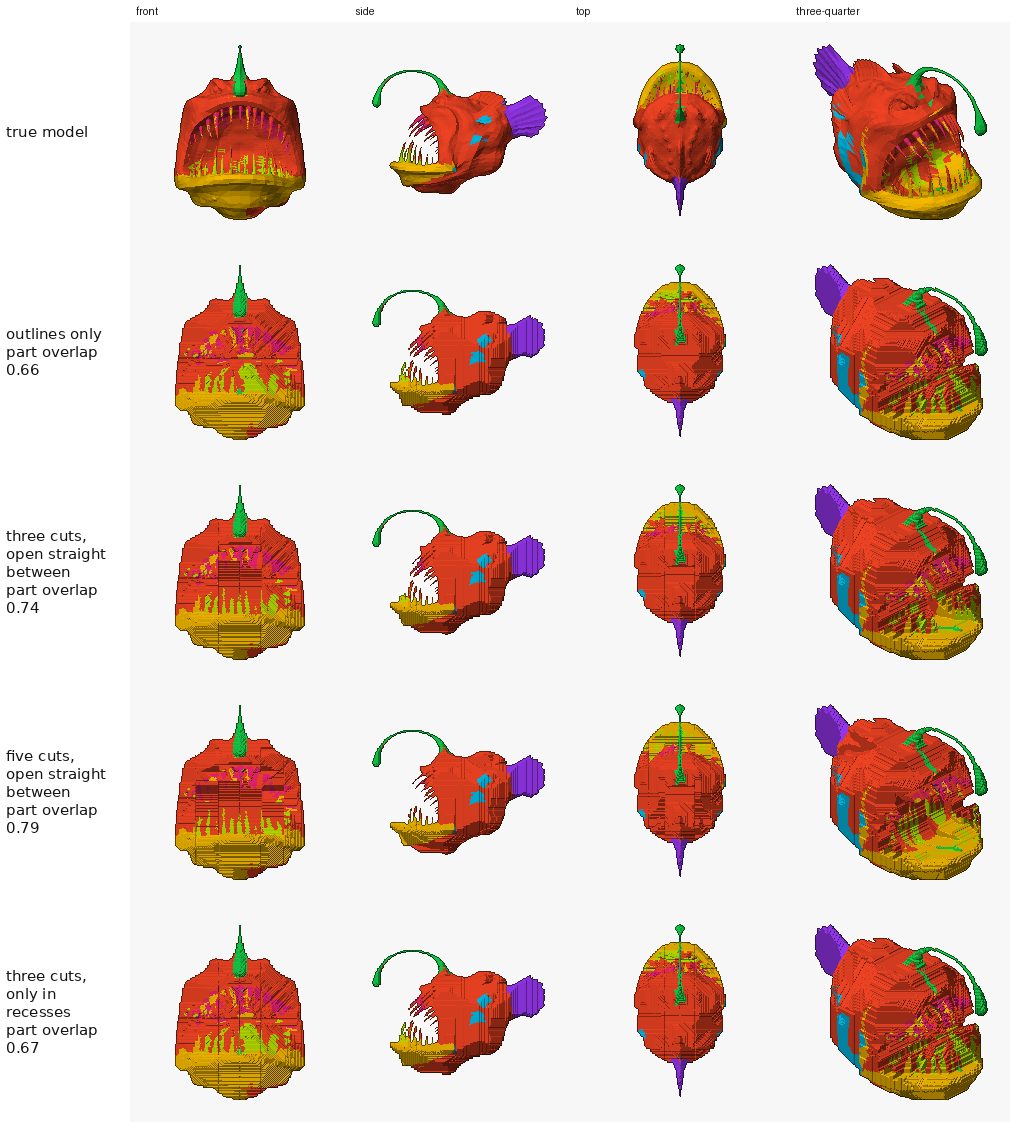
Where there is a hollow, cuts open it. Three cuts leave the anglerfish's mouth 53% filled instead of 74%;
five cuts, 26%: more open than exact depth from the same views gives (47%). Nothing of the true shape is lost.
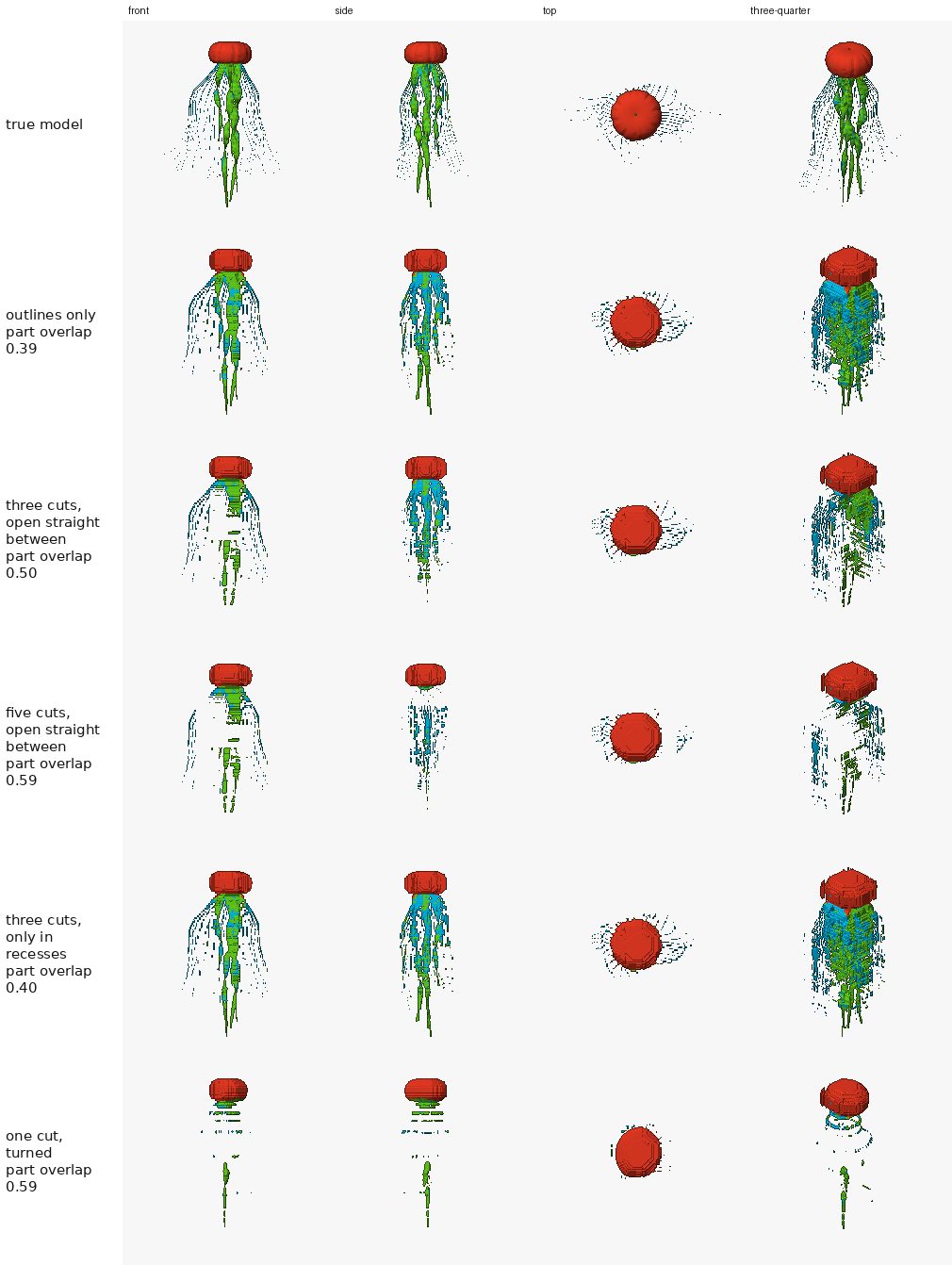
The jellyfish gains too, at a cost. Its part overlap rises from 0.39 to 0.50 with three cuts, and to 0.59
with five, or with one midline cut turned around its axis. The space under the bell empties, but the tentacles and oral
arms hanging between the cuts lose some of their true shape (9% of the whole with the cuts, 17% turned).
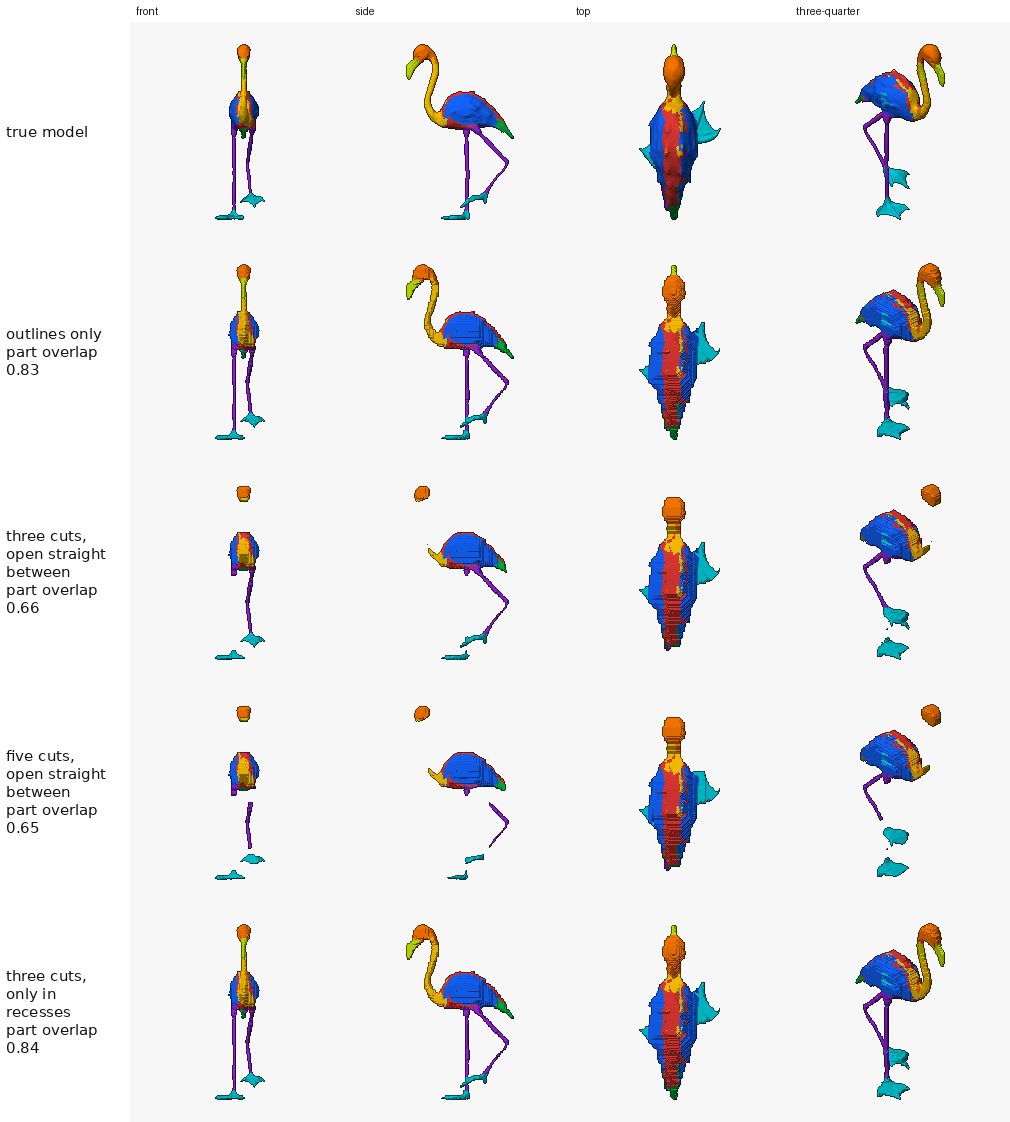
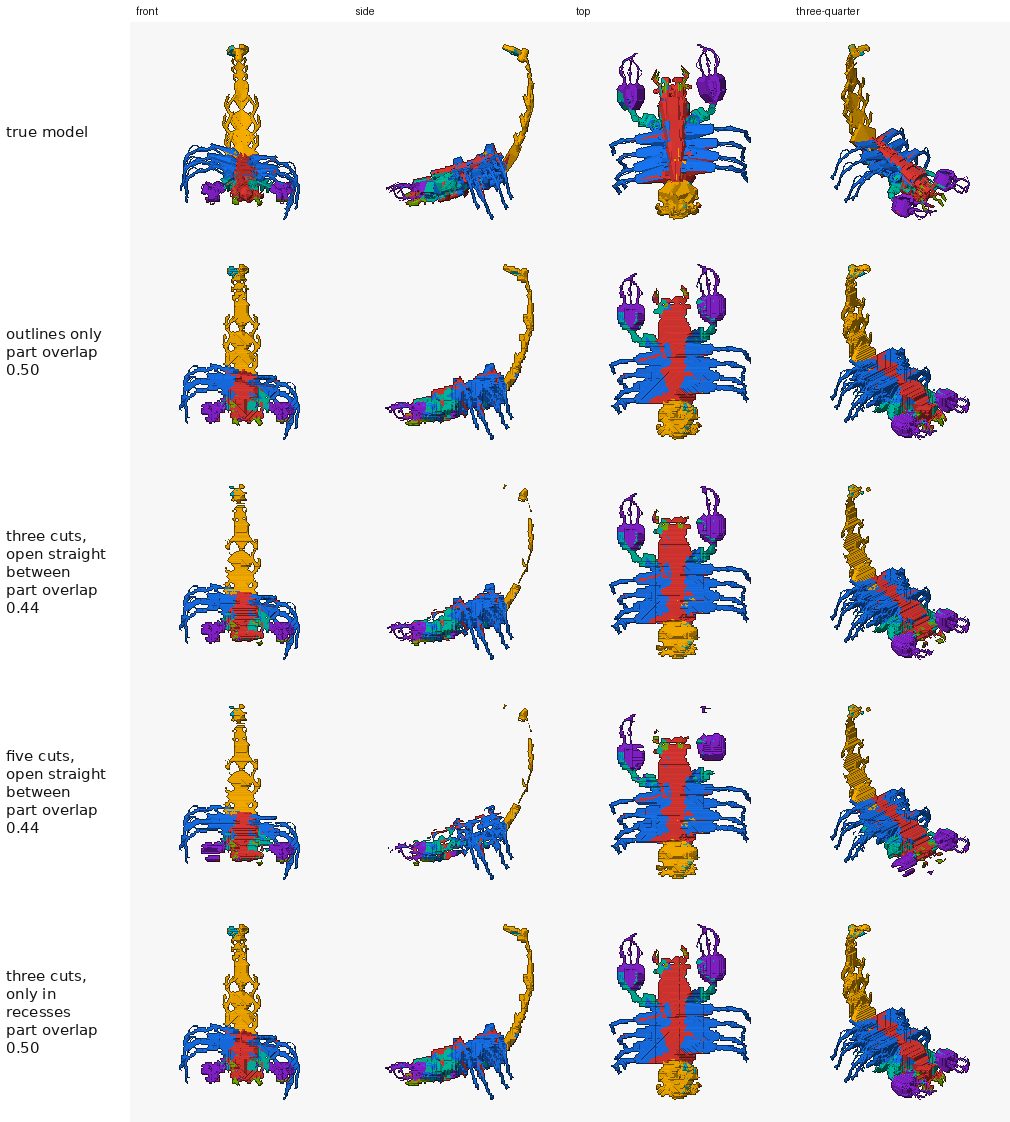
Only on the component that was cut, as you proposed. Applied to a whole animal, opening straight between cuts
takes whatever lies between them: the flamingo's turned bill and neck, the scorpion's stinger (up to a quarter of the
true shape). Opening only inside recesses of the cut keeps everything, but then the mouth stays 66% filled.
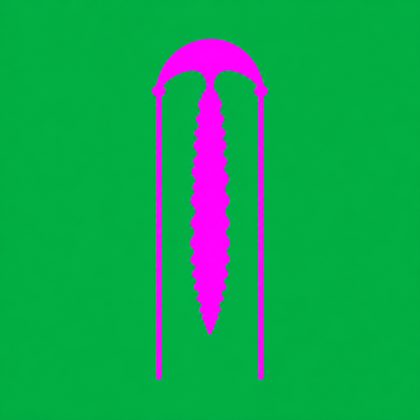
A drawn cut works on the AI jellyfish. The image model drew its midline cut cleanly (a dome with a hollow
under it, the oral arms down the middle, tentacles at the rim; four draws). Turned around the axis, it opens the hollow
under the bell and halves the carved shape. Where the drawing disagrees with the pictures it costs a little: its oral
arms are narrower than the side views show, so the carved shape covers about 4% less of the side outlines.
Step 1: fitting each part to the pictures
It fails its rule. Refitted to the pictures, 12 of 56 parts pass, against the block's 14, and some of the
14 drop out. The fits match the pictures better but move away from the true parts: nothing in a picture says what lies
behind another part, and the fits grow into that space. Keeping each part to its own paint stops the growth but helps
neither. The outlines and paint are already used by the carved block; only new information (cuts, shading) can add.
Step 2: cut-in-half views
The outlines cannot show a hollow: a mouth or the underside of a bell is never on an outline, so no view carves it
(F2 in the plan). A cut-in-half view does: it shows exactly where the inside is empty. Tested first on the true models,
whose cuts are exact: the midline cut and one each side, a third of the way out (or five: two each side). Between two
cuts, an opening both show is taken to run straight across. For a round subject, one midline cut can instead be turned
around its axis.
Cut-in-half views: the anglerfish's mouth
outlines onlythree cuts, open straight between themfive cuts, open straight between themthree cuts, open between only inside a recessone cut, turned about the axis (round subjects)
Share of the open mouth still filled (0% = fully open, as in the true model), carved from the 6 straight views
and 4 special angles, then with exact depth as well (the most depth could add).
Cut-in-half views: every model
outlines onlythree cuts, open straight between themfive cuts, open straight between themthree cuts, open between only inside a recessone cut, turned about the axis (round subjects)
Mean part overlap with the true model (1 = identical), every part counted once.
outlines onlythree cuts, open straight between themfive cuts, open straight between themthree cuts, open between only inside a recessone cut, turned about the axis (round subjects)
Share of the true model's volume carved away (0 = nothing true lost).
Cut-in-half views: a drawn cut on the AI jellyfish
The image model drew the AI jellyfish cut in half through its middle, the cut face flat magenta.
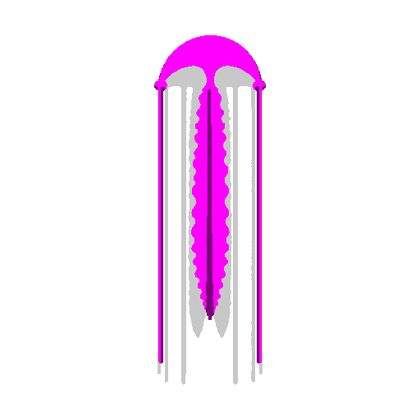
It was placed on the side view by its width and top, then turned around the jellyfish's axis, and carved the shape made
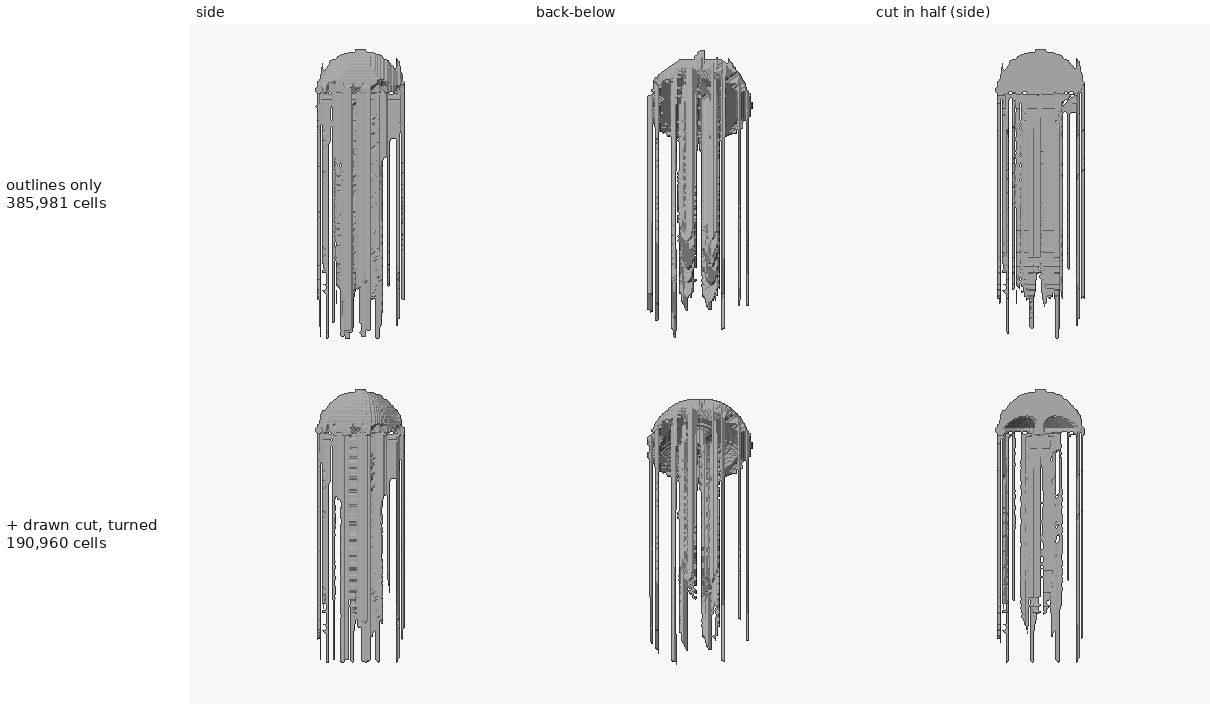
from the 6 straight views and 4 special angles. There is no true model here, so the check is the pictures themselves:
how much of each view's outline the carved shape still covers.
The drawn cut (one of four draws)Placed on the side view (grey: its outline; dark: the cut outside it)
outlines only: 385,981 cells; outline covered: front 99.6%, back 99.9%, left 97.7%, right 97.5%, top 98.8%, bottom 99.0%
+ drawn cut, turned: 190,960 cells; outline covered: front 98.0%, back 98.3%, left 93.5%, right 93.0%, top 98.5%, bottom 98.8%
Cut-in-half views: the carved shapes
The true model and the carved shapes from four directions, each surface coloured by its nearest
true part.
anglerfish
jellyfish
flamingo
scorpion
Step 1: fitting each part to the pictures
Each part's fitted shape was refined to match the pictures: cover the part's own paint in every
view and stay inside the outline, while free to reach behind other parts. Tested on the six true models with the 6
straight views and the 4 special angles, and perfect paint, against the fits to the carved block. The rule, set before
running: keep it if more parts pass than the block's 14 and none of those 14 drops out.
Fitting to the pictures: parts within the pass line, of 56
tool chosen by the methodbest of the five tools, chosen with hindsight
A part passes when its fit is close enough to the true part (the same line as before). The dashed
lines: the block's 14, the count to beat, and 35, what the same tools reach fitted to the true 3D parts.
Of the block's 14, these dropped out:
refitted to the pictures: agama hindlegs, agama hindlegs, agama hindfeet, flamingo torso, seahorse dorsal fin
the same, kept to its own paint: agama hindlegs, agama hindlegs, flamingo neck
Fitting to the pictures: matching the pictures against matching the true part
Each dot is one tool's fit of one part, compared with the same fit before refitting. Left: it
matches the pictures better. Up: it is further from the true part (×2: twice as far). The shaded corner is where the pictures were matched
better and the shape got worse. Open rings: past the frame, drawn on its edge. Where several true pieces fall in one
carved part (small fragments of a part), the fit is compared with the largest.
refitted to the pictures
the same, kept to its own paint
refitted to the pictures: 70% of 230 fits match the pictures better; 59% end further from the true part; 33% both (28 past the frame, drawn as open rings on its edge).
the same, kept to its own paint: 35% of 230 fits match the pictures better; 56% end further from the true part; 11% both (18 past the frame, drawn as open rings on its edge).
Fitting to the pictures: how far the fits reach into other parts
The share of each fit's surface lying where the carved block has another part (the middle value
over all fits).
refitted to the pictures: 68% of fits reach further into other parts than the block's fit did.
the same, kept to its own paint: 23% of fits reach further into other parts than the block's fit did.
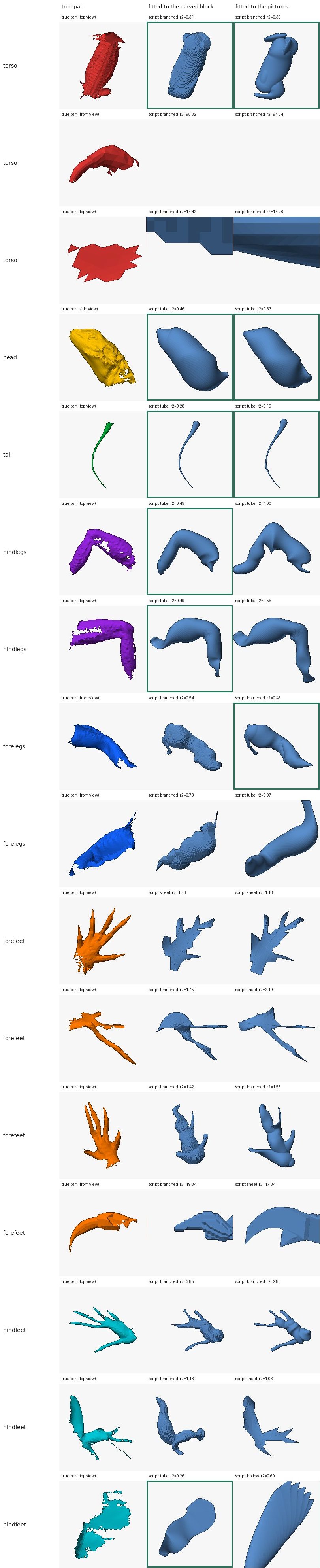
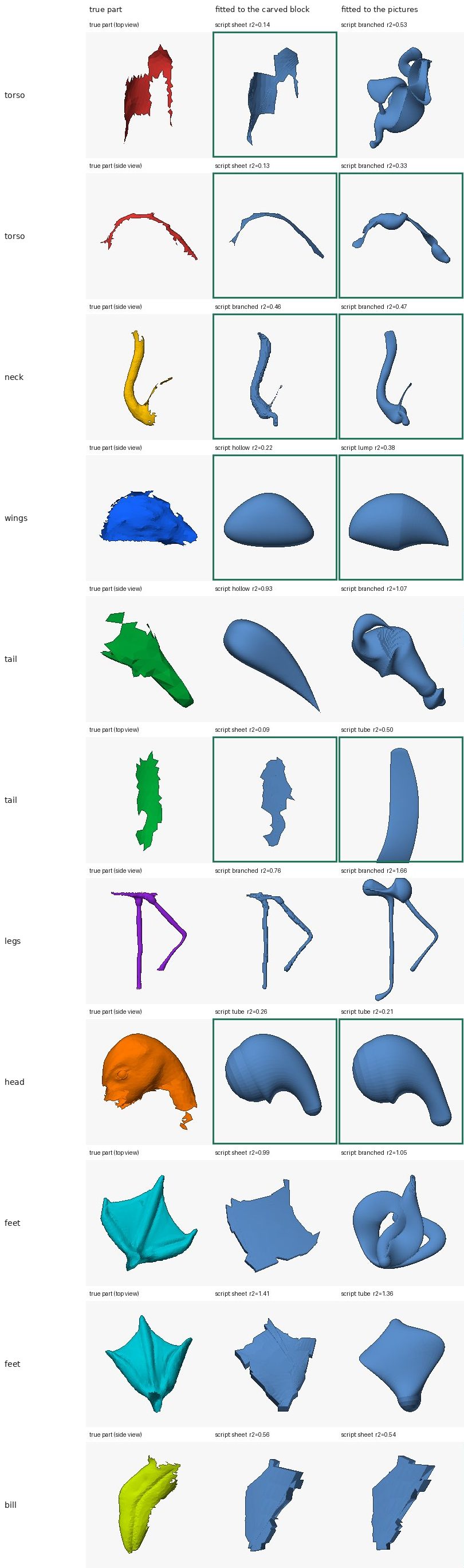
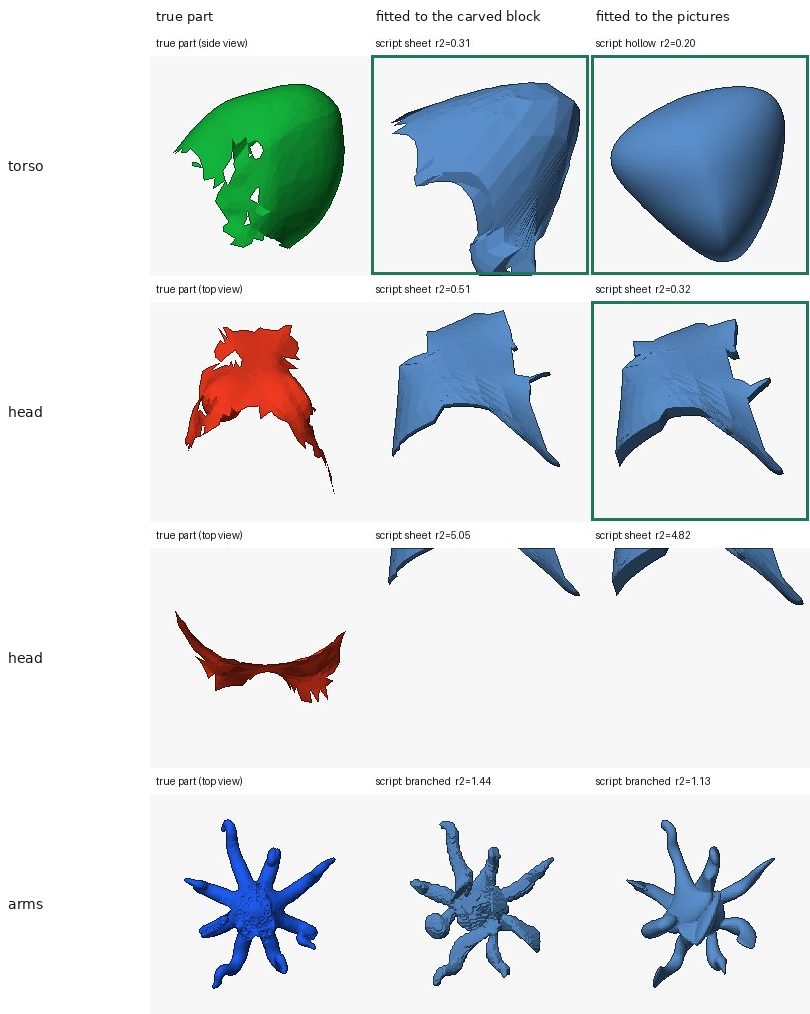
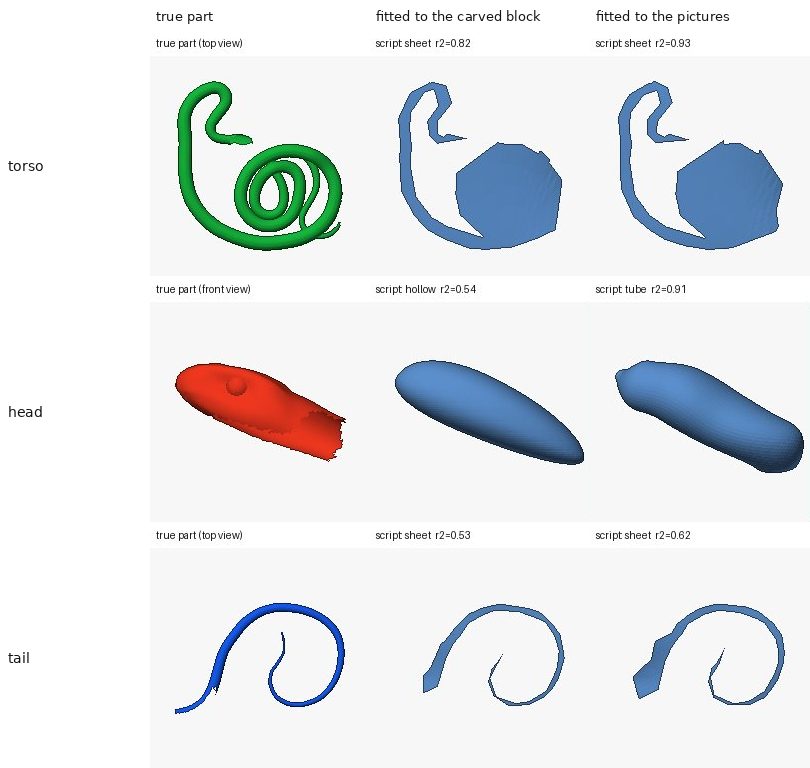
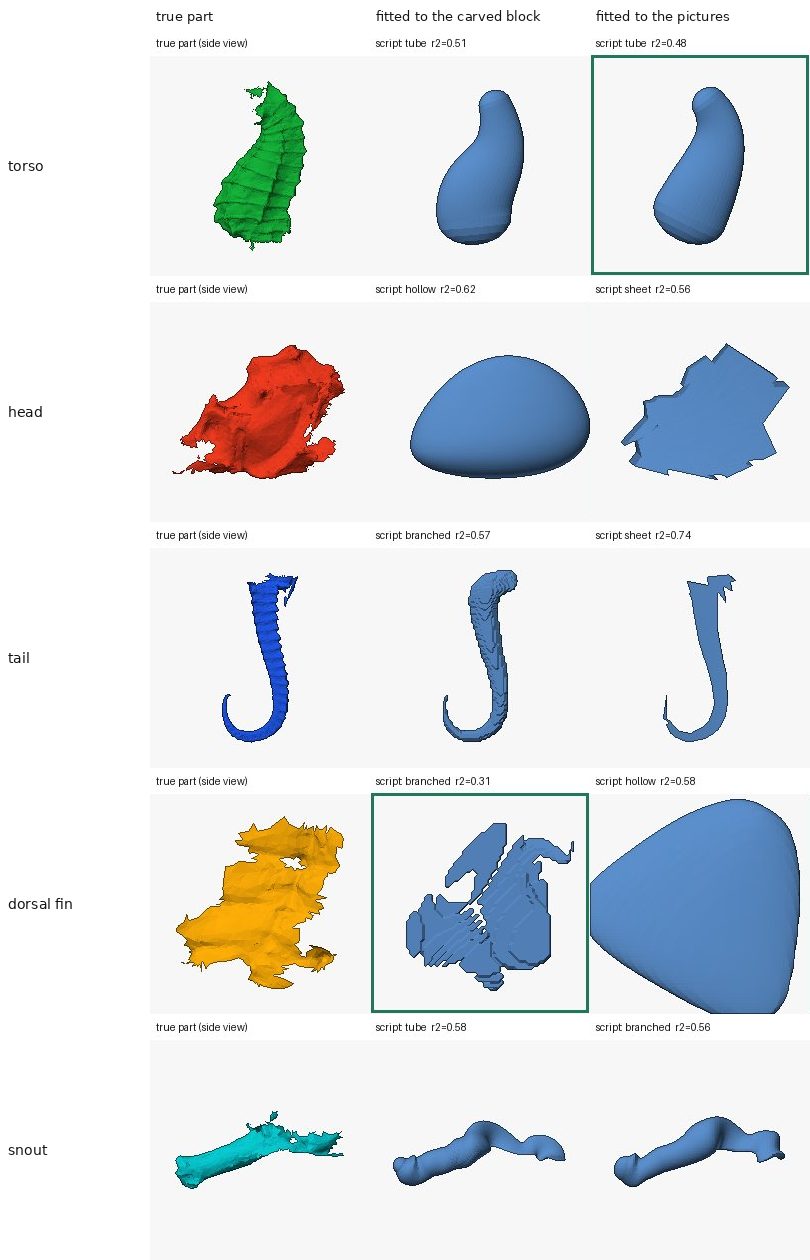
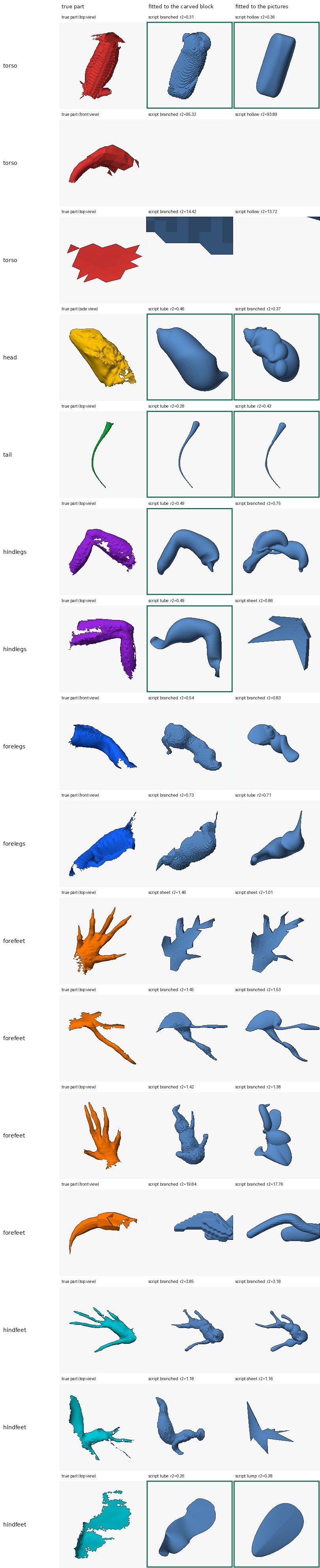
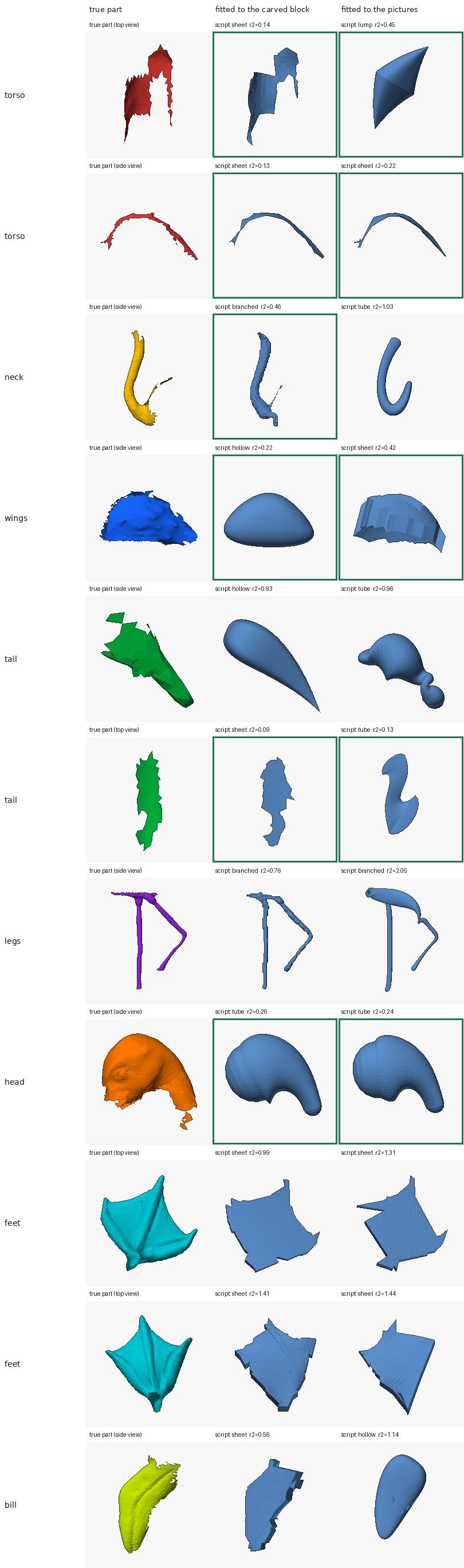
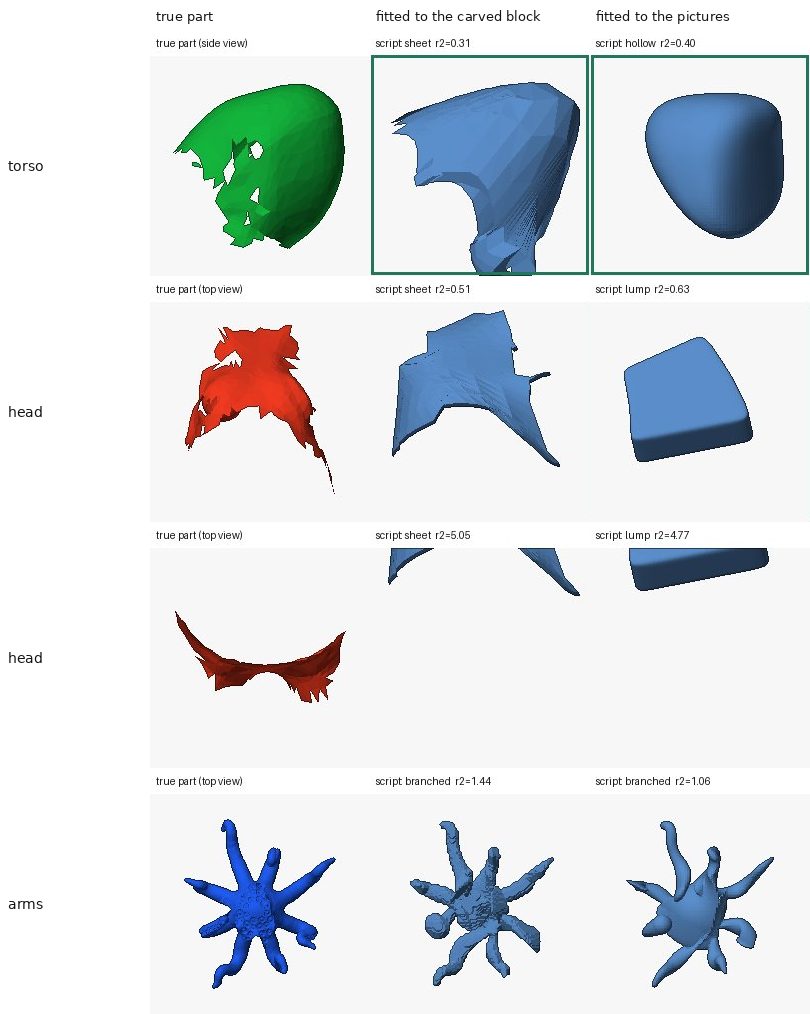
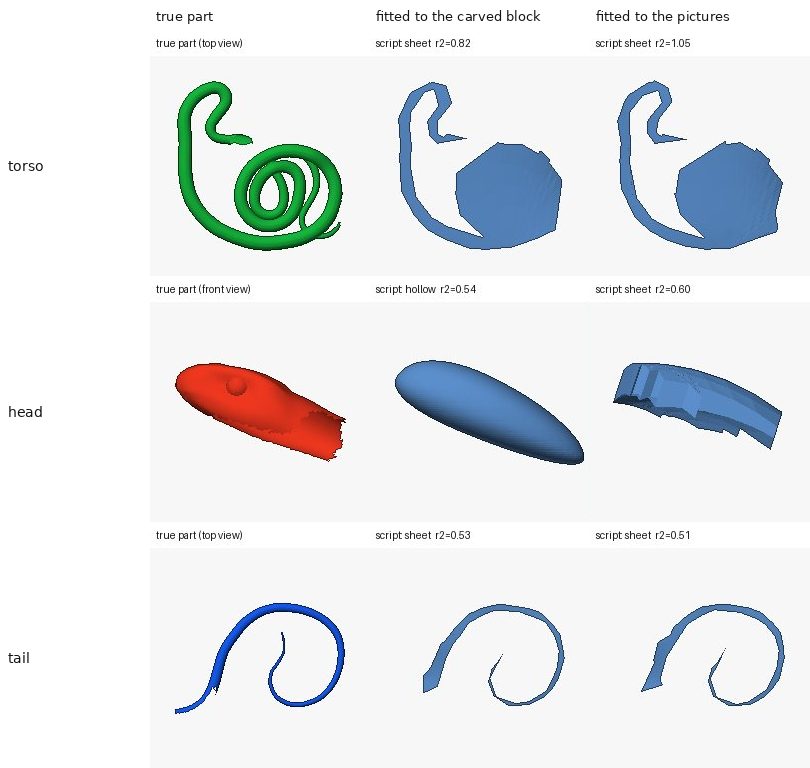
Fitting to the pictures: part by part
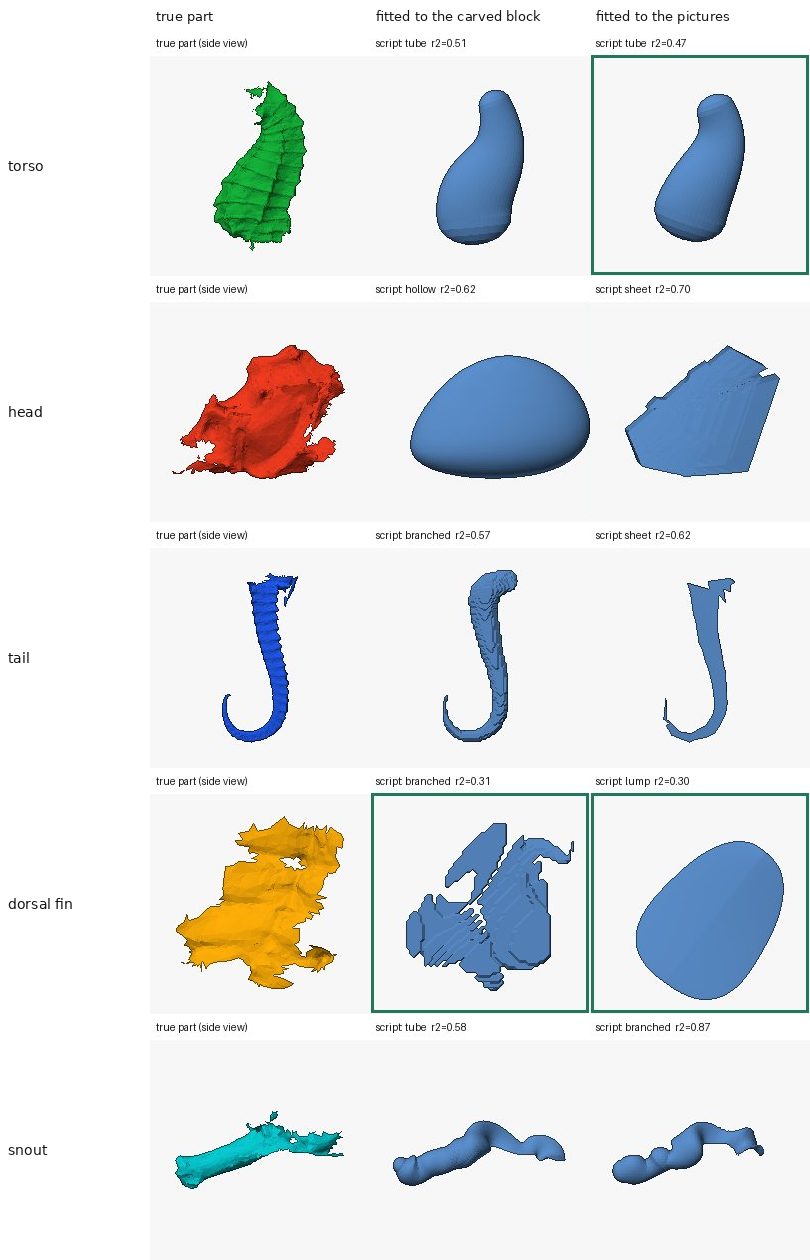
Each row: the true part, the fit to the carved block (the tool the block chose), and the fit to
the pictures (the tool the pictures chose). Framed green: within the pass line. Above each picture: the tool and its
distance to the true part (lower is closer; 0.5 is the pass line).