Your two questions, tested. Shading is only useful if it changes the shape, so here it becomes depth: how
far the surface is from the camera at each pixel, and everything in front of it is carved away. And the fitted tubes
are meshed smoothly instead of in steps.
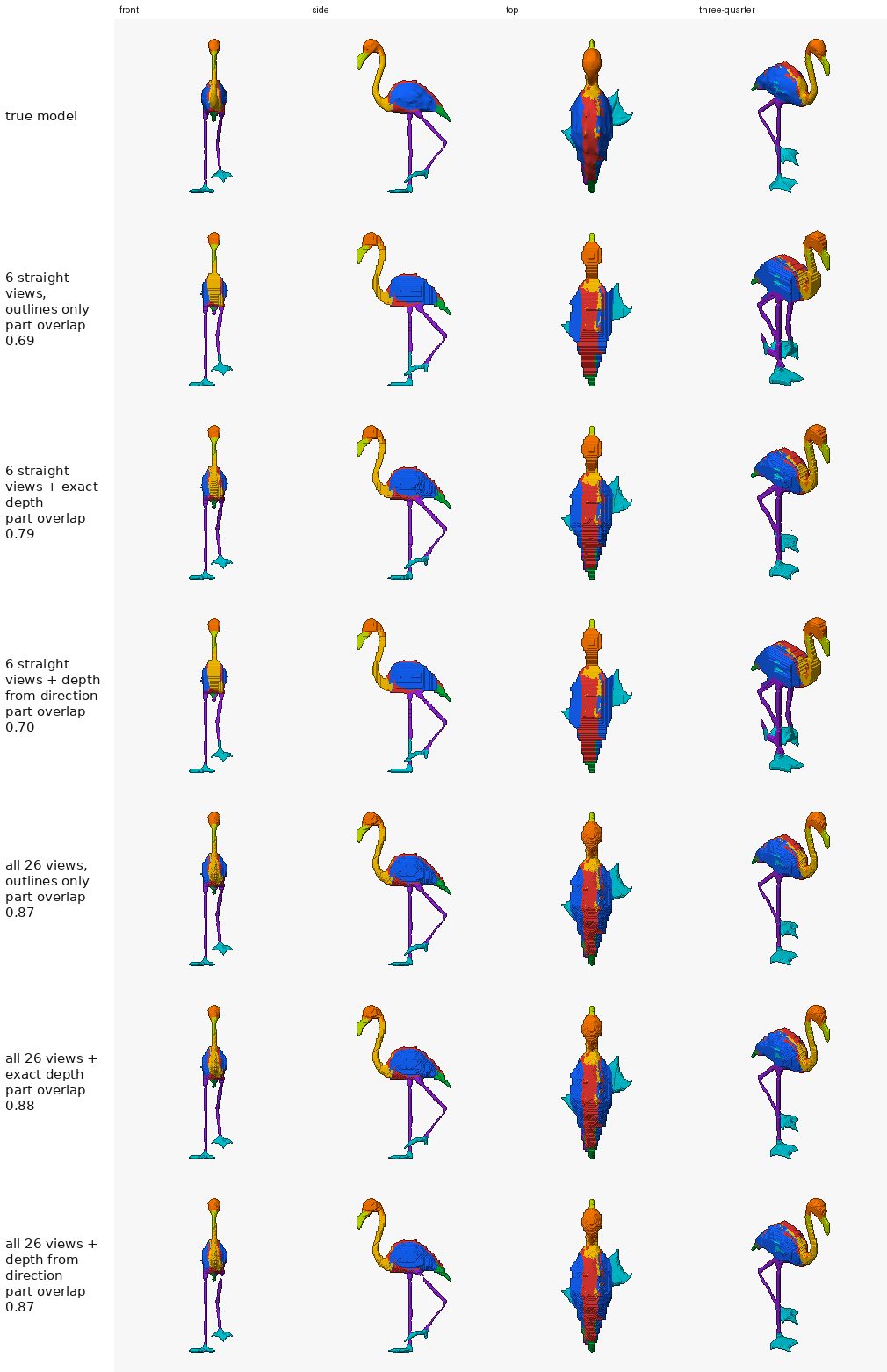
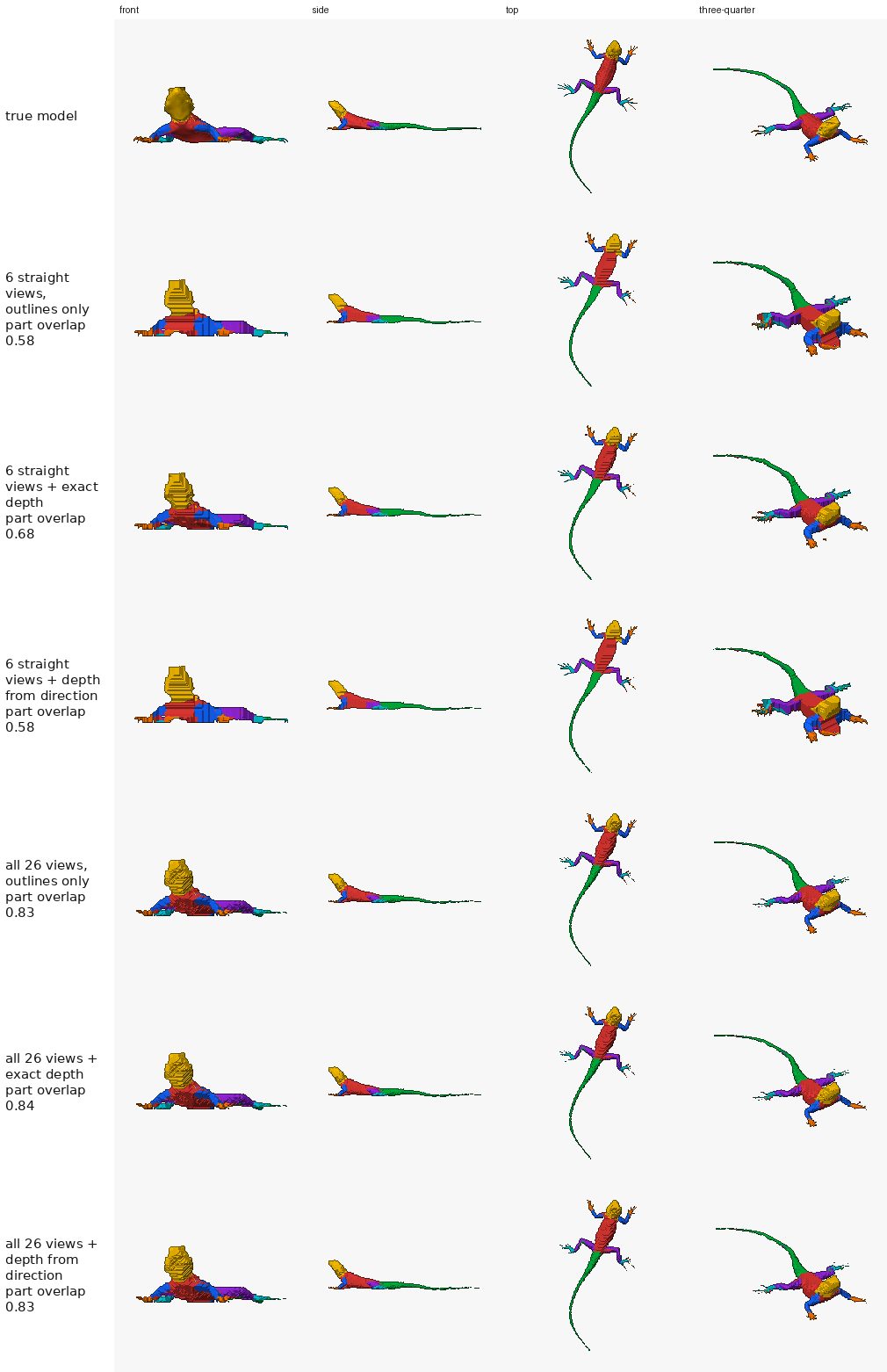
Exact depth is the biggest gain so far. With the six straight views, part overlap with the true model rises
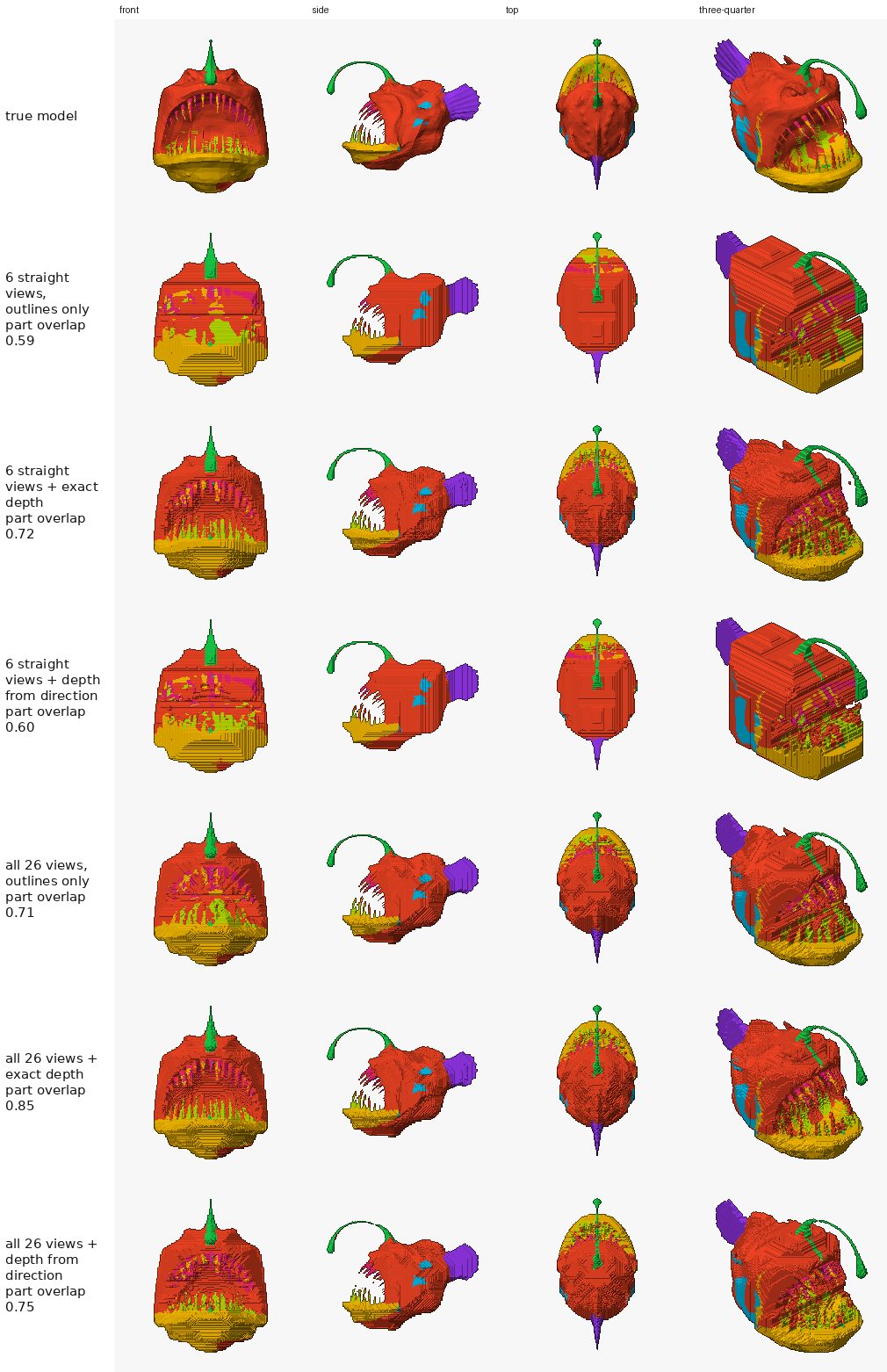
by 0.10 to 0.24 on every model; the anglerfish's mouth goes from 75% filled to 56%, and with all 26 views from 73% to
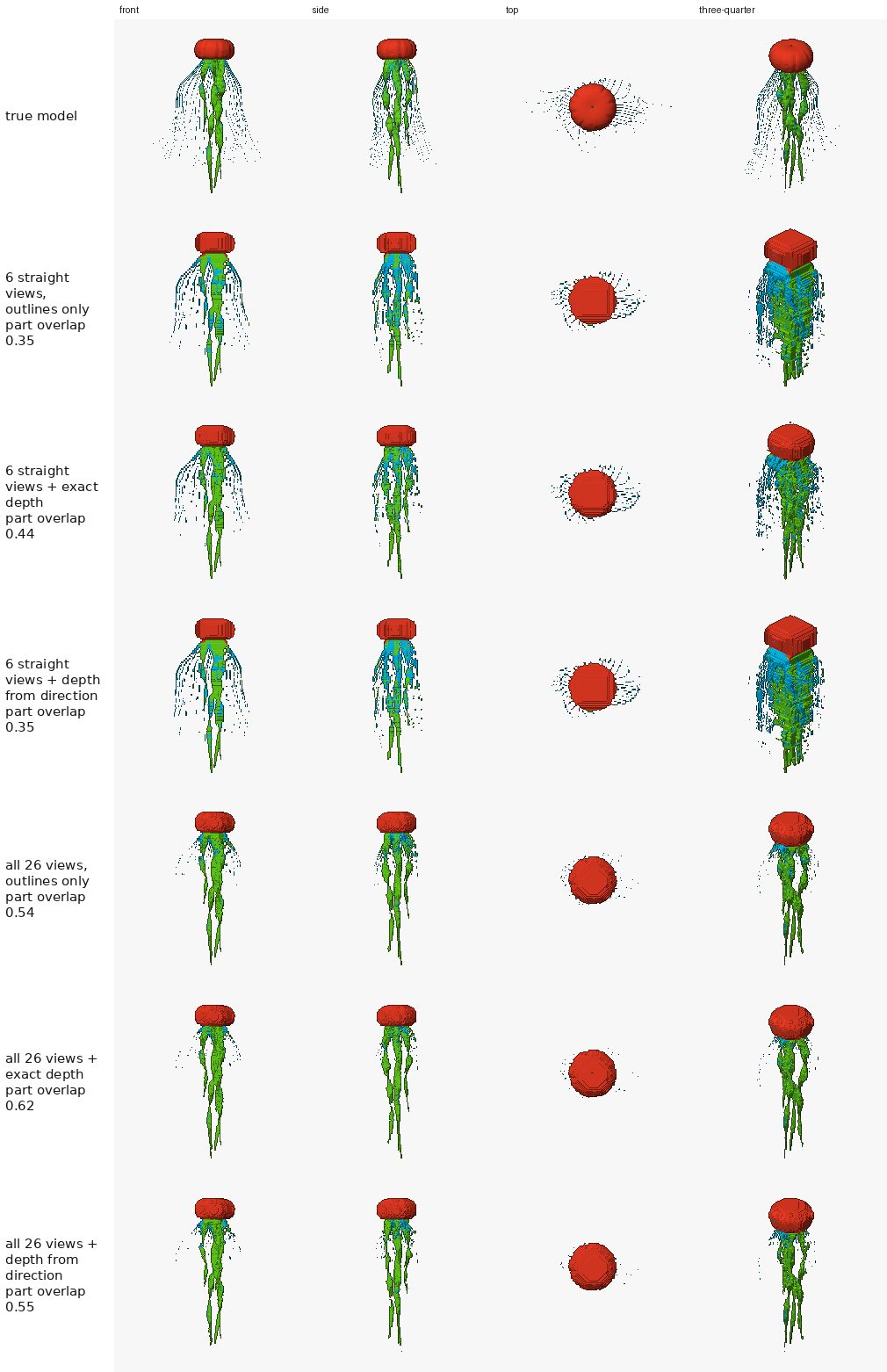
23%. It cuts away nothing of the true shape (up to 2.4% on the jellyfish, whose tentacles are thinner than a grid
cell).
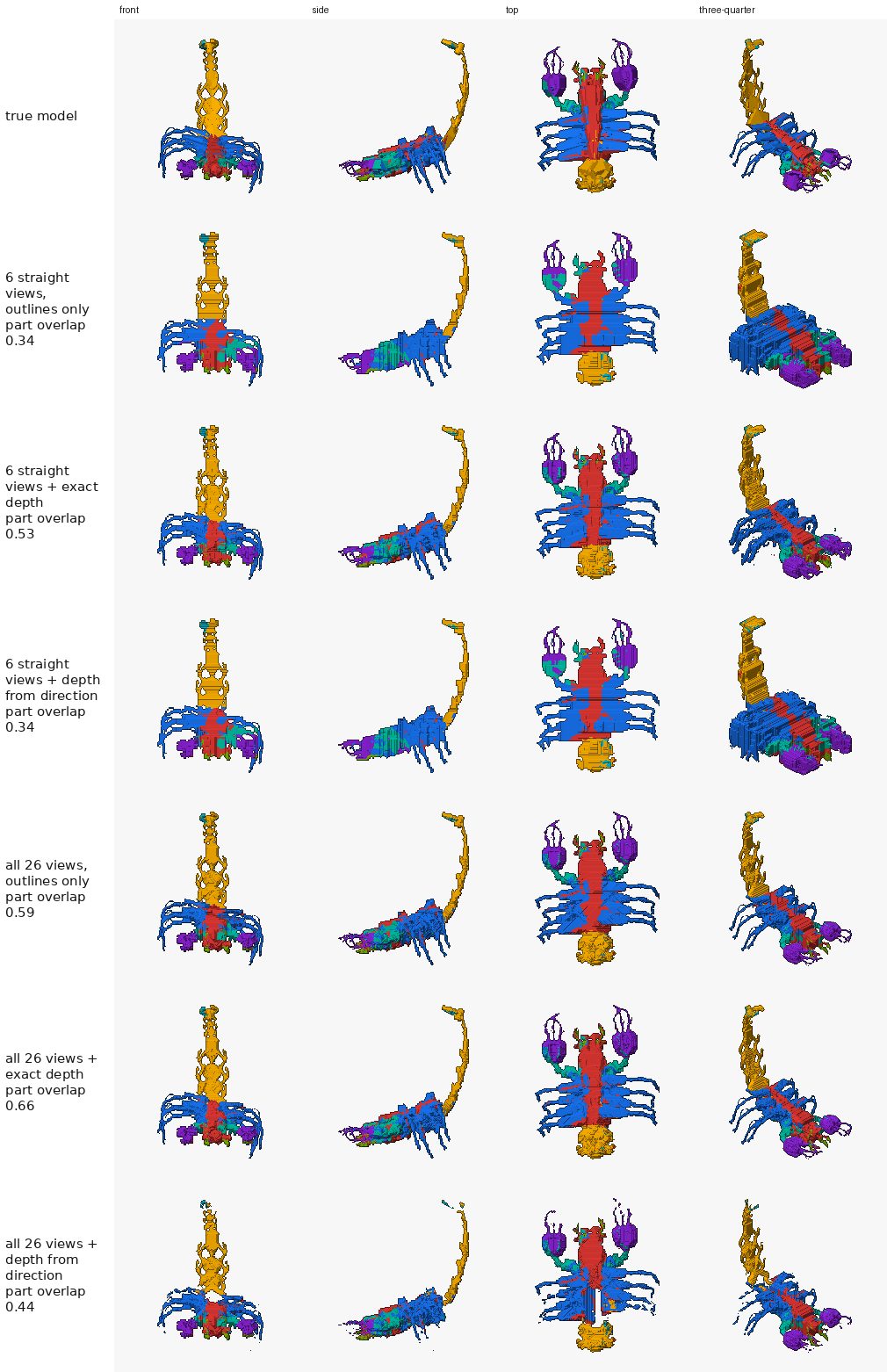
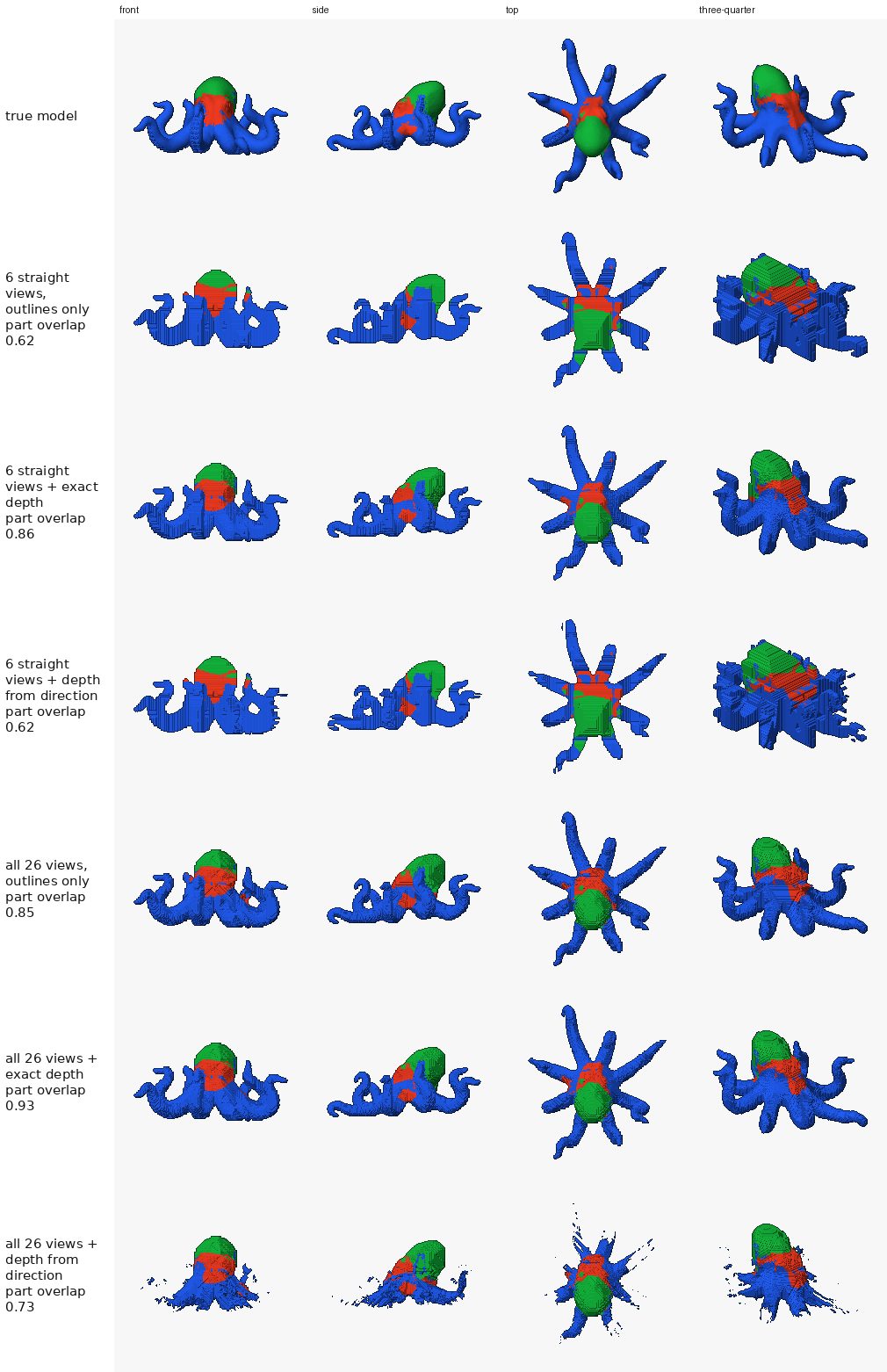
Depth worked out from surface direction alone, as I built it, does not work. The overlap rises in only 5 of 24
cases, and on the octopus and scorpion it cuts away up to 37% of the true shape: where one arm lies over another, the
depth jumps, and surface direction cannot show a jump. Depth has to come from something that sees jumps.
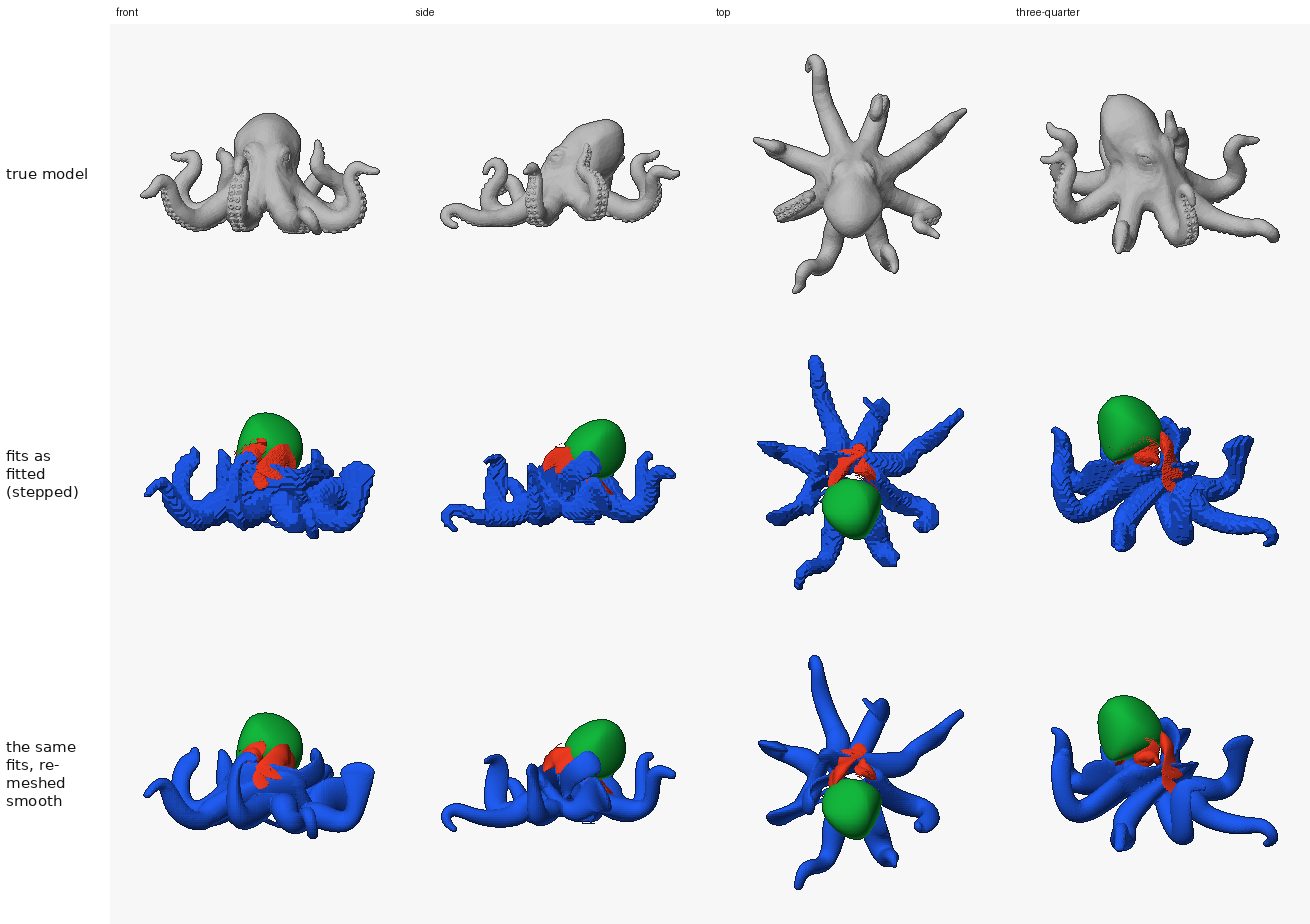
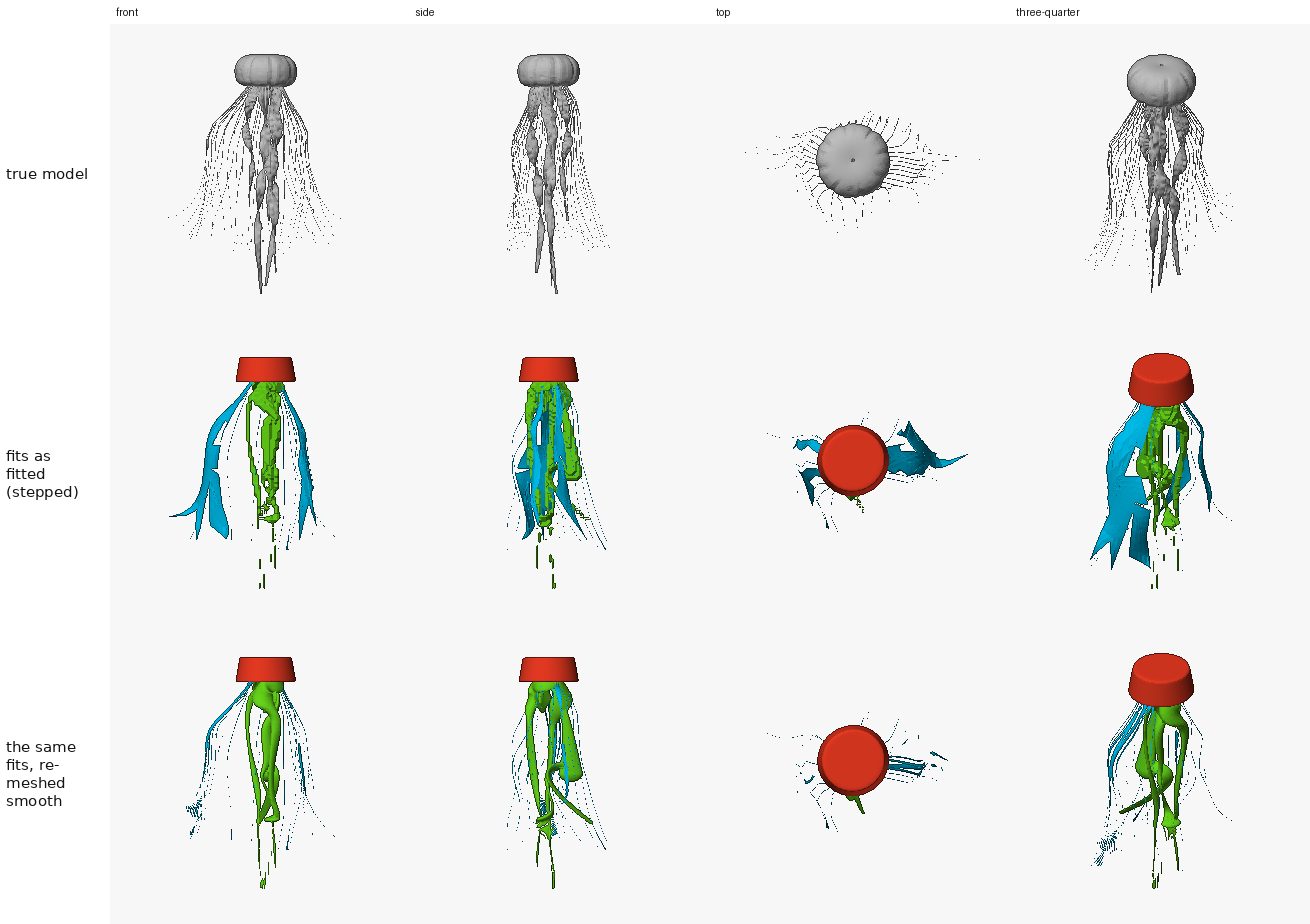
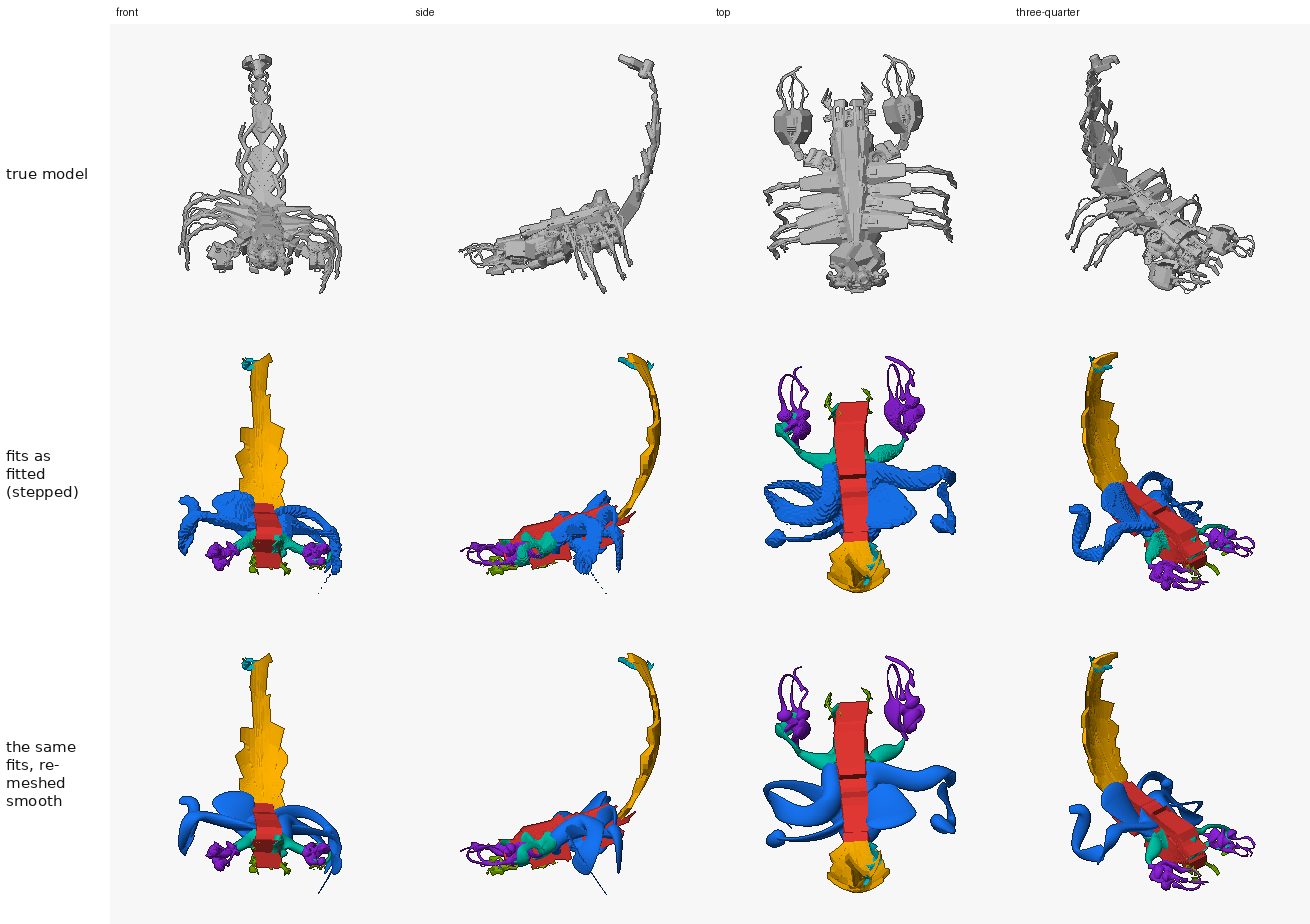
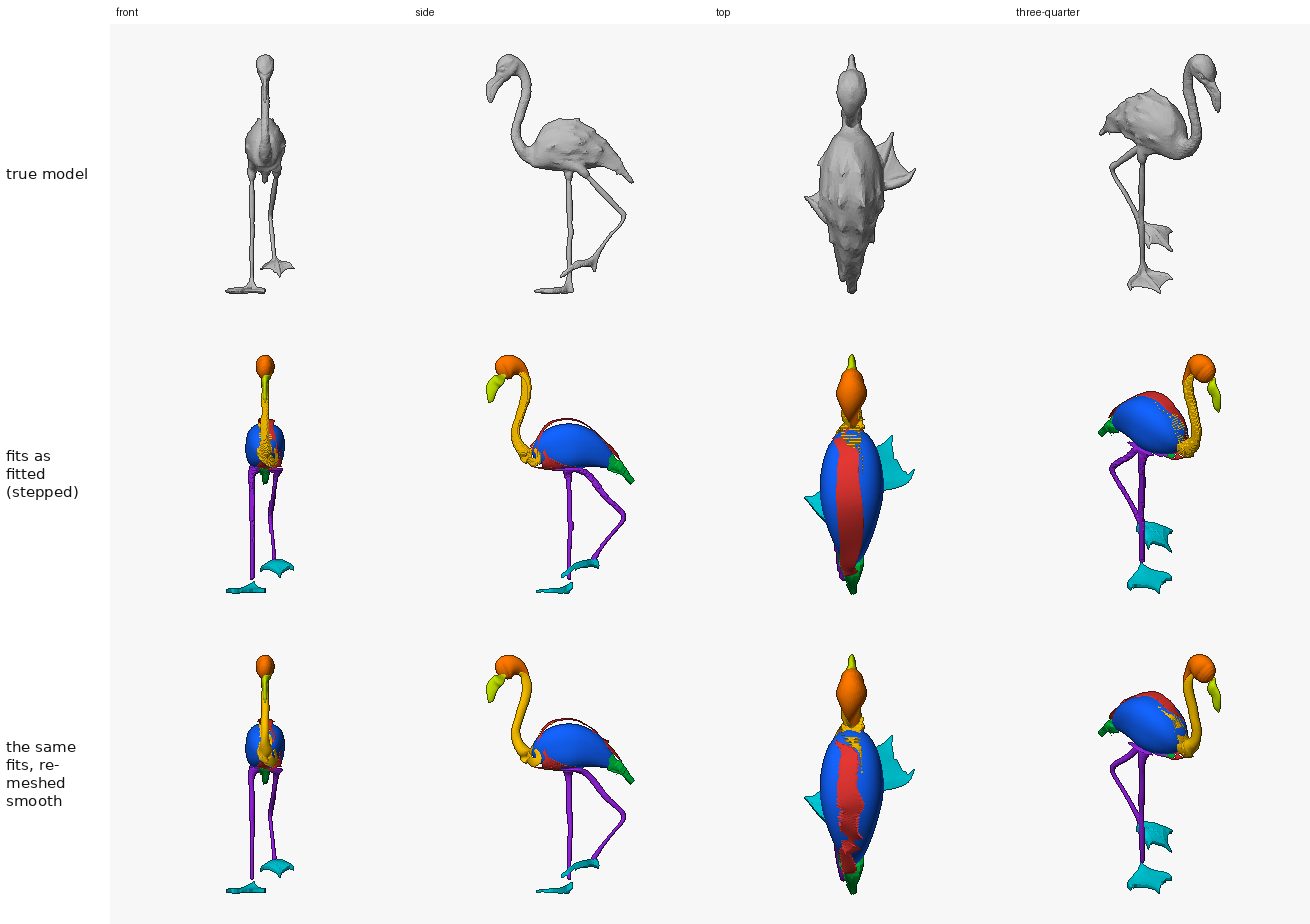
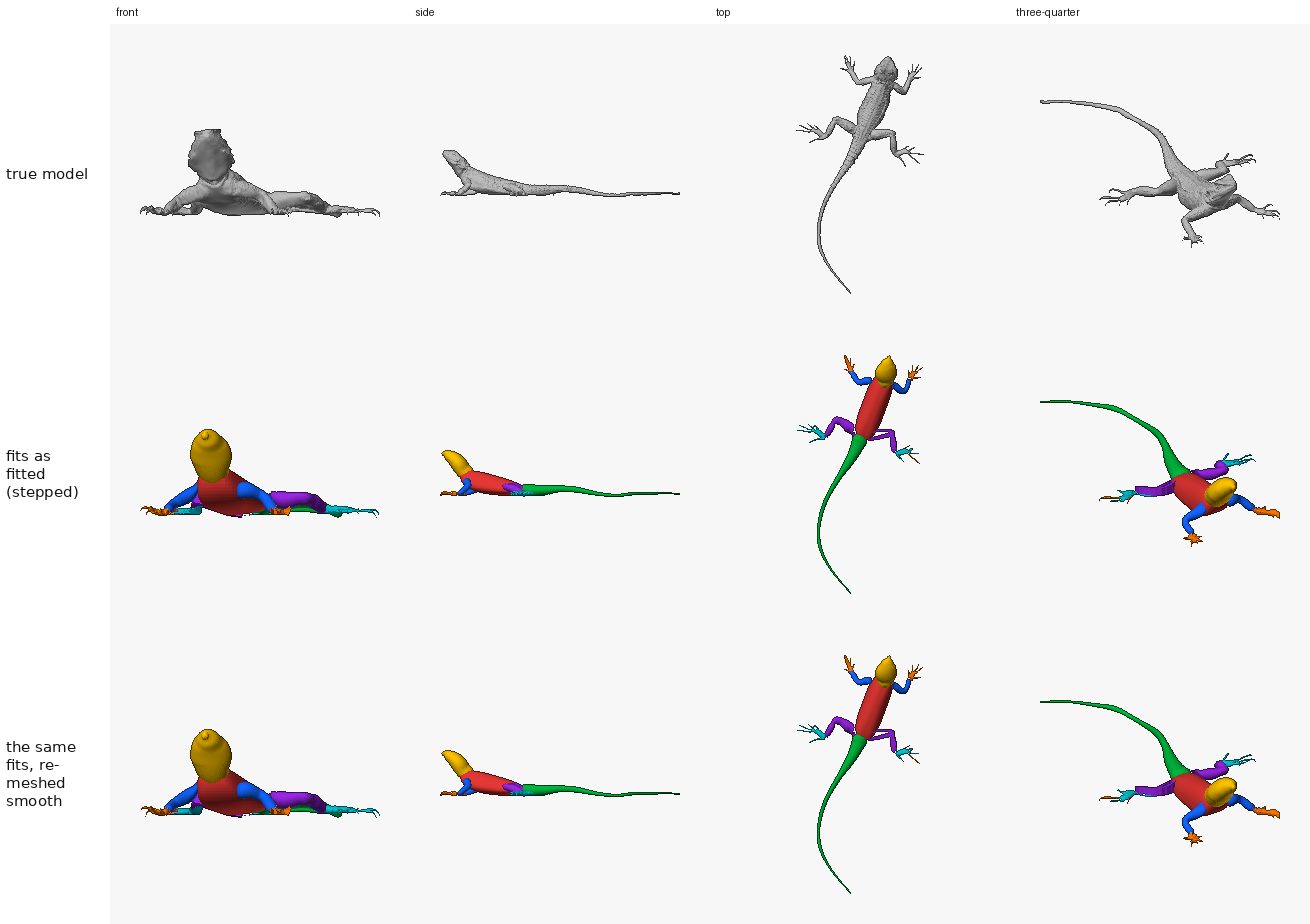
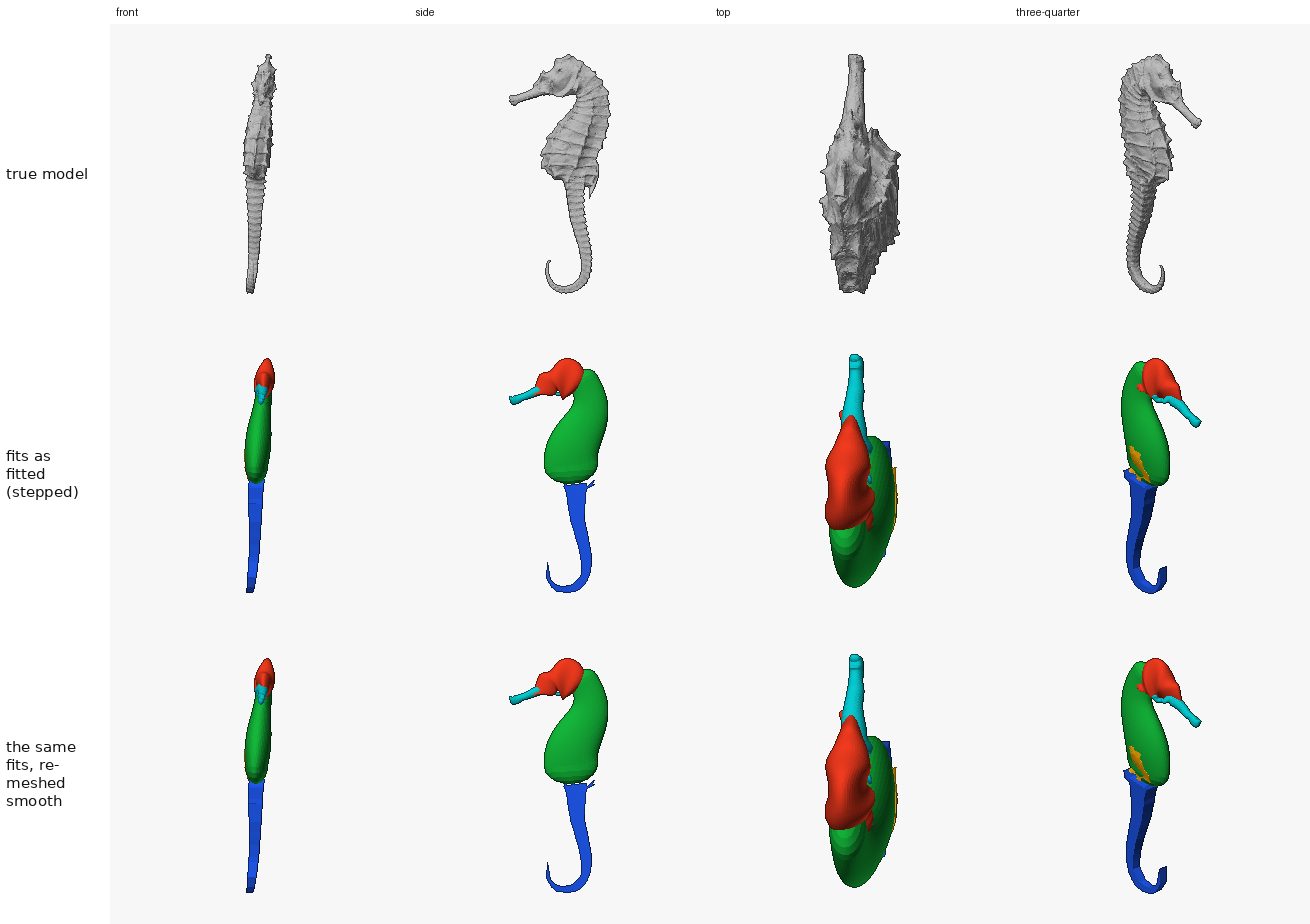
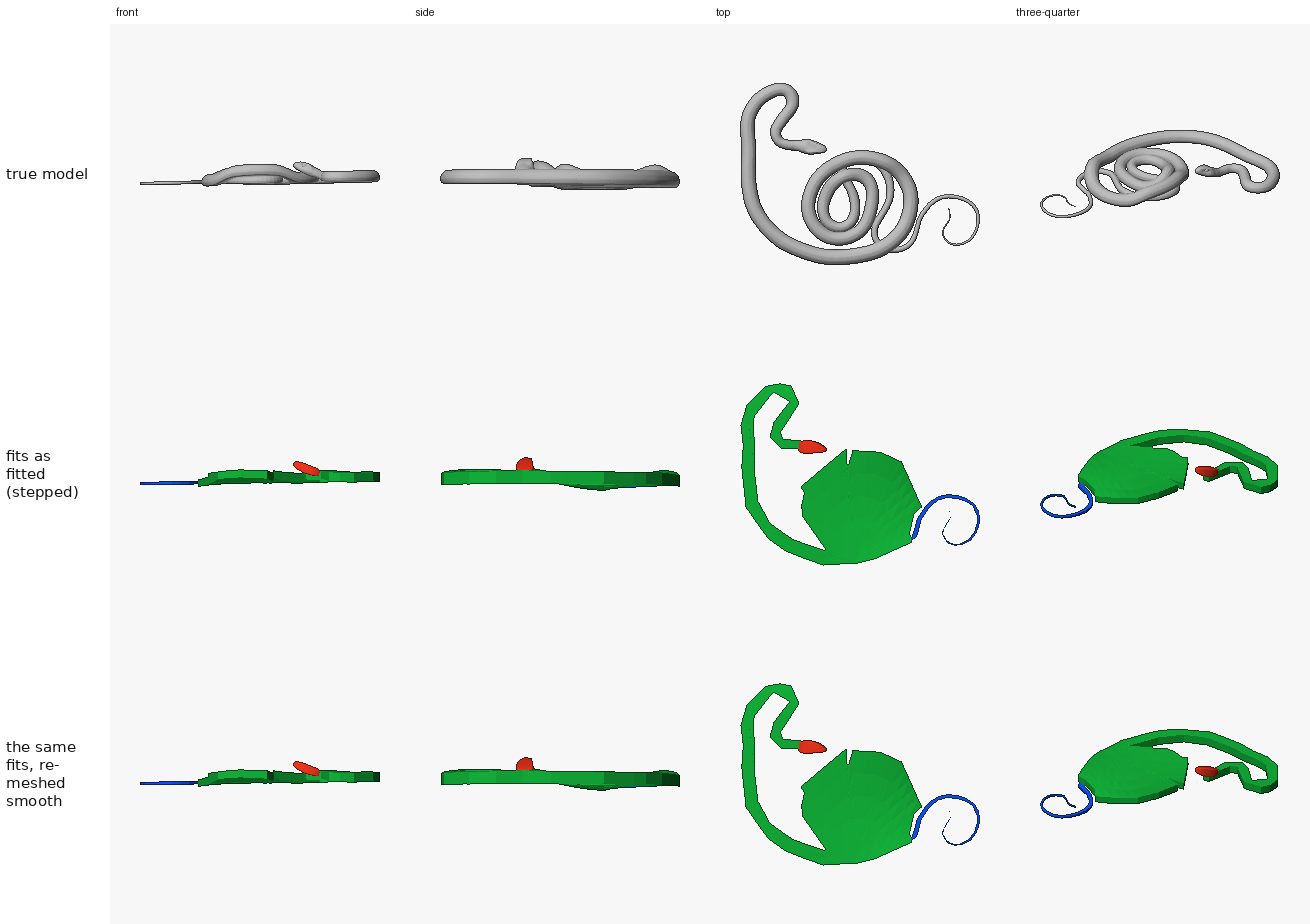
The steps were in the meshing, not the fit. Re-meshed from the same fitted tubes, the arms are smooth. Scores
barely move, except the jellyfish's thin tentacles, which the steps had broken up.
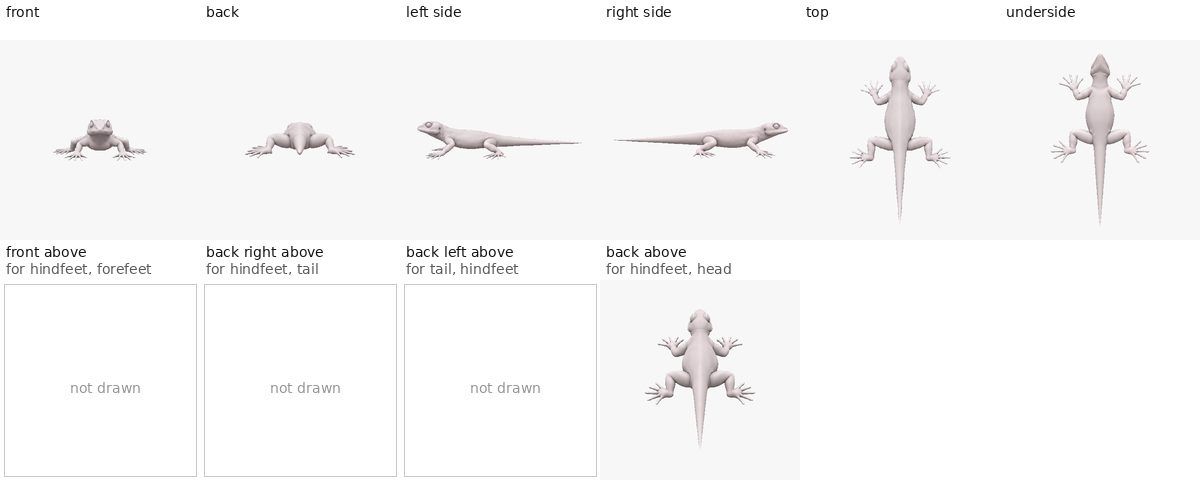
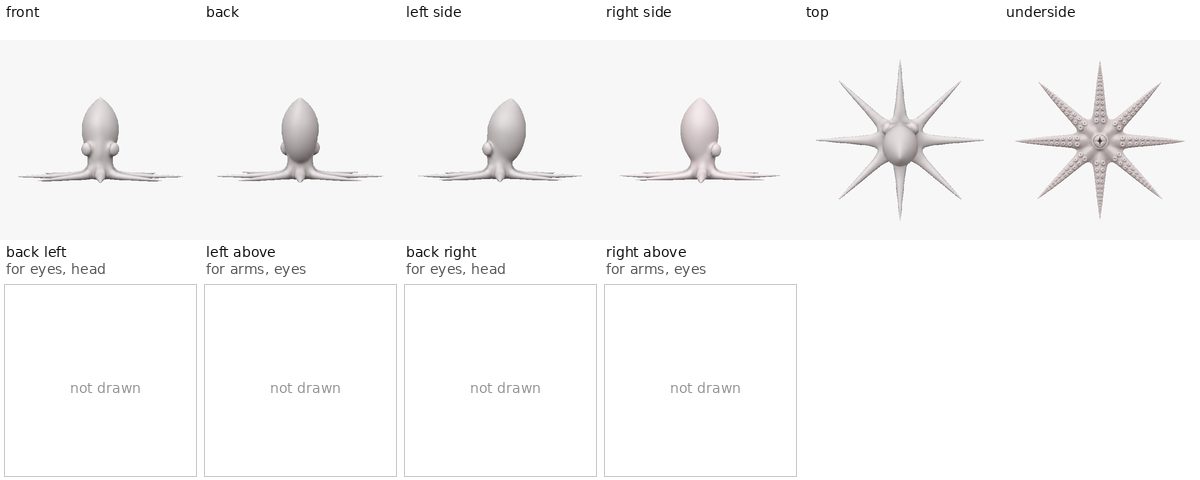
AI pictures: right side and underside drawn and painted for all seven; special angles for four (three wait on
a redraw after a bug of mine); fits running on the lab.
1. Carving by depth: does the shape get closer to the true one?
The true models again, with three view sets. Each shape is carved from the outlines first, then
further with each view's depth: the exact depth from the true model (the most depth could do), and depth worked out
only from the surface direction, which is what shading tells (exact, then off by 10° and 20°, as an estimator reading
AI pictures would be).
outlines onlyexact depthdepth from surface directionthe same, direction off by 10°the same, direction off by 20°
Mean part overlap with the true model (1 = identical), every part counted once.
outlines onlyexact depthdepth from surface directionthe same, direction off by 10°the same, direction off by 20°
Share of the true model's volume the carving cut away (0 = nothing true lost). Outline carving
loses a little where the views disagree at the grid's resolution; depth must not add to it.
Exact depth: the overlap moves by +0.00 to +0.24 (rises in 23 of 24); true cells lost beyond the outline carving: at most 2.4% (jellyfish).
Depth from surface direction: the overlap moves by -0.15 to +0.04 (rises in 5 of 24); true cells lost beyond the outline carving: at most 37.4% (octopus).
The same, direction off by 10°: the overlap moves by -0.15 to +0.04 (rises in 5 of 24); true cells lost beyond the outline carving: at most 38.3% (octopus).
The same, direction off by 20°: the overlap moves by -0.17 to +0.03 (rises in 5 of 24); true cells lost beyond the outline carving: at most 37.2% (octopus).
The anglerfish's open mouth
outlines onlyexact depthdepth from surface directionthe same, direction off by 10°the same, direction off by 20°
Share of the mouth's hollow still filled (0 = open as in the true model).
flamingo
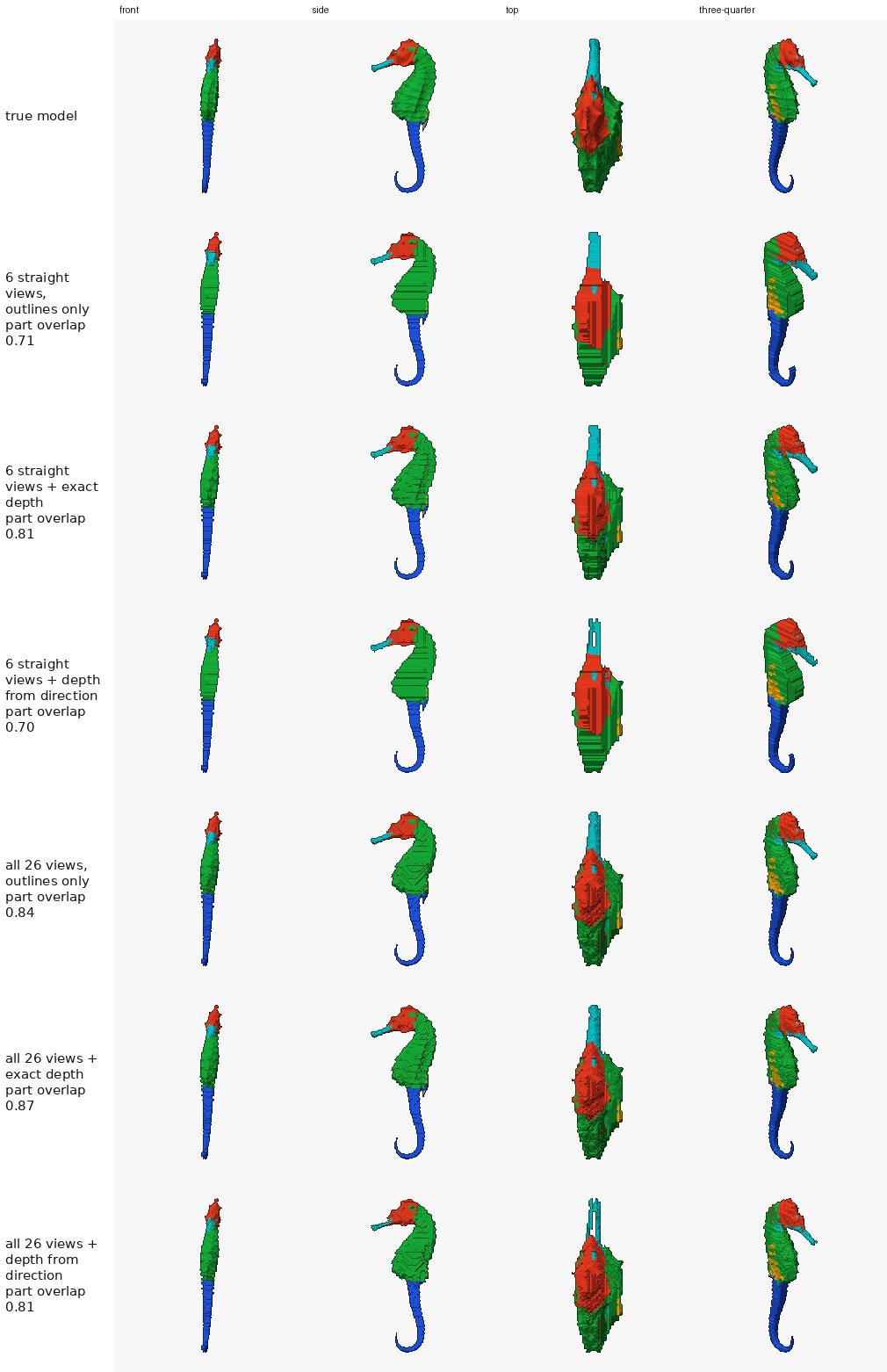
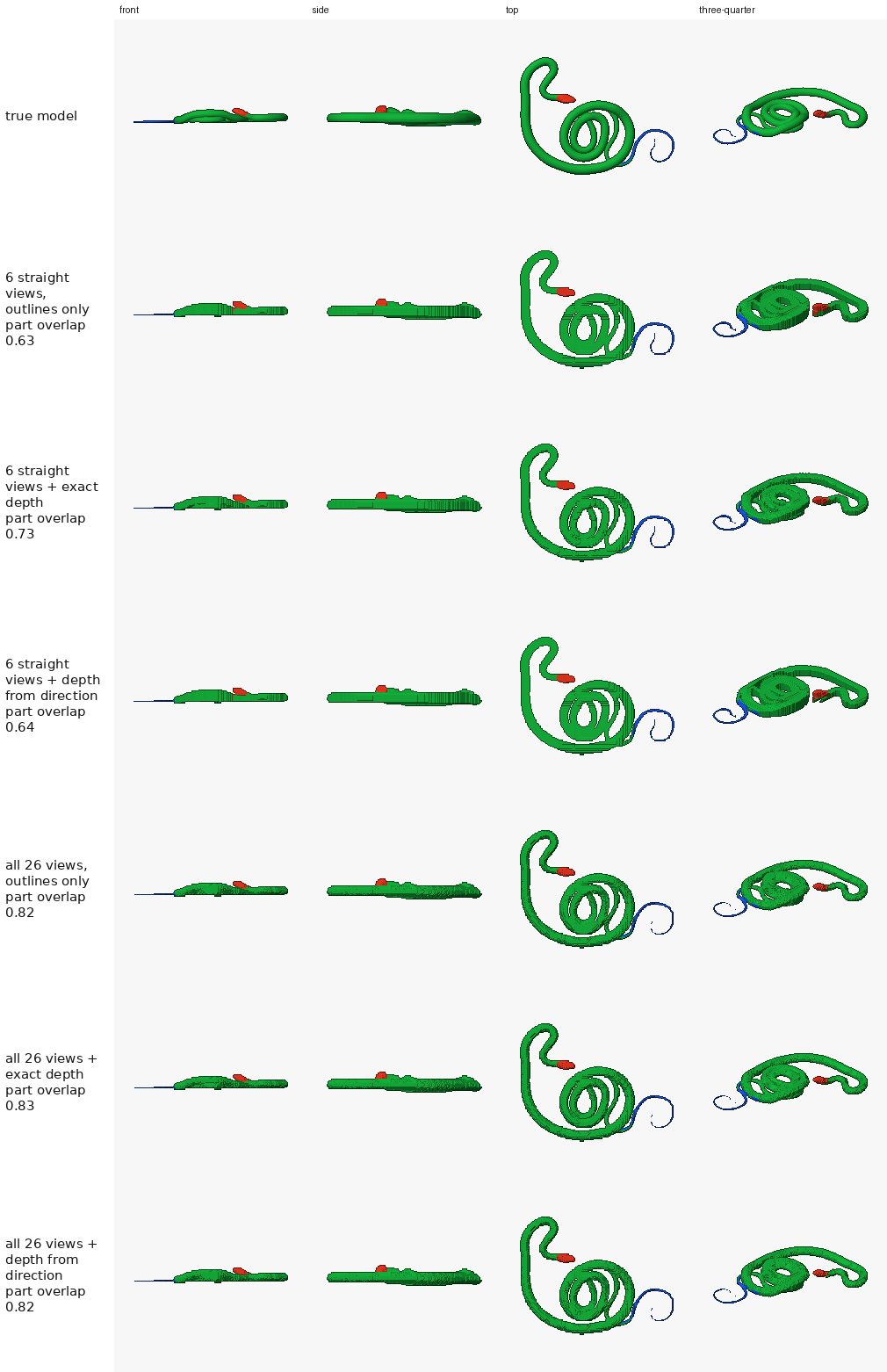
Rows: the true model; then for 6 straight views and for all 26: outlines only, with exact depth, with depth from surface direction. Colours: the nearest true part.
agama
Rows: the true model; then for 6 straight views and for all 26: outlines only, with exact depth, with depth from surface direction. Colours: the nearest true part.
scorpion
Rows: the true model; then for 6 straight views and for all 26: outlines only, with exact depth, with depth from surface direction. Colours: the nearest true part.
octopus
Rows: the true model; then for 6 straight views and for all 26: outlines only, with exact depth, with depth from surface direction. Colours: the nearest true part.
seahorse
Rows: the true model; then for 6 straight views and for all 26: outlines only, with exact depth, with depth from surface direction. Colours: the nearest true part.
racer snake
Rows: the true model; then for 6 straight views and for all 26: outlines only, with exact depth, with depth from surface direction. Colours: the nearest true part.
jellyfish
Rows: the true model; then for 6 straight views and for all 26: outlines only, with exact depth, with depth from surface direction. Colours: the nearest true part.
anglerfish
Rows: the true model; then for 6 straight views and for all 26: outlines only, with exact depth, with depth from surface direction. Colours: the nearest true part.
2. The fitted tubes, without the steps
The branching-tube fit is smooth: a bent centre line with round sections that grow and shrink along
it. It was turned into a mesh by testing inside or outside at each point of a grid, which put the surface on the grid's
steps. Now it is meshed from how far each point is inside or outside, which follows the curve. Nothing is refitted.
On the seven true models (66 parts), the branching tube is the best of the five tools for 17 parts as fitted and 21 re-meshed. For thick parts the score barely moves (the steps were small next to the fit's own error), but the jellyfish's thin tentacles, which the old grid's steps had broken up, now come out whole: three tentacle parts that had been fitted best by a flat sheet are now fitted best by tubes. Parts within the pass line: 43 before, 44 after.
octopus
jellyfish
scorpion
flamingo
agama
seahorse
racer snake
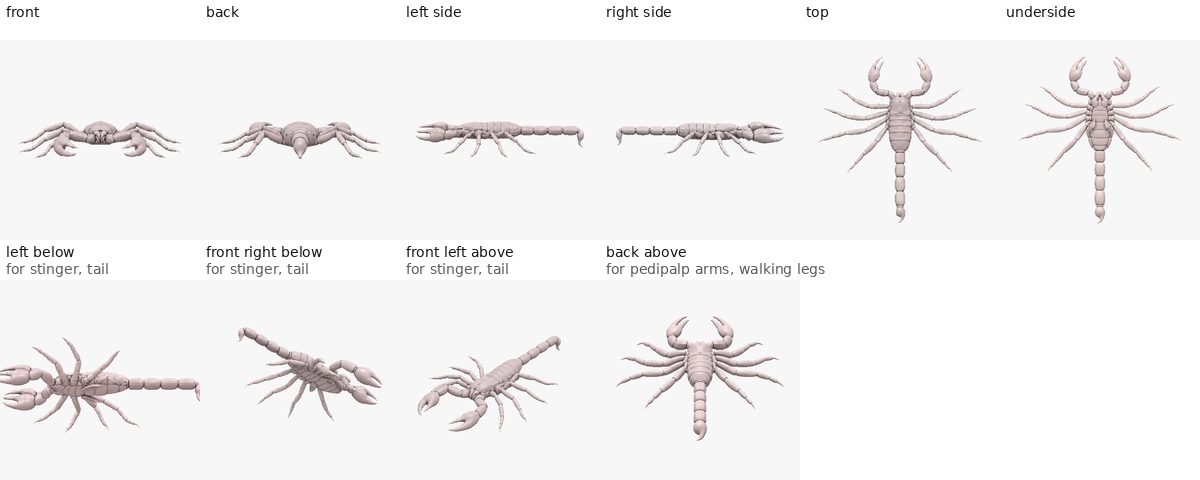
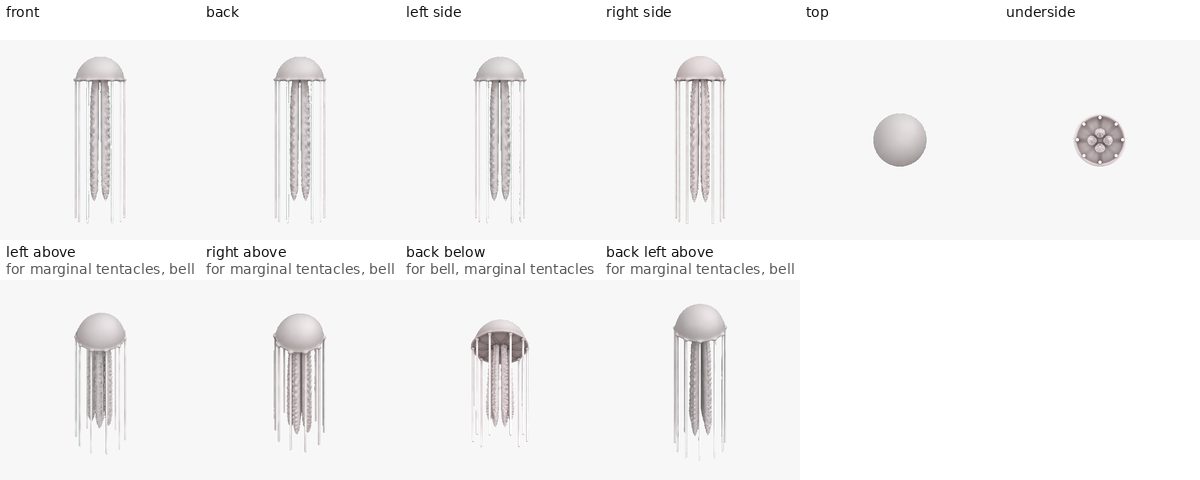
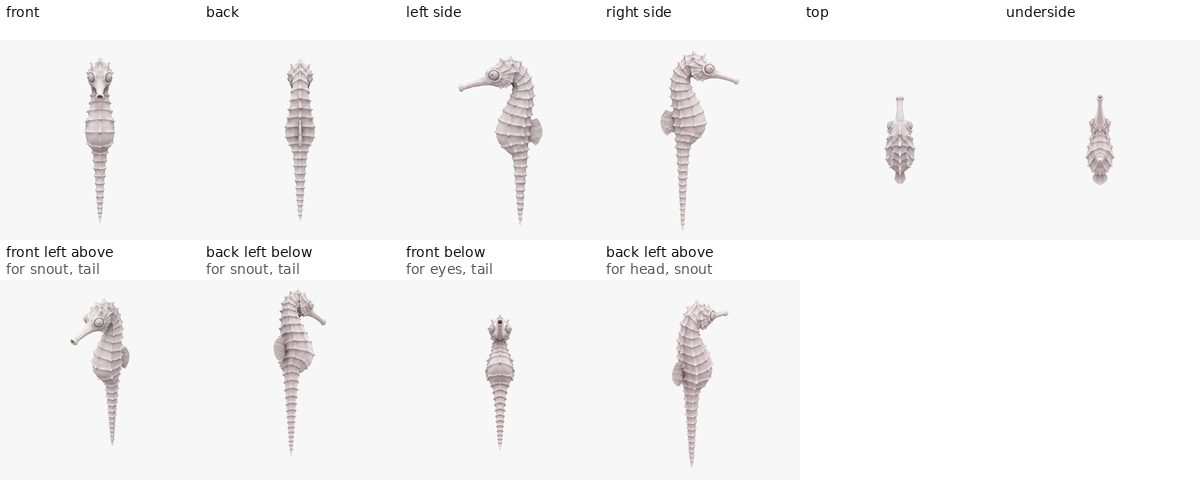
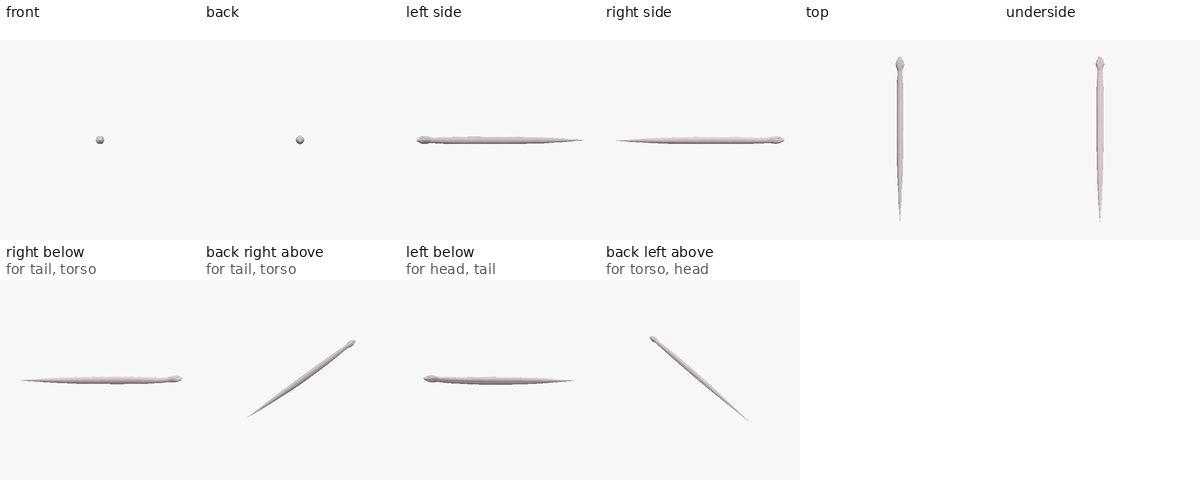
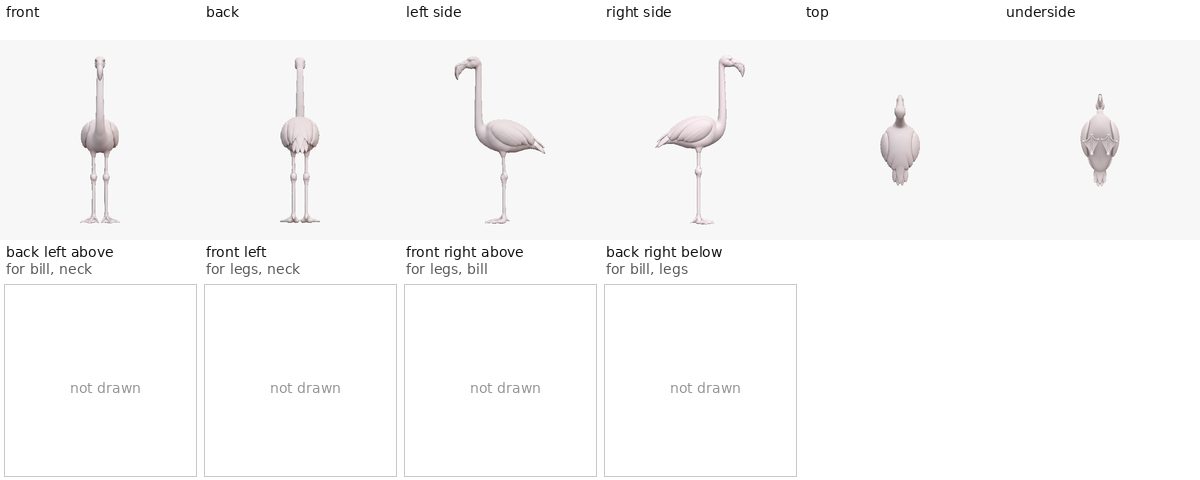
3. AI pictures from more angles
Each animal's sheet (front, left side, back, top), plus its right side and underside drawn as
separate pictures. The per-part pick carves a shape from these six, and four special angles are chosen per animal from
that shape, each for the parts whose surface the straight views leave least certain (named under each angle). The
image model draws the angles only roughly: compared with the asked-for camera, a picture's width-to-height disagrees
by 2% to 57%, and the pick drops a picture for the parts where it disagrees.
The four special angles are drawn for the jellyfish, racer snake, scorpion and seahorse. For the agama, flamingo and
octopus they are not drawn yet: a bug of mine in the first choice of angles (it undercounted how much of each picture
the shape kept, so it chose for the wrong shape) sent those three to the image model with other angles. Those pictures
are kept, but they are not the special angles. Fits to the AI pictures are running on the lab.